


How linear and spiral wall sconces shape visual comfort, atmosphere, and architectural depth
Introduction
Wall lighting has a unique ability to change the way an interior feels without dominating the room. Unlike a central ceiling fixture, a wall sconce illuminates vertical surfaces, adds depth at eye level, and can create a more intimate evening atmosphere. In bedrooms, living rooms, hallways, stairways, and hospitality spaces, this kind of layered light helps reduce the flatness that often comes from relying on overhead illumination alone.
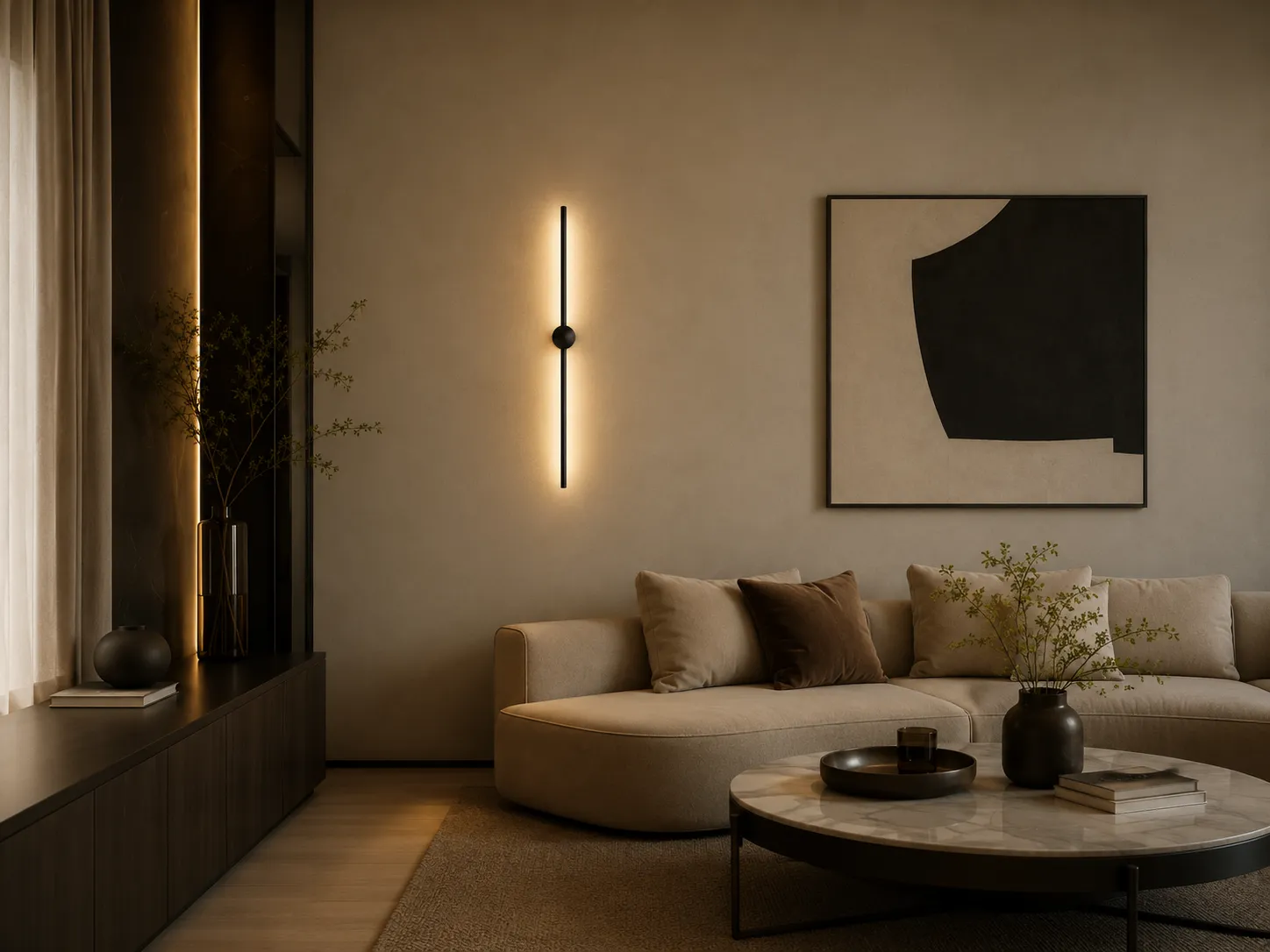
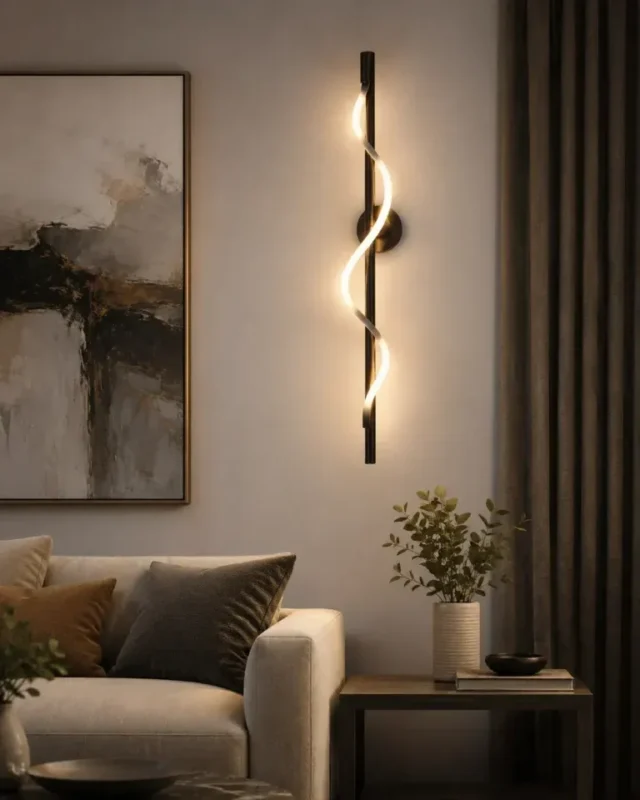
This article compares two Xunlu Lighting designs: the Modern Linear LED Wall Light | Slim Wall Sconce and the Modern LED Spiral Wall Light | Brass Wall Sconce. Both use integrated LED technology, but they solve different design problems. The linear model is restrained and architectural, while the spiral model is more sculptural and expressive. Understanding their light distribution, color temperature, material choices, and visual role makes it easier to select the right fixture for a specific interior.
Two Different Ways to Light a Wall
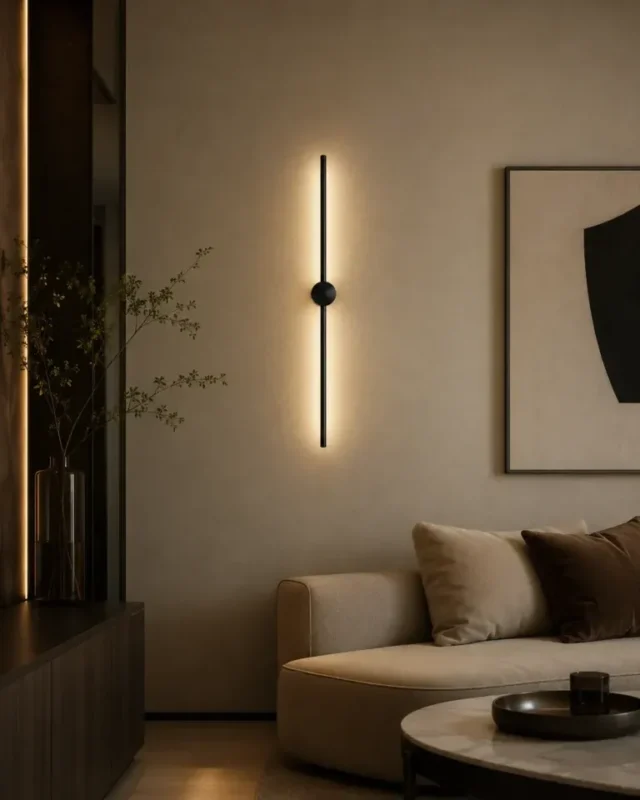
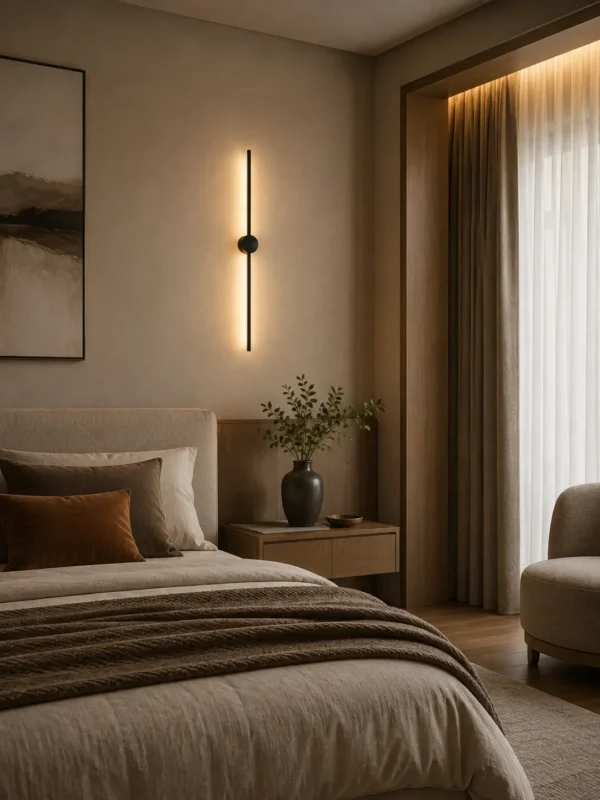
The Modern Linear LED Wall Light uses a slim black aluminum profile with a concealed LED source and an optical diffuser. Its job is subtle: create a controlled wall-washing glow while preserving a clean, minimal silhouette. The product uses a 12W integrated LED source with approximately 800–1000 lumens and offers three selectable color temperatures: 3000K warm white, 4000K neutral white, and 6000K cool white.
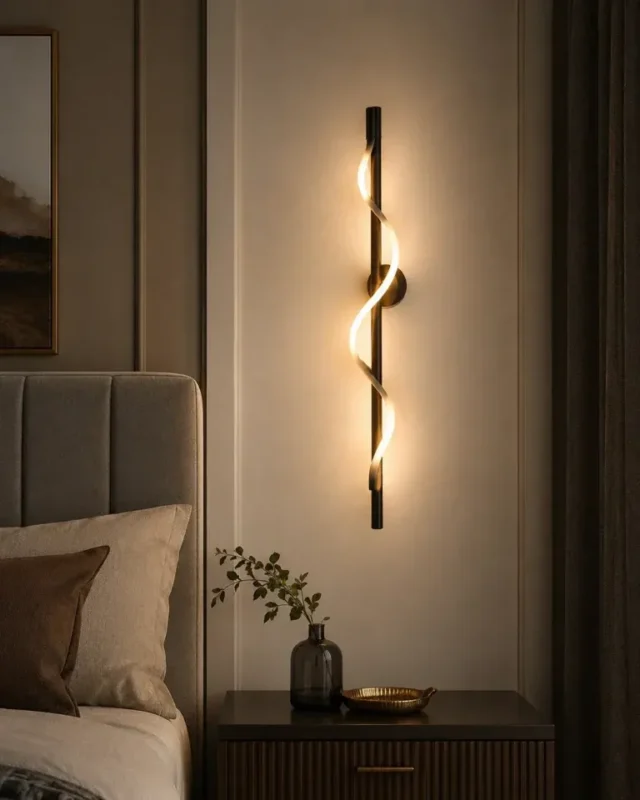
The Modern LED Spiral Wall Light takes a more decorative approach. Its flowing spiral form turns the light source into a visible sculptural element. A silicone light strip softens the output, while the brass construction and black/brushed-brass finish give the fixture a warmer luxury character. Its integrated 15W LED provides approximately 1200 lumens at 3000K warm white.
The Science of Visual Comfort: Why Wall Light Feels Different
Visual comfort depends on more than total brightness. The Illuminating Engineering Society treats glare, brightness perception, visibility, and illuminance as core components of lighting performance. A room can be technically bright yet still feel uncomfortable if the brightest source is exposed directly to the eye or if contrast between bright and dark zones is too severe. Wall-mounted luminaires help by distributing light across a larger vertical surface instead of concentrating all luminance in a single overhead point.
This vertical illumination also changes the perceived brightness of a room. Human vision is strongly influenced by the luminance of walls and other large surfaces in the field of view. When a wall is softly illuminated, the space can feel brighter and more open without requiring excessive power. This is one reason architectural wall washing is widely used in hotels, galleries, upscale residences, and circulation areas.
Diffusion is equally important. The linear model uses a PC/acrylic optical diffuser, while the spiral model uses an integrated silicone light strip. Both materials spread the LED output over a larger luminous area, which lowers the apparent intensity of individual LED points and creates a smoother, less glaring appearance. This is particularly useful at bedside height and in living rooms, where people may see the fixture directly for long periods.
Color Temperature and Mood
The U.S. Department of Energy notes that correlated color temperature affects the perceived mood of a space: warm light around 2700K–3000K is typically associated with friendly, pleasing residential environments, while cooler light is more often used where a cleaner, task-oriented feeling is desired. That makes the spiral wall light’s fixed 3000K output especially appropriate for bedrooms, living rooms, lounges, and hospitality spaces designed around relaxation.
The linear wall light offers greater flexibility because it can switch between warm, neutral, and cool settings. In a bedroom or living room, 3000K is generally the most comfortable choice. In a hallway, dressing area, or multipurpose space, 4000K can provide a crisper visual impression. The 6000K setting is much cooler and is better reserved for situations where a very bright, high-contrast appearance is specifically desired rather than for relaxed evening use.
Material and Surface Interaction
Integrated LEDs allow designers to create shapes that would be difficult with conventional bulbs. The U.S. Department of Energy highlights the small size, optical controllability, energy efficiency, dimming potential, and design flexibility of LED technology. Those advantages are visible in both products here: the linear sconce can remain extremely slim, while the spiral sconce can form a continuous illuminated ribbon without exposed lamp sockets or bulky shades.
LED efficiency also means useful light can be produced with relatively modest power. The linear model delivers roughly 800–1000 lumens from 12W, while the spiral model produces about 1200 lumens from 15W. These levels are suitable for accent and ambient lighting when used as part of a layered lighting plan rather than as the sole source for an entire room.
Where the Modern Linear LED Wall Light Performs Best
- Bedrooms: ideal for a clean bedside composition, especially in modern, Nordic, Japanese-inspired, or hotel-style interiors.
- Hallways and stairways: the vertical form adds rhythm to circulation spaces while helping define the wall surface.
- Living rooms: works well beside art, near a sofa, or on a feature wall when the goal is architectural light rather than decorative ornament.
- Boutique hotels and apartments: its slim profile suits projects where visual simplicity and low-maintenance integrated LED lighting are priorities.
Where the Modern LED Spiral Wall Light Performs Best
- Bedrooms: the warm 3000K glow and sculptural line make it effective beside a headboard or nightstand.
- Living rooms: it can function as both accent light and wall art, especially next to textured curtains, soft upholstery, or abstract artwork.
- Feature walls: its flowing geometry creates a stronger focal point than a conventional bar sconce.
- Hospitality spaces: the brass construction and warm light are well suited to boutique hotels, lounge areas, restaurants, and premium reception spaces.
Material and Surface Interaction
A comfortable room rarely depends on one fixture. A better strategy combines ambient light, accent light, and task light. Wall sconces are especially useful in the accent layer because they add luminance to the vertical field of view and help bridge the gap between a bright ceiling and darker furniture below. In a bedroom, for example, a wall sconce can work with a low-level table lamp and indirect ceiling light. In a living room, it can support a floor lamp, shelf lighting, or a dimmed pendant.
Layering also gives occupants more control over the room throughout the day. Bright overhead light may be useful for cleaning or general activity, while wall lighting is often preferable for evening conversation, reading, television viewing, or winding down before sleep. The result is a room that can adapt instead of remaining locked into one brightness level.
Material and Surface Interaction
The wall itself becomes part of the lighting system. Matte plaster, textured paint, wood veneer, stone, and fabric wall panels all respond differently to grazing or wall-washing light. A narrow linear sconce can emphasize subtle texture and vertical proportion, while the spiral sconce produces a more decorative halo and luminous silhouette. In both cases, warm neutral surfaces tend to amplify the sense of comfort because they reflect warm light softly rather than producing sharp specular highlights.
The DOE also notes that light quality includes both the color appearance of the source and how faithfully it renders objects. In residential interiors, good color rendering helps wood, textiles, skin tones, artwork, and decorative finishes look more natural. When specifying LED wall lighting for high-end interiors, color quality should therefore be considered alongside wattage and lumens.
Product Comparison
| Category | Modern Linear LED Wall Light | Modern LED Spiral Wall Light |
|---|---|---|
| Visual character | Minimal, architectural, geometric | Sculptural, flowing, decorative |
| Main material | Aluminum alloy with PC/acrylic diffuser | Brass with silicone light strip |
| Finish | Matte black | Matte black with brushed brass accents |
| LED power | 12W integrated LED | 15W integrated LED |
| Approx. light output | 800–1000 lm | Approx. 1200 lm |
| Color temperature | 3000K / 4000K / 6000K selectable | 3000K warm white |
| Best role | Wall washing, ambient accent, architectural rhythm | Decorative accent, ambient glow, focal lighting |
| Best spaces | Bedrooms, hallways, stairways, living rooms, hotels | Bedrooms, living rooms, feature walls, boutique hospitality |
How to Choose Between the Two
Choose the Modern Linear LED Wall Light when the interior needs restraint. It is the stronger option for minimalist rooms, narrow circulation spaces, contemporary hotel schemes, and projects where the wall light should contribute atmosphere without becoming the visual centerpiece.
Choose the Modern LED Spiral Wall Light when the fixture should be noticed. Its flowing silhouette, warm 3000K light, and brass detailing make it better suited to bedrooms, living rooms, and feature walls where decorative expression matters as much as illumination.
In a larger project, the two designs can also be used together: linear sconces in corridors and secondary spaces, and spiral sconces in bedrooms or living areas. This creates a consistent modern lighting language while varying the emotional intensity from room to room.
Practical Styling Tips
- Use warm light for evening-focused spaces and neutral light only where added visual crispness is useful.
- Place wall sconces where the light can interact with a clean wall area; overcrowded backgrounds reduce the effect.
- Combine sconces with ceiling and portable lighting so the room has multiple lighting levels instead of a single bright source.
- Use dimming or scene control when compatible with the installation; lower evening light levels can improve comfort and atmosphere.
- Coordinate black, brass, wood, stone, linen, and warm neutral paint finishes for a cohesive modern interior.
Conclusion
Modern wall sconces are small architectural elements with an outsized effect on atmosphere. The Modern Linear LED Wall Light brings precision, quiet geometry, and flexible color temperature control. The Modern LED Spiral Wall Light adds warmth, movement, and a stronger decorative identity. Both demonstrate how integrated LED wall lighting can improve the visual experience of a home when glare, wall luminance, color temperature, and layering are considered together rather than treated as separate decisions.
For homeowners, designers, and hospitality buyers, the most successful choice is not simply the brighter fixture. It is the fixture whose light distribution, form, and color best support the way the room is meant to feel and function.