

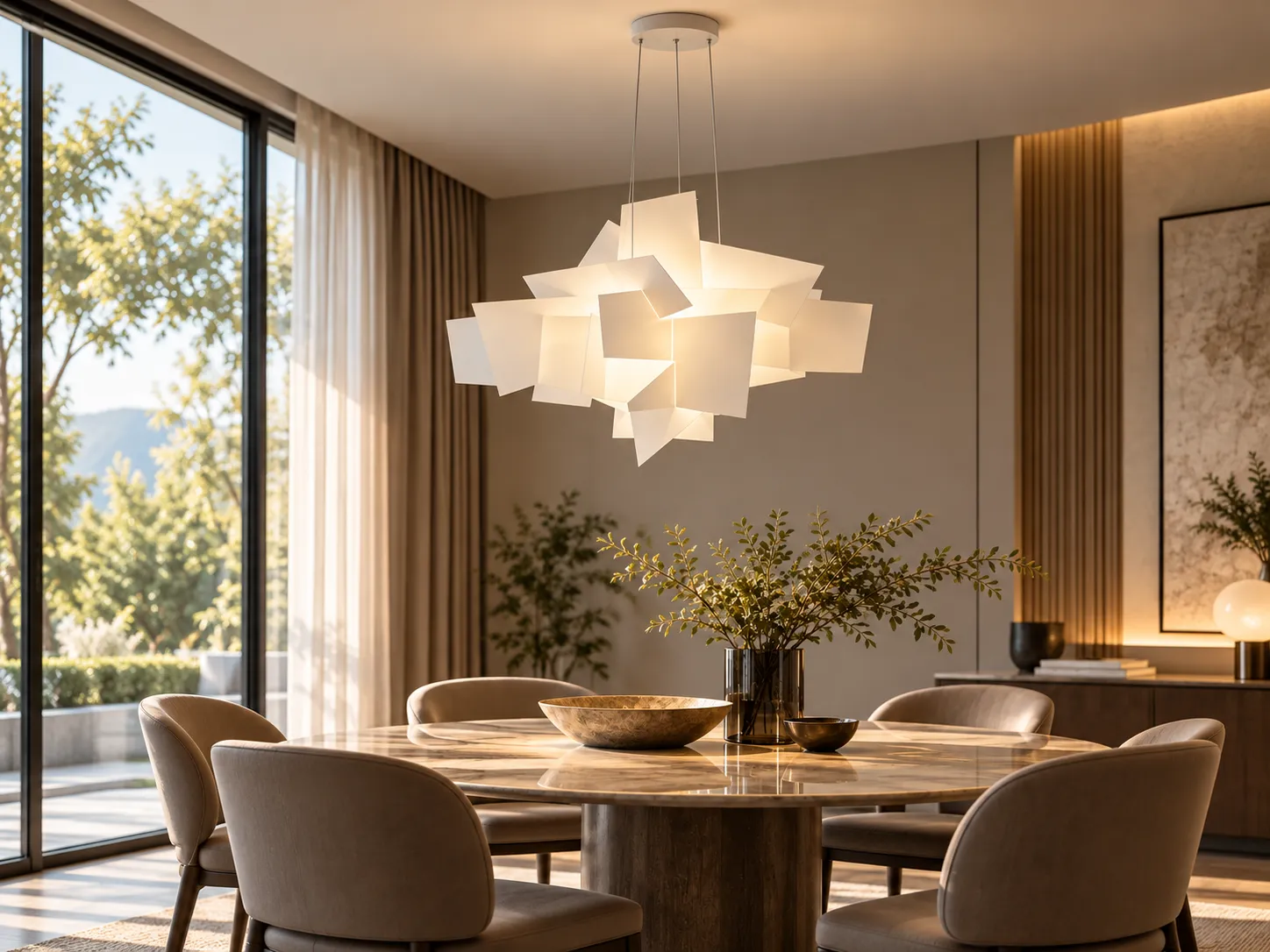

A practical guide to styling a layered, matte-white geometric pendant in dining rooms, living spaces, and contemporary interiors.
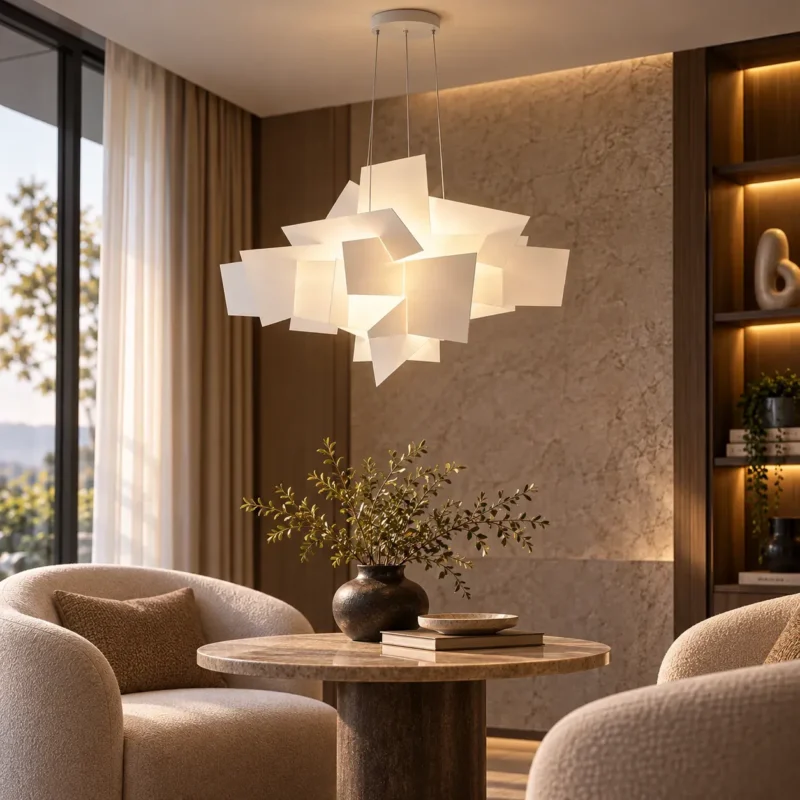
Lighting does more than make a room visible. A thoughtfully chosen pendant can organize the composition of a space, frame the furniture below it, and create a visual focal point even when switched off. The Modern Sculptural Acrylic Pendant Light by xunlulighting takes this idea literally: irregular matte-white acrylic panels form a three-dimensional arrangement of overlapping planes, giving the fixture the presence of a contemporary sculpture.
Its expressive silhouette works particularly well in interiors that balance restrained materials with one memorable architectural detail. Below, we look at how its form interacts with light, where to install it, and which practical checks matter before choosing a size.
1. Why geometric pendant lighting feels architectural
The fixture is built around layered acrylic panels rather than a conventional continuous shade. As the viewing angle changes, the overlap between panels changes too, making the pendant look different from across the room, beneath the fixture, and near a window. The matte-white finish keeps the shape visually cohesive and helps it pair with wood, stone, warm neutrals, and simple cabinetry.
In design terms, the contrast is the point: an irregular light silhouette creates energy, while nearby flat cabinet fronts, quiet walls, and clean-lined furniture give the eye somewhere to rest. For a sophisticated result, repeat one or two materials already in the room instead of introducing many competing statement pieces.
2. What the layered acrylic panels do to light
The product description emphasizes soft ambient illumination. From an optical perspective, surface transmission, internal reflection, panel overlap, and the location of the light source all influence what a person sees. Layering can create bright and shadowed regions that make the fixture itself visually interesting. However, a photograph alone cannot prove a particular glare rating, illuminance level, or light-distribution performance.
Good visual comfort depends on factors such as source brightness, visible area, viewing angle, and background brightness. The Illuminating Engineering Society (IES) defines glare in terms of luminance differences large enough to cause discomfort or reduce visibility. In practice, evaluate the lamp at seated eye level as well as while standing, and avoid relying on a decorative pendant as the only light for demanding tasks.
3. Where this statement pendant works best
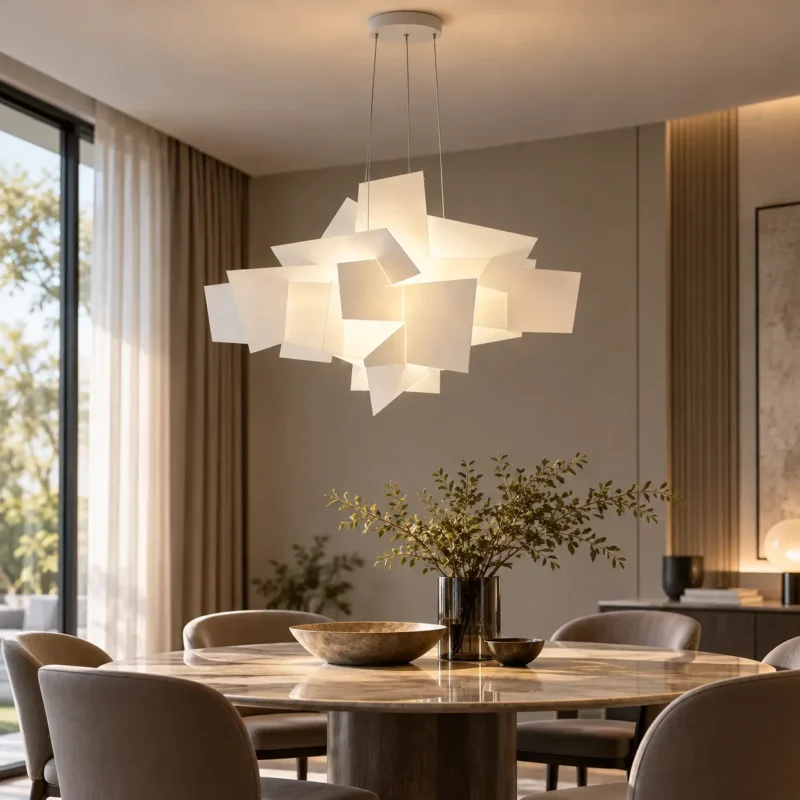
Above a dining table
A dining table provides a natural visual anchor for an expressive pendant. Centering the fixture over the table creates a clear connection between the sculptural form and the furniture. For a comfortable sightline, a commonly used starting point is to position the lowest part of a pendant approximately 75–90 cm (30–36 in) above the tabletop, then adjust for ceiling height, fixture depth, and the people using the room. This is a design starting point, not a universal installation rule.
In a living room or lounge
Over a low central table, the layered pendant can establish a cozy social zone without adding visual clutter at floor level. Check standing circulation routes and head clearance: larger fixtures are better suited to generous ceilings or locations where people will not pass directly underneath. Combine the pendant with wall or floor lamps so brightness can be adjusted for reading, conversation, or evening relaxation.
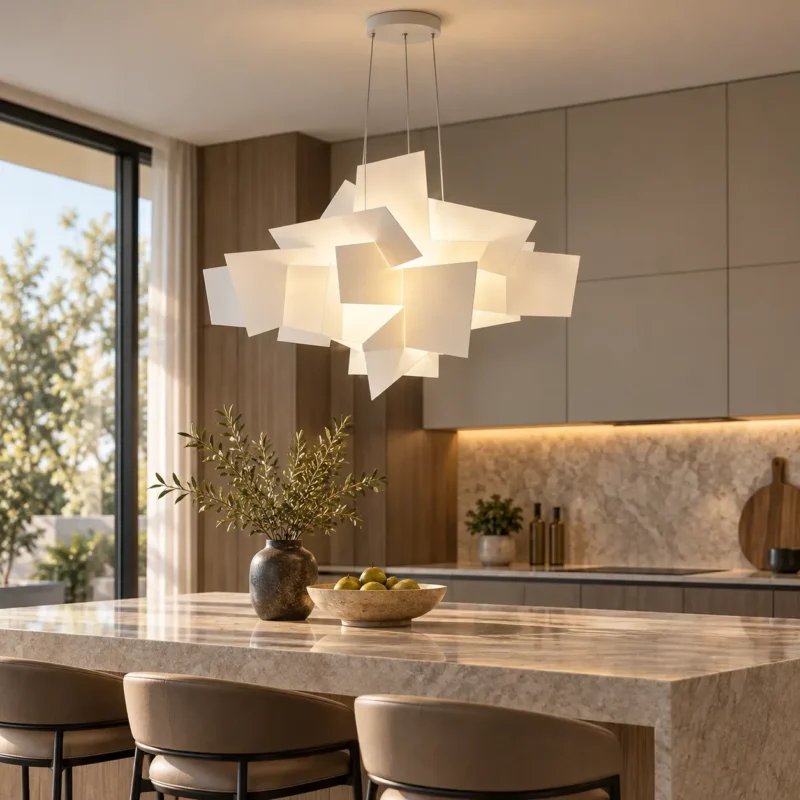
Above a kitchen island
A single oversized pendant can look particularly clean above a long island with minimal detailing. But food preparation needs task illumination at the work surface. Verify that the fixture provides enough useful light and supplement it with under-cabinet or other task lighting where necessary. Keep sightlines open across the island and account for any overhead cabinetry or extraction equipment.
4. Choose proportions before choosing style
The xunlulighting product page currently lists three size options. Consider the overall fixture width and body height together, since this pendant has more vertical depth than a flat ring-style light.
| Listed Fixture Size | Approx. Imperial Equivalent | Styling Consideration |
|---|---|---|
| 65 × 45 cm | 25.59 × 17.72 in | Smaller dining zones and lounge settings |
| 90 × 60 cm | 35.43 × 23.62 in | Larger dining rooms and generous living spaces |
| 144 × 99 cm | 56.69 × 38.98 in | Double-height or expansive interiors |
Dimensions are taken from the product listing; confirm the selected variant and final suspension drop before ordering. Recommendations above are illustrative, not room-size guarantees.
5. Color temperature, brightness and layered lighting
The U.S. Department of Energy describes 2700–3000 K as a warm/soft-light range, often suited to intimate residential settings. This is useful background for planning a warm interior, not a claim that this specific pendant is supplied at 2700 K or 3000 K: the product page does not currently state a confirmed correlated color temperature (CCT). Request the available light-color options before purchase.
Brightness should be evaluated in lumens and on-surface illuminance, not just wattage. The listing does not currently specify lumens or watts, so neither can be responsibly estimated from the photographs. A lighting plan usually works better with several roles: general ambient light, task light where work happens, and accent light that brings out texture or architectural details. The IES discusses this layered approach as a way to give spaces depth and visual hierarchy.
Energy efficiency also depends on the actual light-source technology and electrical specifications. The DOE notes that modern LED technologies can consume substantially less energy than traditional incandescent lamps, but this general comparison should not be treated as a tested performance claim for the pendant without its technical datasheet.
6. A quick pre-installation checklist
- Measure the room, ceiling height, table or island width, and the full vertical drop (fixture body plus suspension).
- Confirm the chosen diameter/height variant, canopy location, and whether the adjustable suspension suits the ceiling.
- Ask the supplier to verify wattage, lumen output, CCT, voltage, dimming compatibility and any relevant certification for your market.
- Check wiring and ceiling support with a qualified electrician; use mounting hardware suitable for the fixture weight and ceiling structure.
- View the proposed hanging position from seated and standing eye levels; plan separate task lighting if the room requires it.
7. Styling details that make the fixture stand out
Keep surrounding colors quiet: off-white, taupe, sand, charcoal accents, and natural oak all complement matte-white acrylic. Textured stone or softly grained wood adds depth without fighting the geometric form. During the day, natural light can emphasize the silhouette; after dark, use gentle perimeter lighting to prevent the pendant from becoming an isolated bright point against an otherwise dark room.
For an intentional interior, treat the light as a piece of hanging art. Leave enough space around its outer edges, avoid placing another similarly intricate object immediately beside it, and allow its outline to be seen clearly from the principal entry and seating positions.
Final thoughts: a pendant that gives a room its identity
The appeal of a sculptural geometric pendant is not simply its brightness. It is the combination of visual rhythm, layered surfaces, and the way the fixture relates to furniture and architecture. The Modern Sculptural Acrylic Pendant Light offers a distinct contemporary focal point in a restrained matte-white palette. Match its scale carefully, plan complementary lighting, and verify technical details for your actual room to achieve a result that is beautiful as well as functional.
Modern Sculptural Acrylic Pendant Light | Click to view the product