

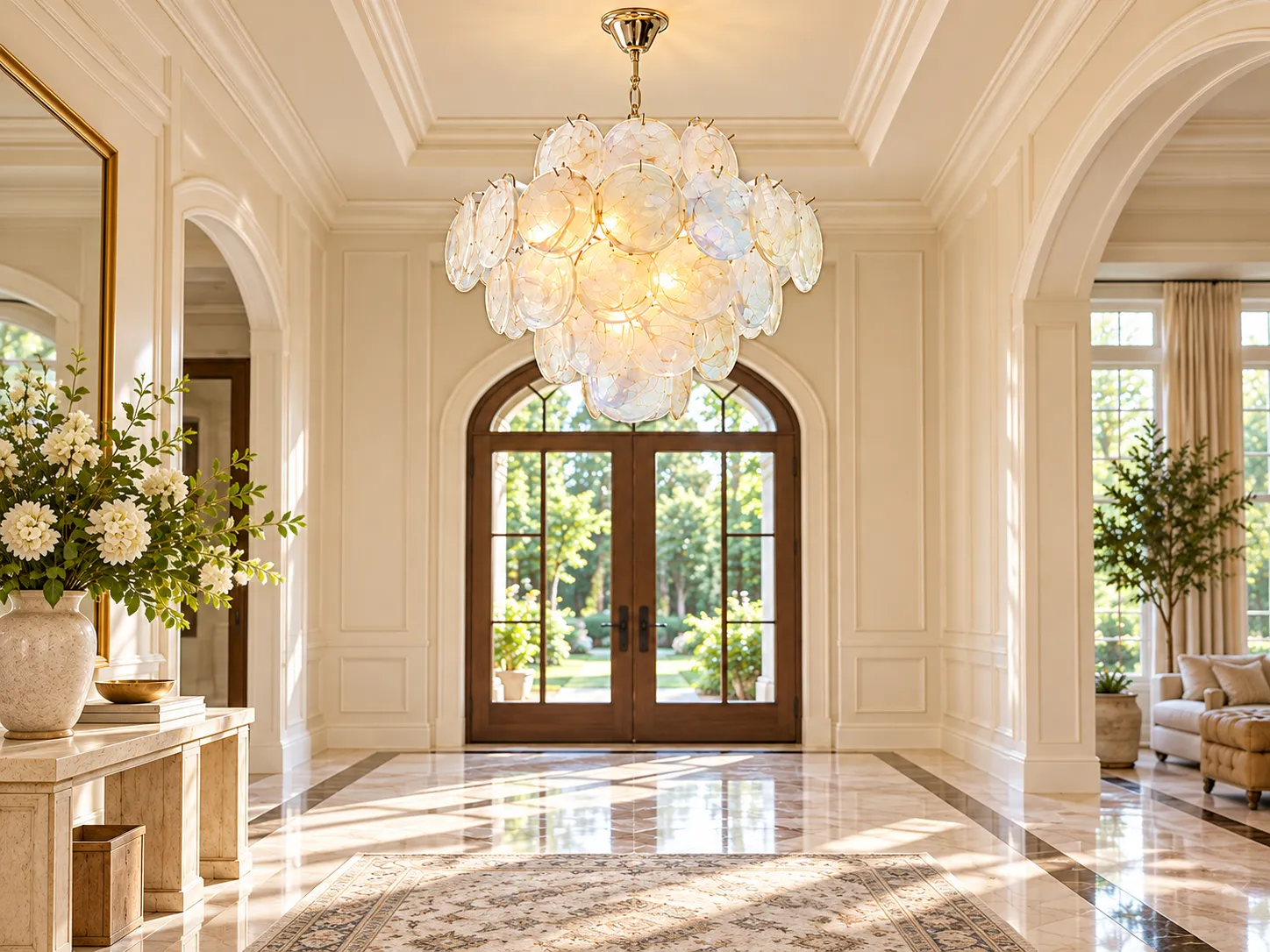

A practical design guide to glass texture, lighting comfort, room styling and chandelier placement.
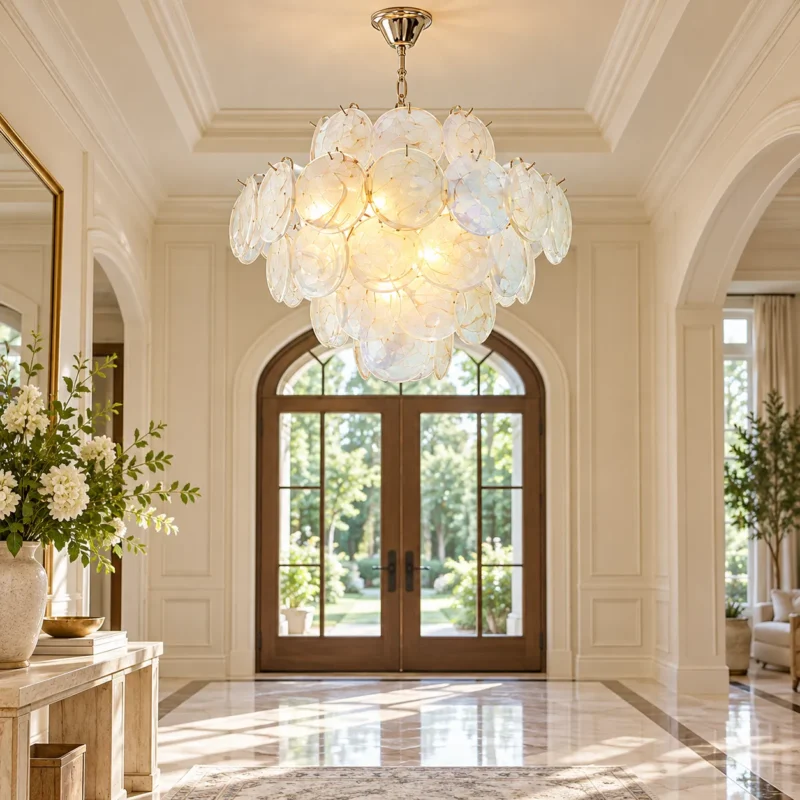
A memorable chandelier does more than illuminate a room. It introduces shape, color, texture and a focal point that changes subtly between daylight and evening. The Art Glass Disc Chandelier by xunlulighting pairs clustered, handmade textured glass discs with a sculptural outline, creating a decorative statement suited to classic-modern foyers, inviting living rooms and refined dining spaces.
1. Why layered glass makes lighting feel more dimensional
Flat, clear glass and textured glass do not distribute light in the same visual way. Irregular surfaces change the directions in which light is transmitted and reflected, increasing the apparent complexity of highlights. The layered disc arrangement also creates overlap and depth: some areas appear luminous, while others remain translucent or softly shadowed. These are optical effects, not a guarantee that the fixture eliminates glare or provides uniform task lighting.
In daylight, colored discs become decorative objects in their own right. After dark, their appearance depends on the bulb spectrum, the chosen light setting, surface finish and surrounding wall colors. This makes art-glass lighting especially effective when the room has relatively calm furniture and material finishes.
2. Three colorways, three design moods
White iridescent: subtle texture and quiet luxury
The white iridescent option pairs naturally with pale stone, cream upholstery, light oak, warm plaster and restrained metallic accents. Its lightly shifting reflections add detail without competing with the architecture. It is an appealing choice for an entrance hall where visitors view the chandelier from several angles.
Pink: a gentle accent for soft, layered rooms
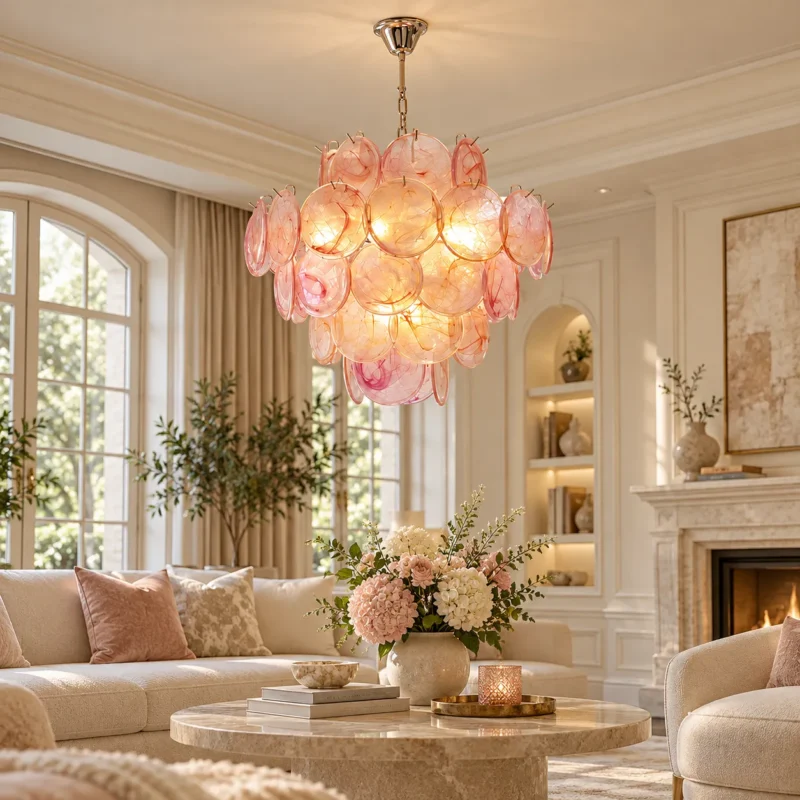
The pink version introduces a romantic tone that works with ivory fabrics, champagne metals, muted taupe and floral arrangements. To keep the space contemporary, repeat pink only once or twice in smaller accessories instead of matching every furnishing to the fixture. Note that the perceived pink saturation can change under different bulb settings and ambient daylight.
Multicolor: expressive art in an architectural setting
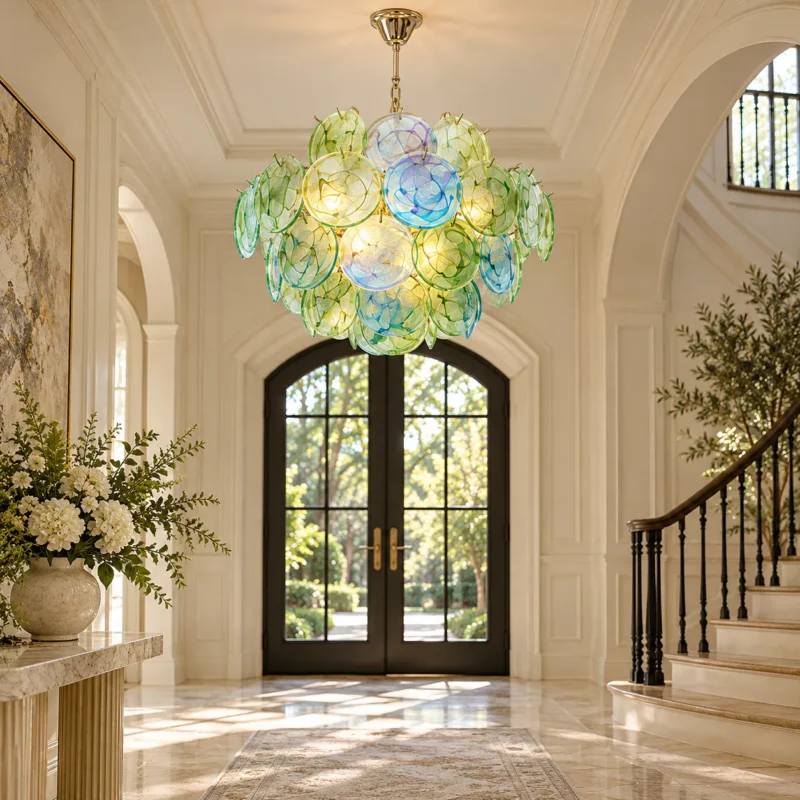
Blue-green and multicolor tones create a more playful, gallery-like centerpiece. Keep adjacent surfaces simple so the discs can carry the visual interest. This option is particularly striking in an open foyer with neutral walls and substantial ceiling height. The supplied lifestyle photographs illustrate styling; they are not measured photometric demonstrations.
3. The science of comfortable ambient light
A chandelier should be considered part of a layered lighting plan. General illumination supports movement, task lighting supports activities such as reading, and accent lighting brings attention to architectural or decorative details. Decorative glass may create attractive sparkle, but it does not by itself establish how much useful light reaches a table or the floor.
Illuminance is measured in lux (lumens per square meter). Actual room illuminance depends on bulb output, luminaire construction, mounting height, room dimensions and surface reflectances. Two chandeliers with the same number of bulbs can perform differently. For this product, lumens and wattage depend on the selected E14 bulbs, so numerical lux claims would require lamp specifications or measurements.
Correlated color temperature (CCT) describes whether white light appears warm or cool. Warm white settings are commonly used for relaxed residential ambience; neutral settings can suit brighter everyday use. However, the product lists “tricolor light” without publishing exact kelvin values, so buyers should confirm the supplied lamp options. Bulb color rendering also matters: higher-quality color rendering helps glass, artwork, textiles and food appear more natural.
4. Where to hang an art-glass chandelier
Foyers and entrance halls
An entry chandelier works best where it can be seen clearly from the front door and from upper-level viewpoints without obstructing circulation. Plan around the fixture’s complete suspended height—not just its glass body. The ceiling structure and junction box must support the chandelier’s weight; have a qualified installer check local electrical requirements.
Living rooms
Position the fixture to complement the conversation area rather than forcing it into a geometric center unrelated to the furniture. Combine it with adjustable lamps, wall lighting or concealed architectural lighting, so the chandelier can remain a visual highlight without doing every lighting job.
Dining rooms
Above a dining table, an initial design guideline is around 76–91 cm (30–36 in) between the tabletop and the bottom of the chandelier under a typical 2.4 m (8 ft) ceiling; adjust for sightlines, fixture scale and room geometry. This is a starting point, not a universal code requirement. Do not apply dining-table clearance rules to chandeliers hung above walkways.
5. Confirmed product details at a glance
| Attribute | Published Product Detail |
|---|---|
| Construction | Metal + handmade textured art glass discs |
| Color Options | Pink / White Iridescent / Multicolor Iridescent |
| Diameter | 60 cm (23.62 in), all three colors |
| Fixture Height | Pink: 55 cm (21.65 in); White / Multicolor: 58 cm (22.83 in) |
| Lamp Holders | 9 × E14 |
| Voltage | 110–240 V (verify local lamp compatibility) |
| Suspension | 50 cm (19.69 in) adjustable chain |
| Ceiling Canopy | 12 cm (4.72 in) diameter |
| Light Settings | Tricolor; exact Kelvin values not published |
| Power / Lumens | Depend on the selected E14 lamps |
| Use | Indoor |
The seller lists a recommended coverage area of 15–20 m²; consider it indicative rather than a verified illuminance rating. Confirm the actual lamp package and ceiling drop before ordering.
6. Choosing bulbs and planning maintenance
Select E14 bulbs within the manufacturer’s allowable wattage, dimensions and thermal limits. Where dimming is wanted, confirm that the actual bulbs, controls and any included electronics are compatible; a selectable tricolor setting does not automatically mean smooth dimming is supported. Clean only when cool and disconnected from power. Use a dry or slightly damp soft cloth, avoid abrasive cleaners and support each glass disc while handling it. Follow the supplied product care and installation instructions.
7. A statement piece that still feels livable
The strongest interiors balance one expressive object with a quieter supporting palette. Let the glass-disc chandelier provide the movement and light play; use consistent wood, stone and textile colors to hold the room together. For a more refined evening scene, pair the chandelier with lower-level sources so the space has both a glowing focal point and comfortable functional illumination.
Art Glass Disc Chandelier-Click to view the product