

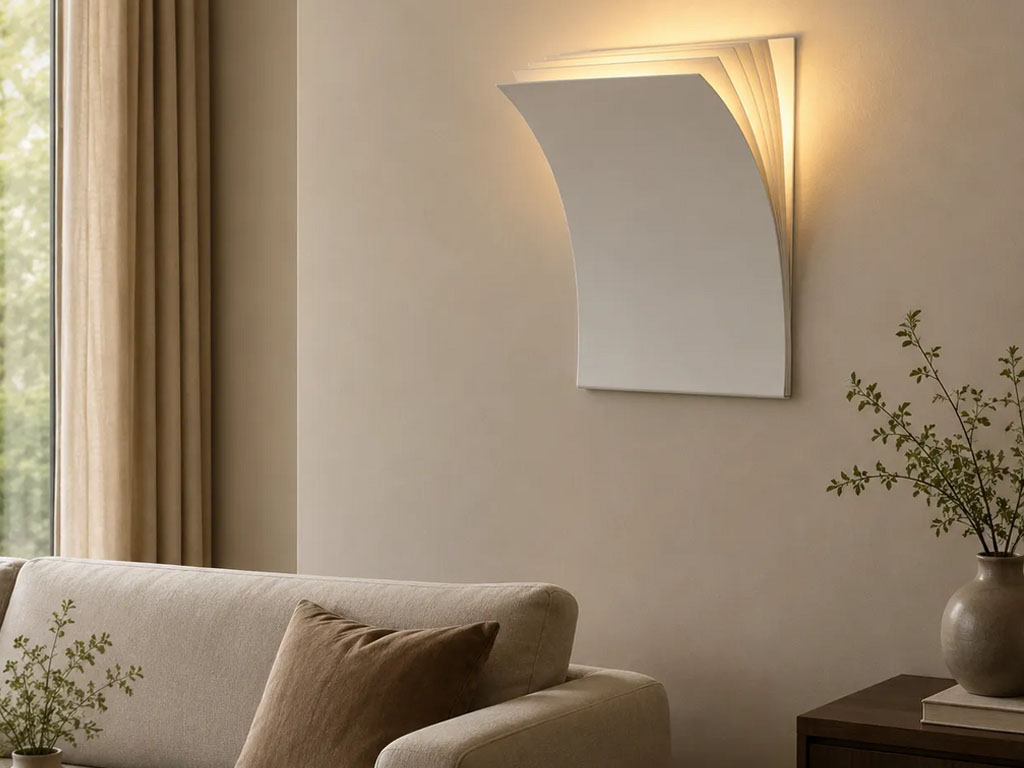

How glass, natural shell, wood, and metal change light at home
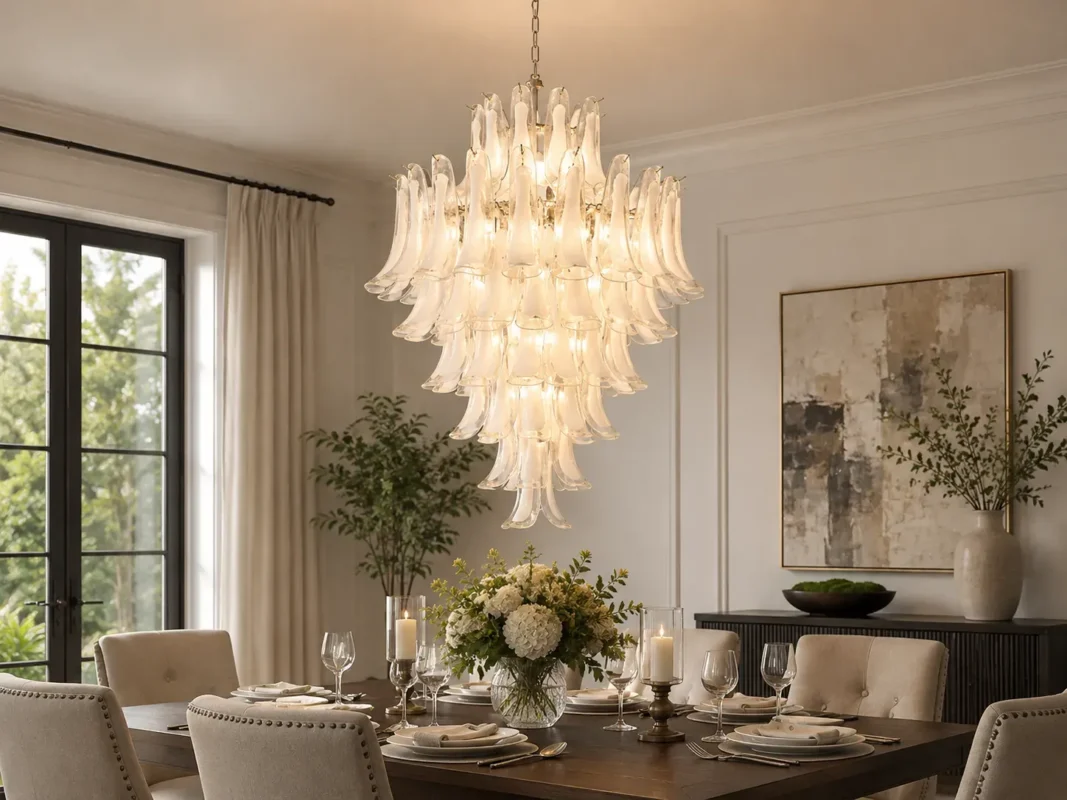
A lampshade is not just decoration. It is an optical component that controls how much light leaves the fixture, where that light travels, how bright the source appears, and how colors and textures are perceived in the room.
Prepared for Xunlu Lighting | August 2026
Why Material Changes the Lighting Experience
When light reaches a shade, three processes compete: transmission, reflection, and absorption. Some light passes through the material, some is redirected back into the fixture or room, and some becomes heat. The ratios vary with wavelength, thickness, surface finish, pigment, internal texture, and angle of incidence. CIE measurement guidance treats reflectance and transmittance as material characteristics that can be measured spectrally or as weighted luminous values [1].
This is why two fixtures using the same LED bulb can feel completely different. A clear glass shade can preserve sparkle and high source contrast. Opal glass can scatter rays over a wider angle, increasing the apparent luminous area. Opaque metal blocks transmission but can redirect light through openings. Natural shell may transmit light unevenly, revealing organic texture. Wood usually works as a structure or reflector rather than a diffuser, adding visual warmth around the source.
Four Optical Questions to Ask
- How much light is transmitted? A heavily diffusing or dark shade may reduce delivered lumens. Decorative beauty and usable illuminance must be balanced.
- How widely is light scattered? A diffuser can reduce the apparent intensity of a small source by spreading light across a larger luminous surface. CIE defines diffusion using measurable directional properties rather than a simple “soft” or “hard” label [2].
- Where is the source visible? A bright filament or LED point in the normal field of view can create discomfort even if total room illuminance is modest.
- Does the material alter the spectrum? Colored or naturally tinted materials can transmit some wavelengths more readily than others, subtly changing the appearance of skin, wood, textiles, and food.
Glass: From Sparkle to Soft Diffusion
Glass is unusually versatile because it can be clear, frosted, etched, ribbed, seeded, opal, colored, or layered. Clear glass transmits a high proportion of visible light and preserves sharp highlights. This is useful when sparkle, filament visibility, or optical clarity is part of the design. The trade-off is that the lamp itself may become the brightest object in the scene, increasing glare risk.
Frosted and opal glass contain surface roughness, particles, microbubbles, or internal structures that scatter light. NIST research on fused-silica diffusers shows that engineered scattering centers can produce broad angular transmission and strong spatial uniformity [3]. In residential terms, that means a larger luminous surface, softer shadow edges, and fewer intense points—although some output is lost through absorption and repeated internal reflection.
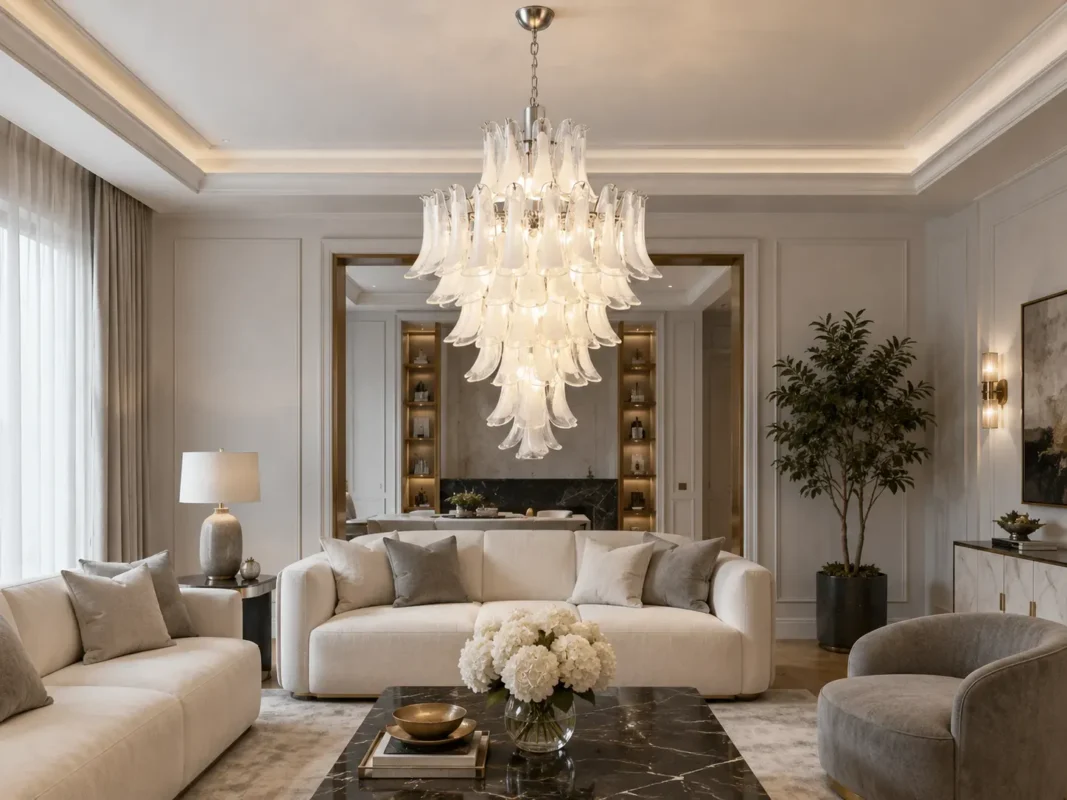
Layered curved glass creates another effect: each piece catches and redirects light from a different angle. The result is visual depth and controlled sparkle rather than a flat, uniform glow. For a dining room or living room, this can produce a strong focal point while keeping the source partially screened.
Natural Shell: Organic Texture as a Light Filter
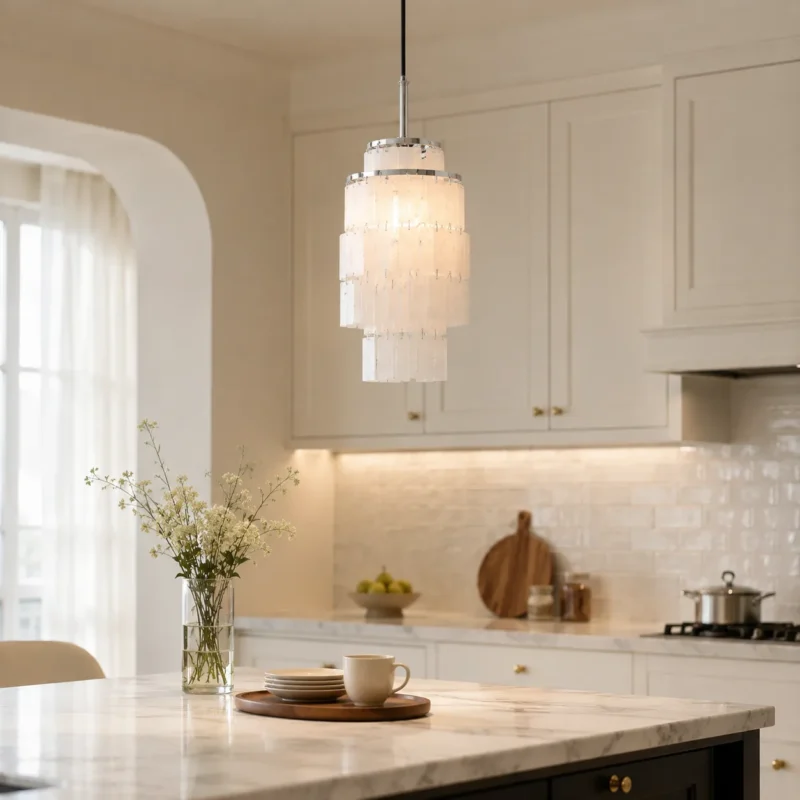
Natural shell is not optically uniform. Variations in thickness, mineral structure, color, and surface finish cause some areas to transmit more light than others. Instead of producing the perfectly even appearance of engineered opal glass, shell creates a textured luminous pattern. That irregularity is the point: it makes the material visible, not just the lamp behind it.
Because each shell element is small, a layered shade can break one bright source into many overlapping reflections and transmissions. The eye perceives a decorative field of highlights while direct views of the lamp are reduced. However, the shade should not be assumed to provide high task illuminance. A separate task layer may still be needed over a kitchen counter, reading chair, or desk.
Metal: Shape and Direction Matter More Than Transmission
Metal is opaque, so its lighting behavior comes from reflection, geometry, openings, and surface finish. A polished surface produces stronger directional highlights; a matte or textured finish spreads reflections more broadly. The inside finish of a shade can be as important as the outside: a pale interior may return more light, while a dark interior can absorb more output and create a tighter pool.
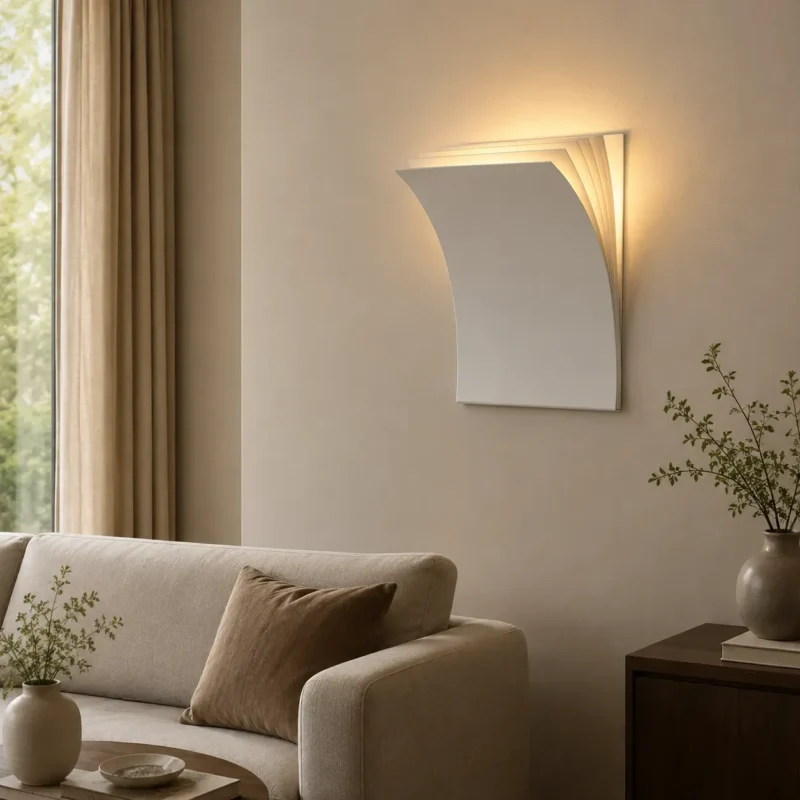
Curved metal shades can hide the source completely and send light toward a wall or ceiling. The illuminated surface then becomes a secondary source. This indirect strategy often feels comfortable because the apparent light-emitting area is larger and the brightest LED or bulb is outside the normal viewing angle. It also adds vertical brightness, which helps a room feel visually balanced.
Wood: Visual Warmth, Contrast, and Controlled Exposure
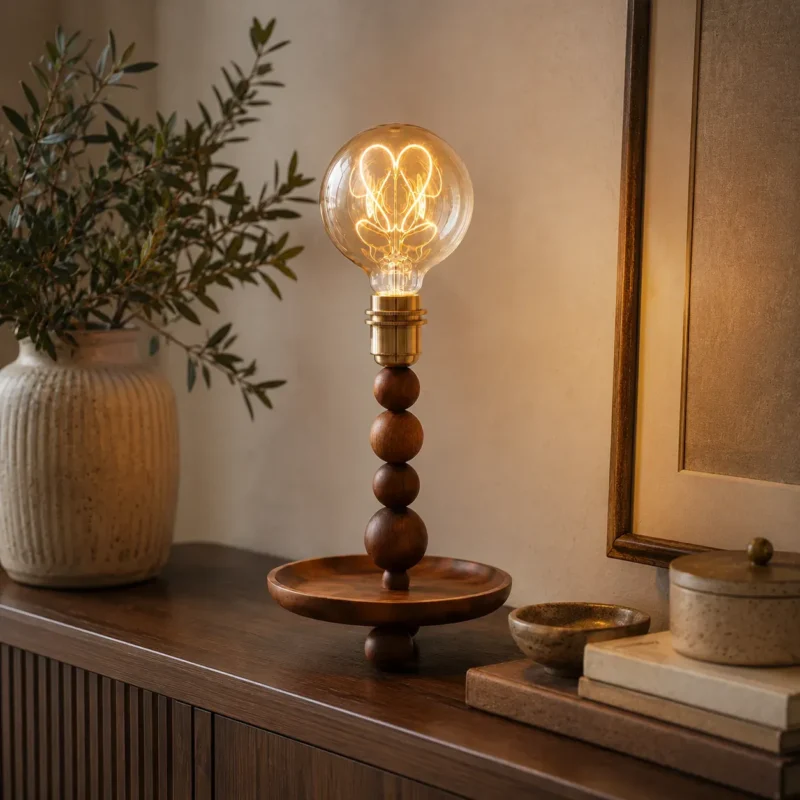
Wood rarely functions as a translucent diffuser. Instead, it shapes the fixture, frames the source, and contributes a low-gloss, warm-toned surface around the light. Grain and finish affect reflection: matte wood tends to suppress sharp highlights, while lacquered wood can produce stronger specular reflections.
A clear-globe table lamp with a wooden base intentionally preserves the luminous character of the bulb. That makes lamp selection critical. A low-lumen decorative LED can create a warm visual point, while a high-output clear bulb at eye level may become uncomfortable. The fixture should therefore be treated as atmospheric light, with reading or desk tasks supported by a shielded source if necessary.
Material Does Not Replace Good Light-Source Data
A beautiful shade cannot correct a poor-quality LED. The source still determines luminous flux, color temperature, spectrum, flicker performance, dimming behavior, and much of the color-rendering result. The U.S. Department of Energy notes that CRI is a basic fidelity metric and that TM-30 provides a more detailed picture of color fidelity and gamut using a much larger set of color samples [4][5].
The shade can then modify that source. A tinted material may selectively absorb wavelengths. A dense diffuser may reduce output. A clear material may reveal multiple images of the filament through reflection and refraction. Therefore, review the lamp and shade as one optical system, not as separate purchases.
How to Match Material to the Room
Living room
Use layered or diffusing glass when you want a visible centerpiece with softer source brightness. Add a metal wall light or shaded floor lamp for indirect light on vertical surfaces. Avoid depending on one decorative chandelier for every activity.
Dining area
Glass and shell pendants work well when the goal is atmosphere and material expression. Check the bottom view from seated eye level. If the bulb is visible, choose lower source luminance, add a diffuser, or raise the fixture while maintaining comfortable light on the table.
Bedroom
Favor shades that block direct views of the source: opal glass, fabric-lined designs, or metal fixtures that bounce light onto the wall. Transparent decorative lamps can still work as accents, but they should be dimmable or low output and positioned outside the primary sightline from bed.
Kitchen
Decorative material can define the island or dining edge, but countertops need direct task light. A translucent pendant above the island should be supplemented with under-cabinet lighting so the body does not cast shadows over preparation surfaces.
Hallway and entry
Indirect metal sconces are useful where the fixture is close to eye level. Their shielding reduces direct source visibility, while wall illumination improves orientation and makes narrow spaces feel less tunnel-like.
A Practical Specification Checklist
- Ask whether the shade is clear, diffusing, opaque, reflective, or spectrally tinted.
- Check the fixture from the actual seated and standing viewpoints—not only from the front photograph.
- Confirm whether the light source is replaceable and which lamp shape, lumen output, and base are compatible.
- For LEDs, review CCT, CRI or TM-30 data, dimming compatibility, driver quality, and flicker performance.
- Compare decorative output with the illuminance required at the real task plane.
- Verify heat management, maximum lamp wattage, electrical certification, and damp- or wet-location rating where applicable.
- Allow for natural variation in shell, wood, stone, and hand-finished glass; sample approval matters for large projects.
- Plan cleaning access. Dust and fingerprints change transmission, reflection, and sparkle over time.
Conclusion
The material around a light source determines whether illumination is concentrated, scattered, reflected, colored, or concealed. Clear glass celebrates sparkle; diffusing glass enlarges the apparent source; shell adds organic luminous texture; metal creates direction and shielding; wood frames the light with warm visual contrast. The best result comes from matching those optical behaviors to the activity, sightline, and atmosphere of the room.
Treat every luminaire as a complete system: source, shade, optics, mounting position, room surfaces, and controls. When these parts are coordinated, decorative lighting can remain expressive without sacrificing visual comfort or useful illumination.