

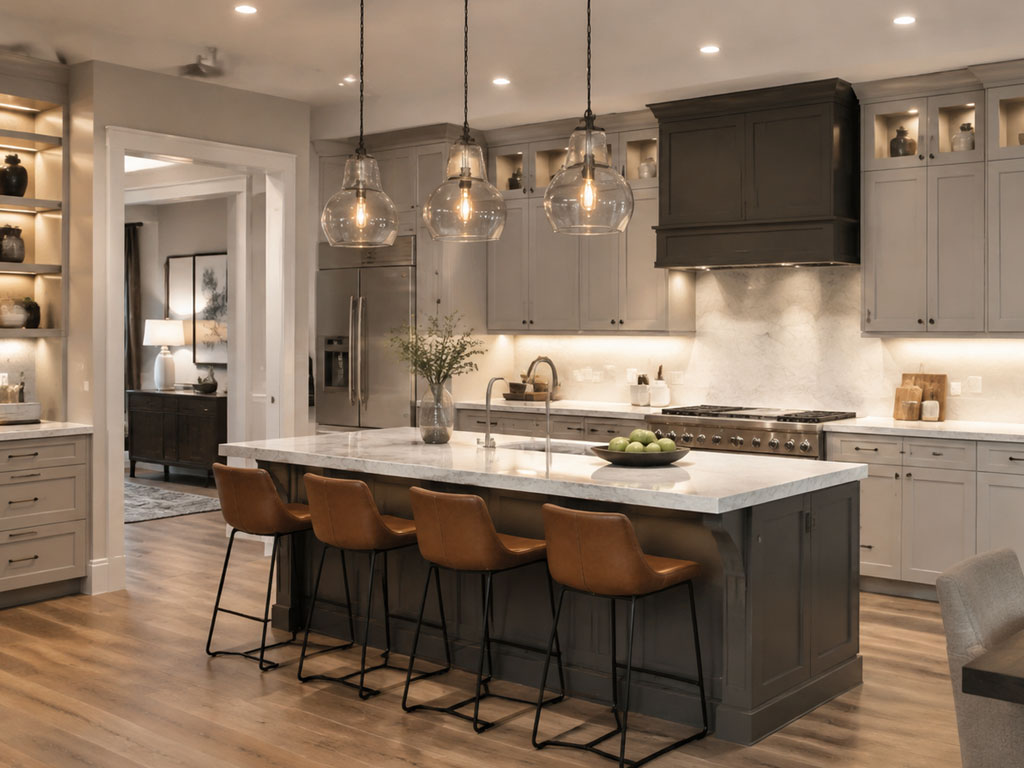

A practical guide to layered light, color temperature, visual comfort, and better evenings
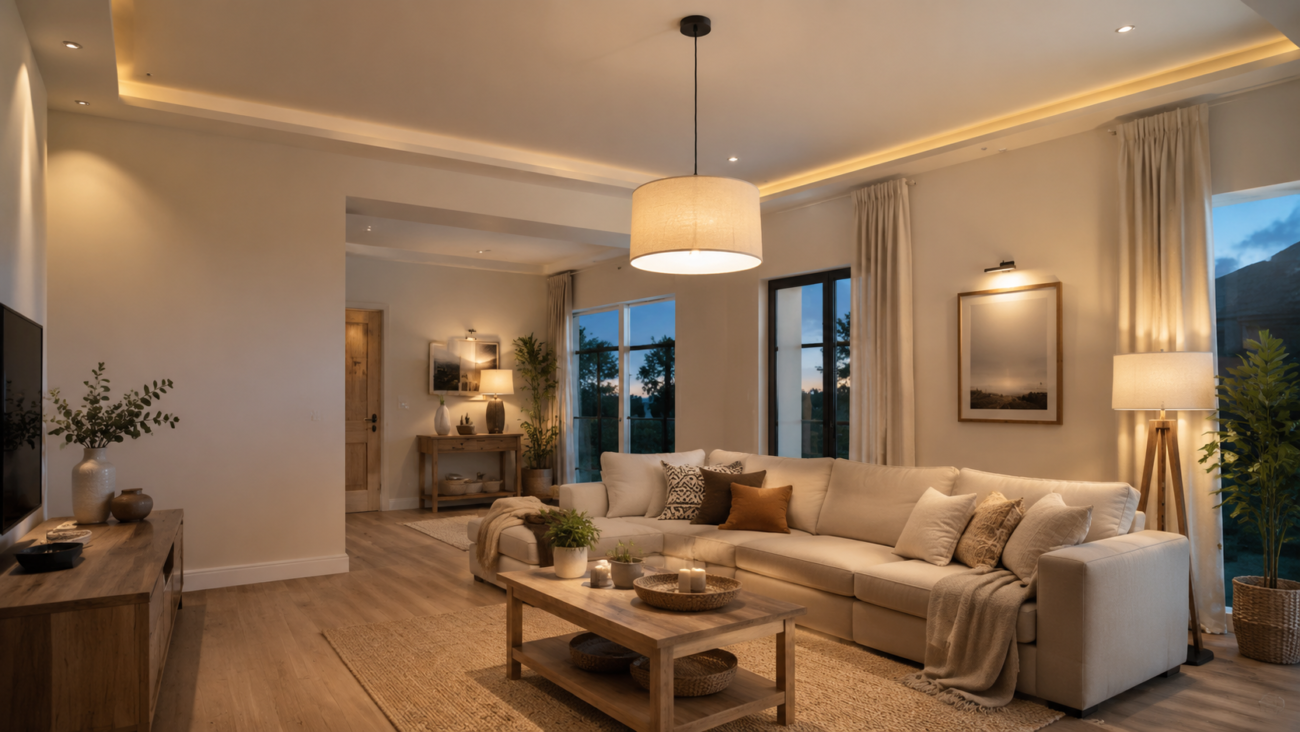
Good home lighting is not measured by how bright a ceiling looks. It is measured by whether people can see comfortably, perform tasks accurately, relax at the right time, and move through the home safely—without glare or wasted energy.
Prepared for Xunlu Lighting | August 2026
Why Light Affects More Than Vision
Light has two simultaneous jobs in the home. The first is visual: it helps the eye distinguish shape, contrast, texture, and color. The second is biological: light reaching the retina also provides timing signals to the body’s circadian system. The International Commission on Illumination (CIE) formalizes this non-visual pathway through CIE S 026, which describes how optical radiation stimulates five photoreceptor classes, including melanopsin-containing intrinsically photosensitive retinal ganglion cells.
That does not mean every home needs laboratory-grade “circadian lighting.” It means timing, intensity, spectrum, direction, and duration all matter. Bright light during the day—especially daylight—helps reinforce daytime alertness. In the hours before sleep, lower light levels and warmer, less short-wavelength-rich sources are generally the safer design choice. Systematic reviews find that evening light can delay circadian timing and suppress or postpone the normal rise of melatonin, although the size of the effect varies by person and exposure pattern.
The Core Method: Three Layers, Three Jobs
A single ceiling fixture must compromise between comfort, task visibility, and atmosphere. Layered lighting separates those jobs, so each source can be positioned and controlled more intelligently.
- Ambient light: Provides general orientation and comfortable background brightness. Examples include diffuse pendants, ceiling lights, recessed lighting, and indirect cove lighting.
- Task light: Places useful illuminance where detailed work happens: reading, chopping food, applying makeup, working at a desk, or sorting laundry.
- Accent light: Adds depth by lighting art, textured walls, shelves, plants, or architectural surfaces. It creates visual hierarchy instead of making every surface equally bright.
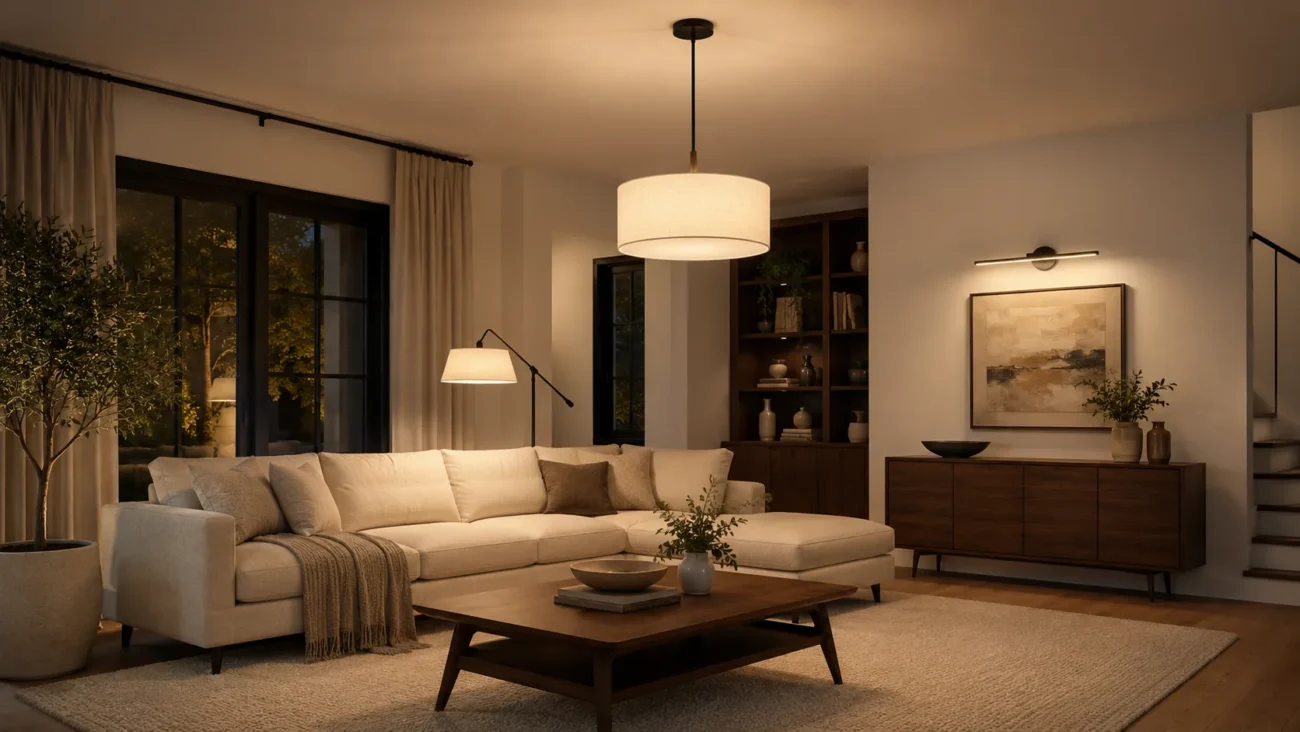
Plan Light Across the Day, Not Just Across the Room
Morning and daytime
Open curtains and blinds early, and organize daytime activities near windows when possible. Daylight is typically much more intense than ordinary indoor electric light and provides a strong time-of-day signal. If daylight is limited, use brighter ambient light in occupied areas and neutral-white task light where concentration matters. Avoid forcing a fixed color-temperature rule: illuminance at the eye and duration of exposure matter alongside CCT.
Late afternoon and evening
Begin reducing the brightest ceiling sources one to three hours before bedtime. Shift emphasis toward shaded table lamps, wall lights, and indirect light located below eye level. Warm sources around 2200–3000 K can support a calmer visual atmosphere, but “warm” does not automatically mean biologically weak: a very bright warm lamp can still deliver a substantial circadian stimulus. Dimming and direction remain essential.
Night navigation
For hallways, stairs, and bathrooms used at night, use the minimum light needed for safe navigation. Shield the source from direct view and aim it at the floor. Motion sensors and short time-outs prevent unnecessary all-night exposure while improving safety.
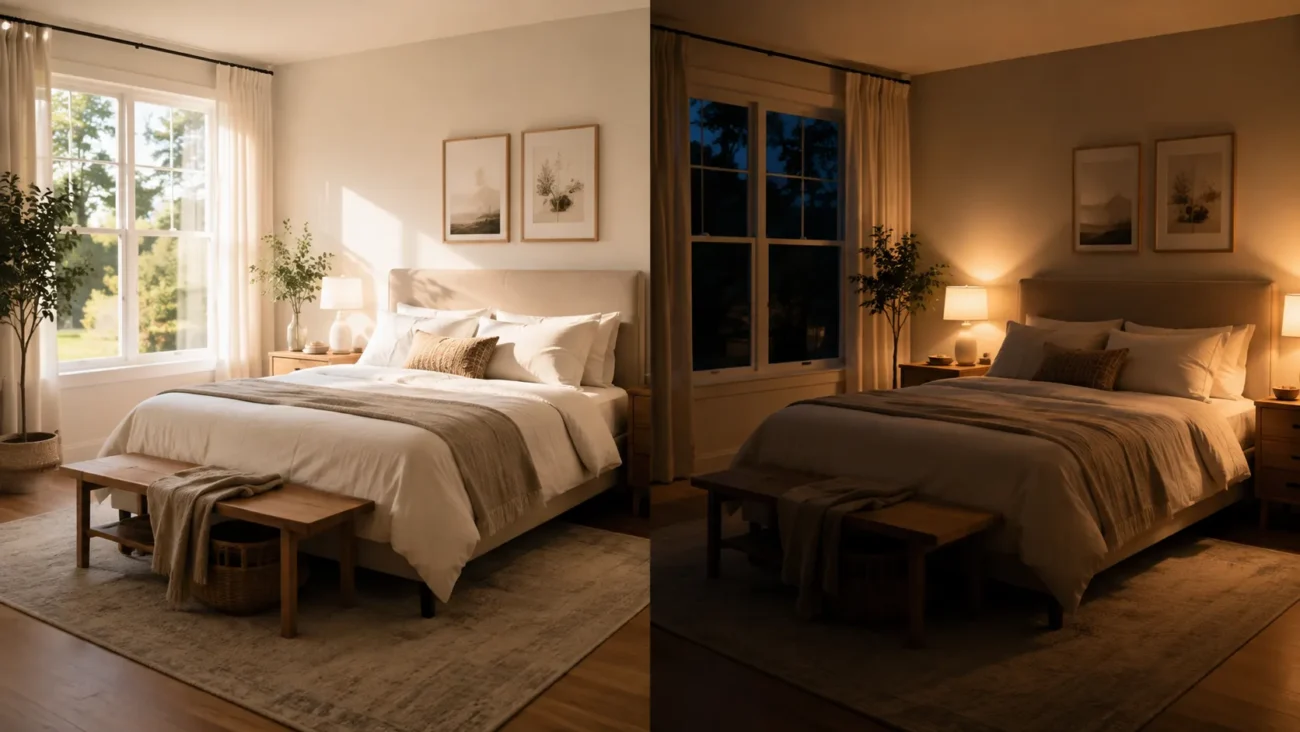
light.
Use Lux to Measure the Result
Lumens describe the light output of a lamp or luminaire; lux describes the light arriving on a surface. One lux equals one lumen per square meter. Because distance, beam angle, reflectance, and fixture optics affect delivery, two 1,000-lumen fixtures can create very different conditions on a countertop or book page.
The ranges below are practical starting points for homes—not a substitute for a project-specific calculation, local code, or the IES Illuminance Selector. Older eyes, low-contrast tasks, dark finishes, and high ceilings may require more delivered light. Measure at the actual task plane with a calibrated meter when accuracy matters.
| Area or Task | Practical Starting Range | Design Note |
|---|---|---|
| Living Room Ambient | 100–200 lux | Keep the background comfortable; add a reading lamp instead of over-lighting the entire room. |
| Reading / Desk Work | 300–500 lux | Place the light on the side opposite your writing hand and control screen reflections. |
| Kitchen Counters | 300–500 lux | Use continuous under-cabinet lighting near the front edge to reduce body shadows. |
| Dining Table | 150–300 lux | A dimmable pendant creates focus while keeping faces comfortable. |
| Bathroom Mirror | 300–500 lux | Use vertical lighting on both sides of the face; avoid relying on a single downlight. |
| Hall / Stair | 50–150 lux | Favor uniformity and visible step edges over raw brightness. |
| Bedroom Evening | Low and dimmable | Use warm, shielded light sources and reduce ceiling light before sleep. |
Color Quality: Look Beyond CCT
Correlated color temperature (CCT) describes the appearance of white light, not its quality. A lower CCT appears warmer; a higher CCT appears cooler. But two lamps with the same CCT can render wood, skin, food, and textiles differently because their spectral power distributions are different.
- CRI: The U.S. Department of Energy notes that CRI 80 is a common minimum for interior lighting, while CRI 90 or higher indicates higher color fidelity. For kitchens, bathrooms, artwork, retail-like displays, and material-rich interiors, 90+ CRI is a useful purchasing target.
- TM-30: For professional selection, IES TM-30 provides richer information than a single CRI number by describing both color fidelity and gamut. It can reveal whether a source subtly increases or decreases saturation.
- Consistency: Use matching or carefully coordinated CCT and color quality within one visual zone. Unplanned mixtures—such as 2700 K pendants beside 6000 K downlights—can make the room feel fragmented.
Glare, Shadows, and Flicker: The Hidden Comfort Factors
Control direct glare
A small, intense source in the field of view can be uncomfortable even when measured illuminance is adequate. Choose diffusers, louvers, deeper optics, frosted shades, or indirect distribution. Check the normal seated and standing sightlines—not only the fixture from directly below.
Use vertical and reflected light
Illuminating walls and ceilings increases the apparent brightness of a space with less harsh contrast than a concentrated downlight-only scheme. Soft vertical light also helps facial recognition and makes small rooms feel more open.
Prevent task shadows
In kitchens, ceiling downlights placed behind the user can cast the body’s shadow onto the countertop. Under-cabinet lighting solves the geometry at the task plane. At mirrors, light on both sides of the face reduces the deep eye and chin shadows caused by a single overhead source.
Specify flicker performance
Poorly designed LED drivers can produce temporal light modulation that is visible or detectable as stroboscopic effects, especially when dimmed or recorded on a phone camera. Ask for tested flicker metrics and confirm compatibility among the luminaire, driver, dimmer, and control protocol. A phone slow-motion check can reveal obvious problems, but it is not a calibrated measurement.
A Room-by-Room Lighting Plan
Living room
Start with dimmable ambient light, then add a reading lamp near the main seat and accent light on one or two vertical surfaces. Put at least two layers on separate controls so the room can shift from cleaning mode to conversation mode.
Kitchen and dining
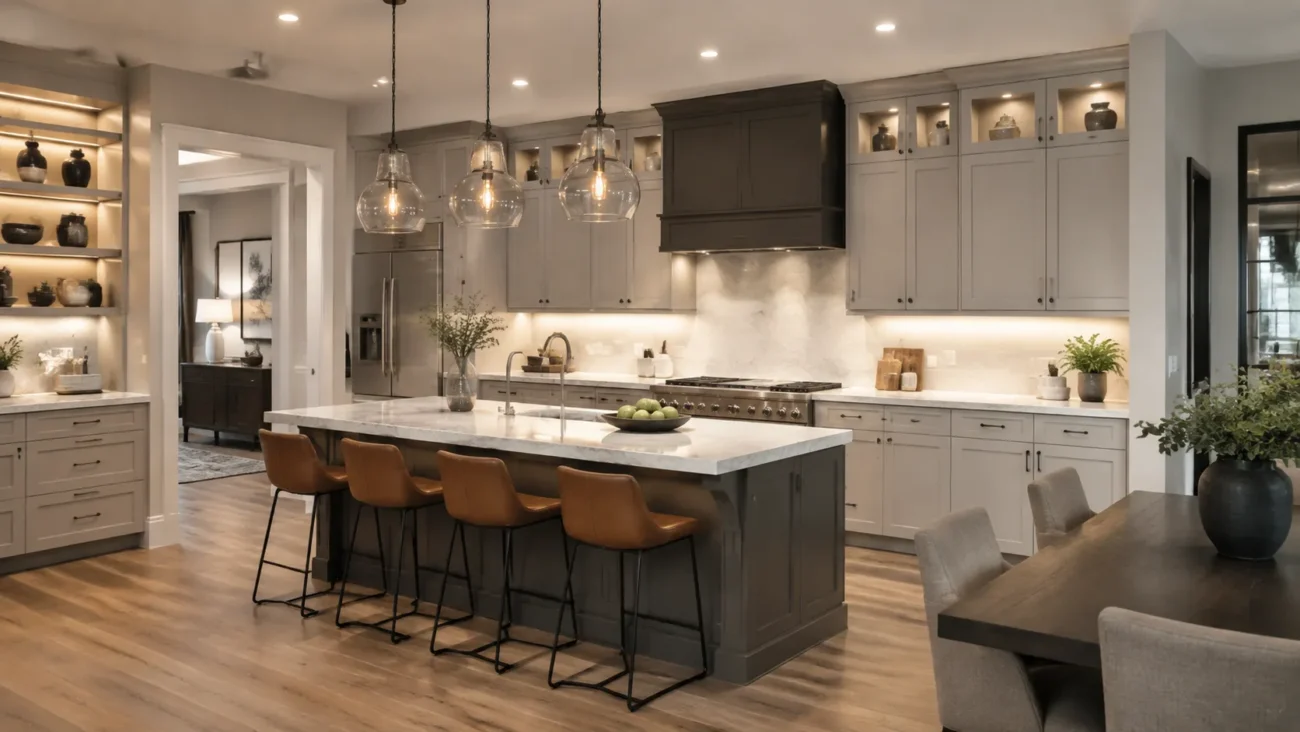
Prioritize countertop illuminance, then add pendants for visual focus and dining ambience. Keep high-output task lighting separate from the dining dimmer. Select high color fidelity so ingredients, finishes, and food look natural.
Bedroom
Use bedside lamps or wall lights that do not expose the eye to a bright bare source. Provide a separate brighter circuit for dressing and cleaning, but make the evening default warm and dimmable. Place switches within reach of the bed.
Bathroom
Light the face vertically from both sides or with a well-diffused mirror luminaire. Add a separate low-output night circuit. Verify the required damp- or wet-location rating for each zone.
Home office
Combine comfortable ambient light with an adjustable task light. Arrange the desk perpendicular to windows when possible and position luminaires so they do not reflect in the display. Use blinds to manage daylight rather than blocking it all day.
Hallways and stairs
Use uniform, shielded light that reveals landings, handrails, and changes in floor level. Motion sensing is useful, but the fade and timeout should feel calm rather than abrupt.
Energy Efficiency Without Sacrificing Quality
LED efficacy matters, but efficiency should be evaluated at the system level. A high-lumen fixture that sends light in the wrong direction may use more energy than a lower-output task light placed close to the work. Separate circuits, dimming, occupancy sensors, daylight-responsive controls, and scheduled scenes reduce operating hours as well as wattage.
A simple annual energy estimate is: watts × hours per day × 365 ÷ 1,000 = kilowatt-hours per year. For example, reducing a frequently used lighting load from 120 W to 60 W for four hours a day saves about 87.6 kWh per year. The actual cost saving depends on the local electricity rate.
Seven Steps to Specify a Better Home Lighting System
- List the activities in each room before selecting decorative fixtures.
- Mark the real task planes: book page, counter, desk, mirror, stair tread, and artwork.
- Assign ambient, task, and accent layers, and decide which layers need independent control.
- Choose CCT by time and function, then verify color quality with CRI and—when available—TM-30 data.
- Check glare from normal viewpoints and confirm that shades, optics, and mounting heights shield the source.
- Verify electrical compatibility, dimming method, driver quality, safety certification, and location rating.
- Commission the finished room at night: measure task illuminance, test scenes, and adjust dimmer limits and sensor timing.
Conclusion
A successful home lighting plan is not a collection of fashionable fixtures. It is a controlled system that supports sight, comfort, atmosphere, and time of day. Begin with the activity, deliver measured light to the task, protect the eye from glare, choose credible color-quality data, and give the user simple control over layers. The result will usually feel both brighter and calmer—often while using less energy.