


How diffuse light, vertical illumination, and warmer evening lighting can make a home feel calmer, more comfortable, and more functional
Why home lighting affects more than decoration
Good residential lighting is not just about making a room look beautiful. It influences visual comfort, perceived spaciousness, task performance, and the way a home supports the transition from active daytime living to a calmer evening environment. In practical terms, a successful lighting scheme controls where light falls, how bright the source appears to the eye, and how different layers of light work together.
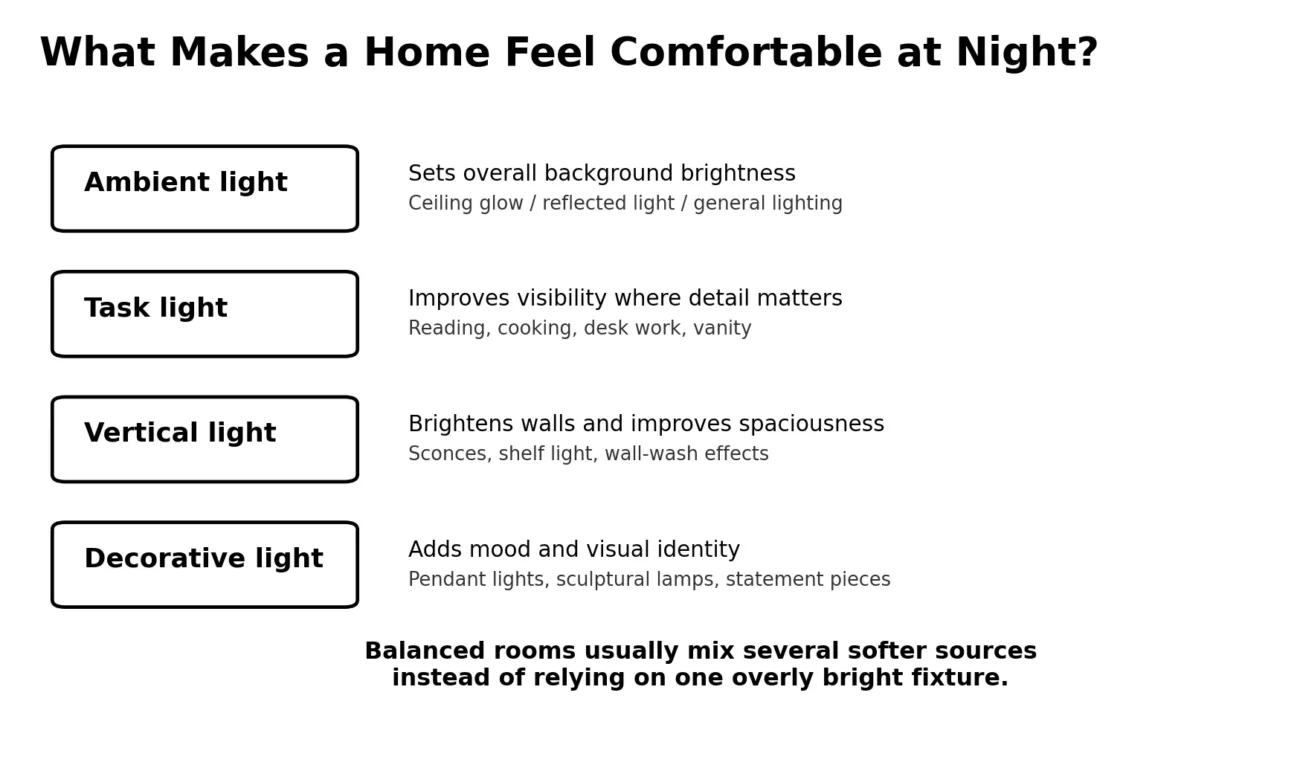
That is why one bright fixture rarely solves every problem. A room can measure enough light on paper and still feel uncomfortable if there is glare, poor vertical brightness, or too much contrast between bright and dark zones. Multiple softer sources usually create a more balanced result.
1. Diffuse light reduces harshness and helps a room feel calmer
A bare or intensely visible source can cause discomfort because the eye is highly sensitive to luminance contrast. Frosted glass, shell, acrylic, linen, and other diffusing materials spread the light over a larger luminous surface. This softens the apparent brightness of the source and creates a more relaxed visual experience.
Diffused light does not mean weak light. A fixture can still deliver useful illumination while appearing gentler to the eye, especially over dining tables, lounge areas, bedrooms, and transition spaces where comfort matters as much as brightness.
2. Vertical light often makes a room feel brighter than extra ceiling output
People experience rooms by looking at walls, curtains, furniture, and faces—not only floors. Brightening vertical surfaces therefore changes perceived brightness and spaciousness more efficiently than simply adding more general overhead light. Wall sconces, shelf lighting, and softly glowing floor lamps are especially valuable because they add depth and visual relief.
This principle is helpful in apartments and living rooms with limited floor area. Instead of concentrating all the light in the ceiling center, distributing some of it onto walls and surrounding surfaces makes the room feel larger and more balanced.
3. Evening lighting should become lower and warmer
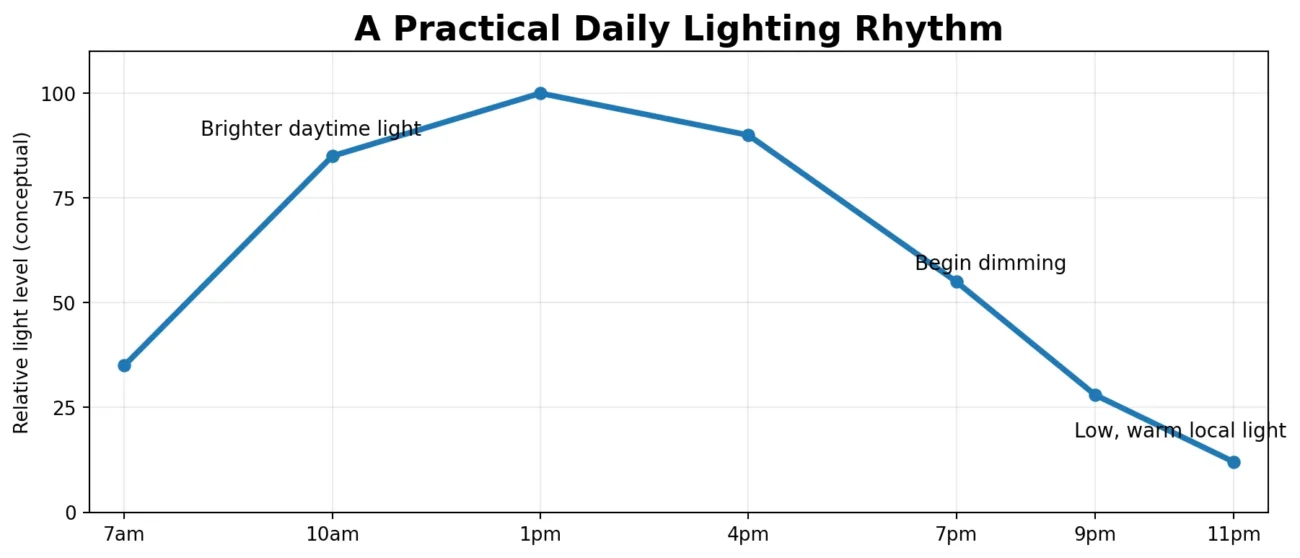
Research on light exposure and circadian rhythm suggests that homes benefit from a day-to-evening shift. Brighter and more activating light is useful during daytime hours, while lower, warmer, and more localized lighting is generally more appropriate in the evening. In practice, this means using stronger task or daylight-supported lighting earlier in the day and then shifting toward softer 2700K–3000K sources at night.
For bedrooms, lounges, and family living rooms, the goal is not darkness but reduced stimulation: enough light to see comfortably without flooding the room with cool, intense illumination late at night.
Fresh Xunlu Lighting product picks for this article
To avoid repeating the products used in the earlier blog versions, this article focuses on a new group of Xunlu Lighting fixtures chosen for their diffuse light quality, strong decorative character, and ability to support calm layered home lighting.
1. White Cloud Glass Chandelier | Luxury Glass Pendant Light
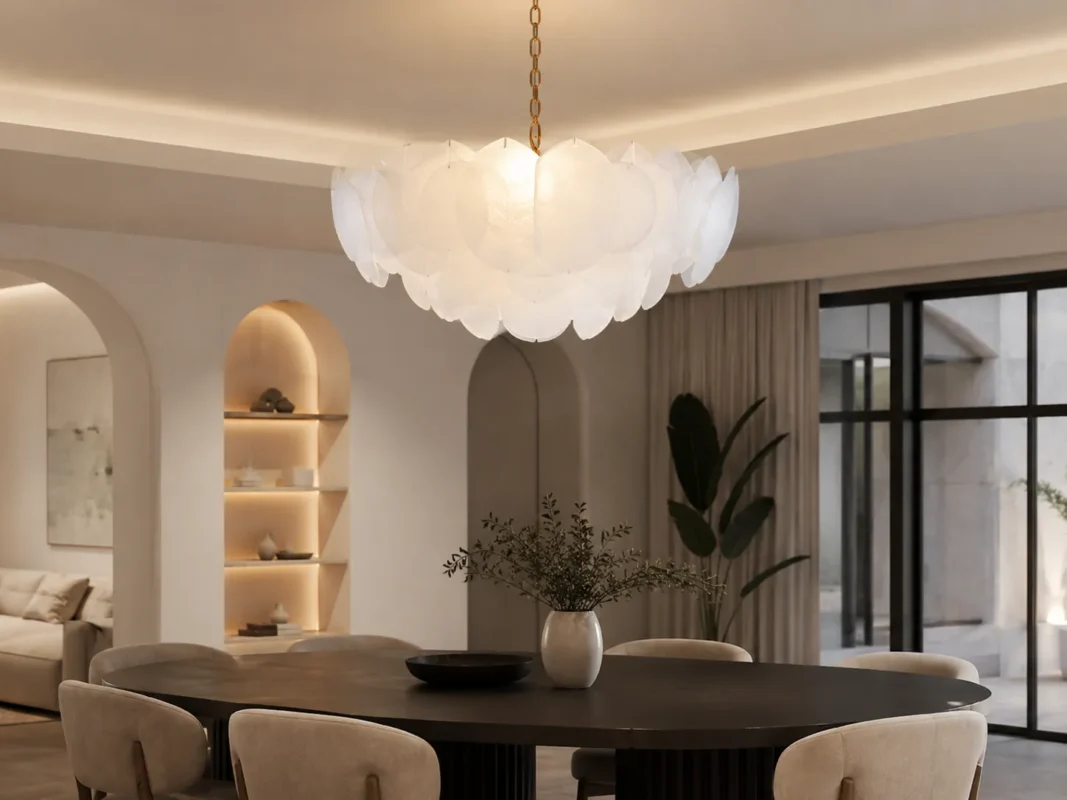
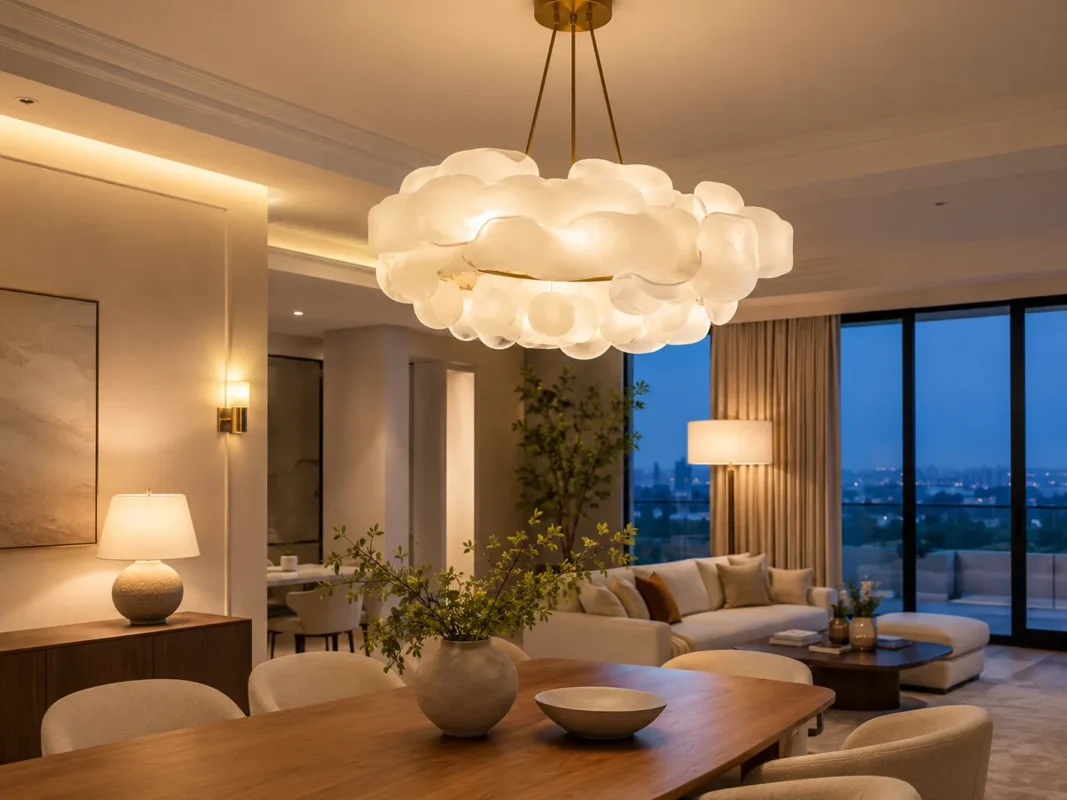
The White Cloud Glass Chandelier is a strong example of decorative ambient lighting. According to Xunlu Lighting, it uses layered curved glass pieces inspired by soft cloud formations, creating a gentle translucent glow and a sculptural focal point suitable for dining rooms, living areas, and premium residential interiors. It is especially useful in homes that want a statement fixture without the harshness of exposed point sources.
Suggested role: main decorative centerpiece for dining or open-plan living spaces.
2. Frosted Glass Bead Chandelier | Modern LED Pendant Light
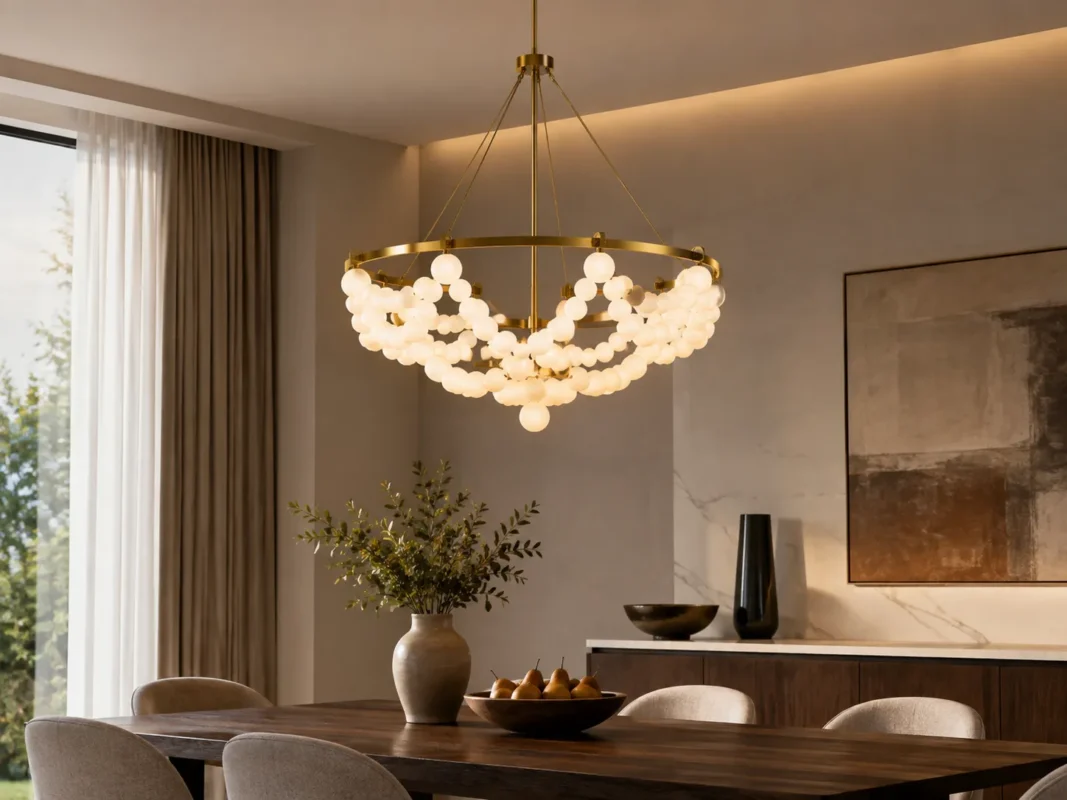
This chandelier combines frosted glass spheres with a brushed brass structure. Xunlu describes it as a soft ambient pendant for dining spaces, lounges, stair areas, and contemporary interiors. The frosted bead construction helps diffuse the light and reduce visual harshness, making it a strong candidate for homes that want warmth, sparkle, and a comfortable glow at the same time.
Suggested role: dining pendant or statement light above a table, especially where visual softness is preferred.
3. Modern Curved LED Floor Lamp | Indoor & Outdoor Lighting
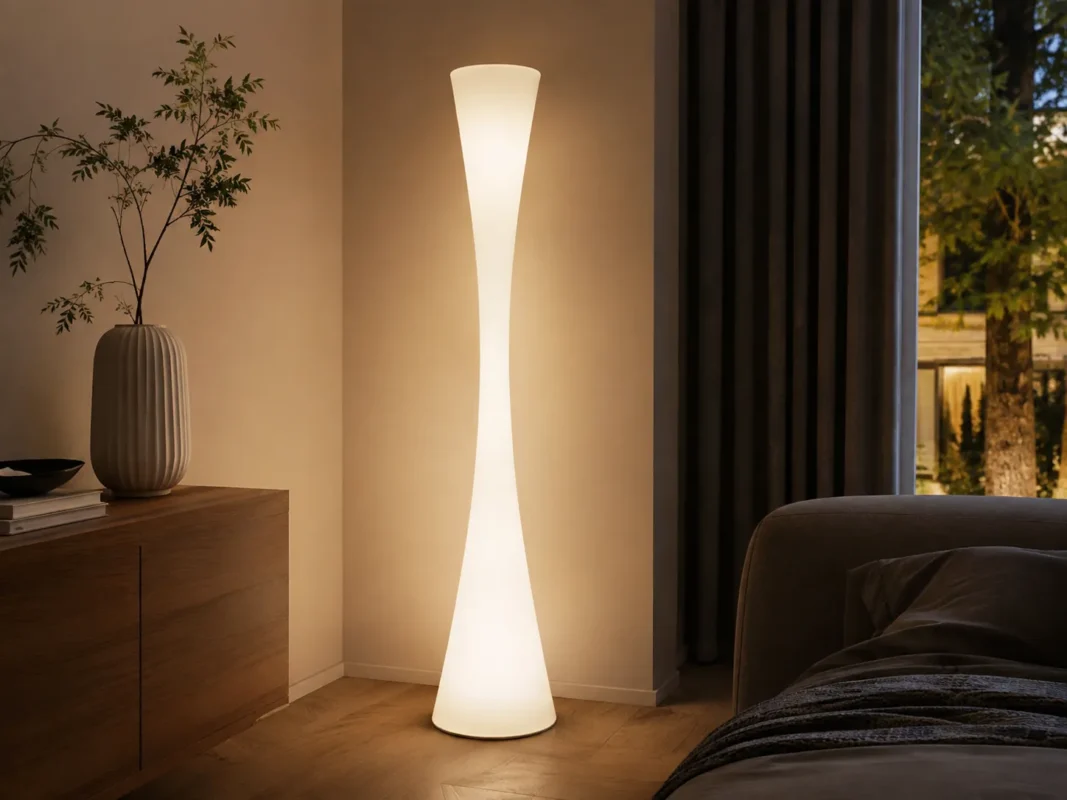
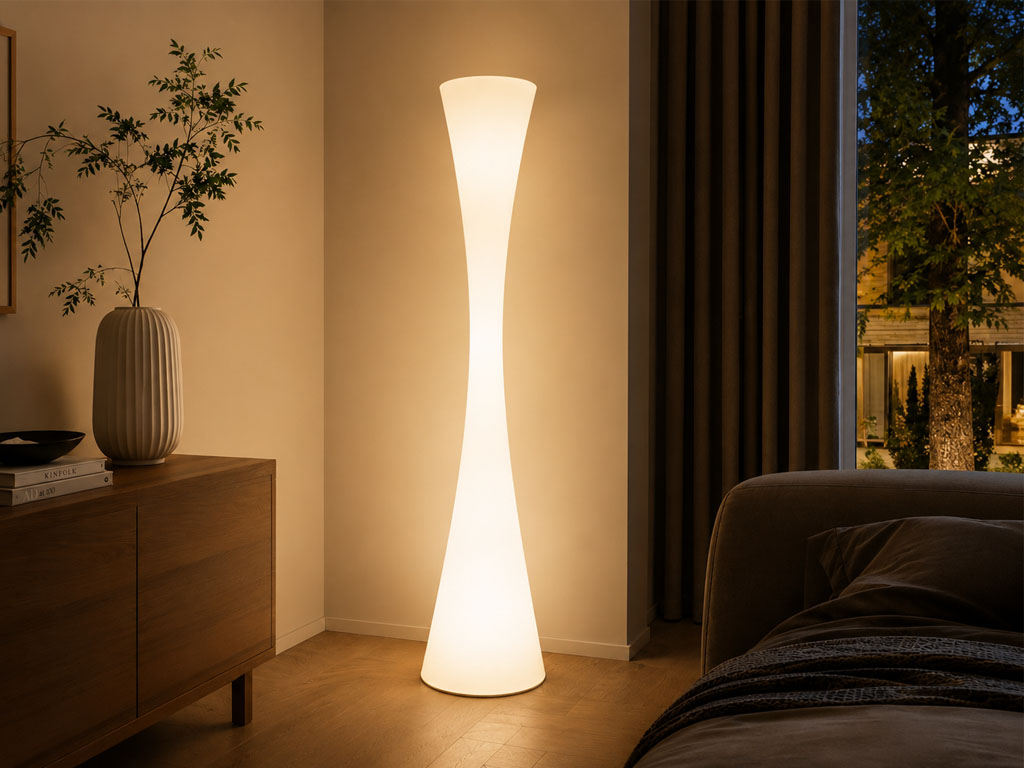
The Modern Curved LED Floor Lamp features a seamless sculptural form and a softly glowing PE body. Xunlu notes that the molded diffuser creates uniform, glare-reduced illumination, while the tall freestanding silhouette makes it appropriate for living rooms, bedrooms, balconies, and quiet lounge areas. In a home setting, it works well as an evening ambient source or as a vertical light element that brightens a corner without needing installation work.
Suggested role: soft floor-level ambient lighting beside a sofa, lounge chair, or bed.
4. Modern Slim Linear LED Wall Light Sconce
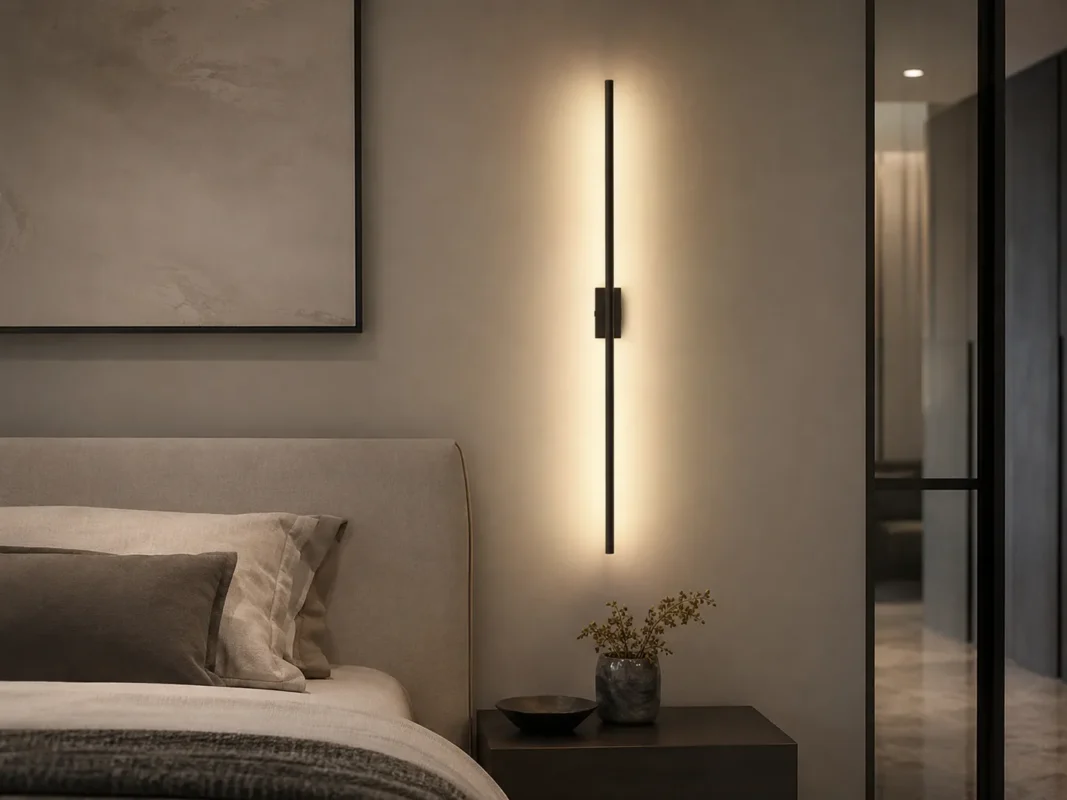
This ultra-slim matte black wall sconce uses hidden LED technology to produce a soft indirect glow. Xunlu positions it as an architectural wall light for bedrooms, hallways, living rooms, and hospitality interiors. Because it directs attention to the wall rather than exposing a bright bulb, it is ideal for increasing perceived depth and wall brightness while maintaining a calm, minimalist appearance.
Suggested role: bedside wall light, hallway accent, or vertical lighting layer in modern interiors.
Room-by-room application ideas
| Room | Main goal | Recommended lighting mix | Comfort note |
|---|---|---|---|
| Living room | Relaxation + atmosphere | Cloud chandelier + curved floor lamp + soft wall light | Use layered sources instead of one very bright ceiling light. |
| Dining room | Table focus + social comfort | Frosted glass bead chandelier + background wall lighting | Keep the pendant visually soft at seated eye level. |
| Bedroom | Low-stimulation evening light | Slim wall sconce + warm local lamp | Favor warm, lower-output lighting at night. |
| Hallway / transition | Orientation + spaciousness | Linear wall sconce or vertical wall glow | Vertical illumination can make tight spaces feel larger. |
A simple home-lighting checklist before buying
- Decide the light’s job first: ambient, task, vertical accent, or decorative focal point.
- Look at the diffuser or shade material, not only wattage or lumen output.
- Check whether the light source will be visible from common seated positions.
- Prefer warm white for evening comfort in living rooms and bedrooms.
- Use at least one source that brightens a wall or vertical surface.
- If possible, separate daytime task lighting from evening relaxation lighting.
- Choose fixture scale to suit the furniture and room volume.
Conclusion
The most comfortable homes are rarely the brightest ones. They are the ones where light is distributed intentionally: diffused where comfort matters, focused where tasks matter, and softened at night when the home is shifting toward rest. Decorative fixtures can still play a functional role when they contribute the right kind of luminous surface and placement.
By combining statement pendants, soft floor lighting, and architectural wall glow, a home can feel warmer, calmer, and more spacious—without relying on excessive brightness.