

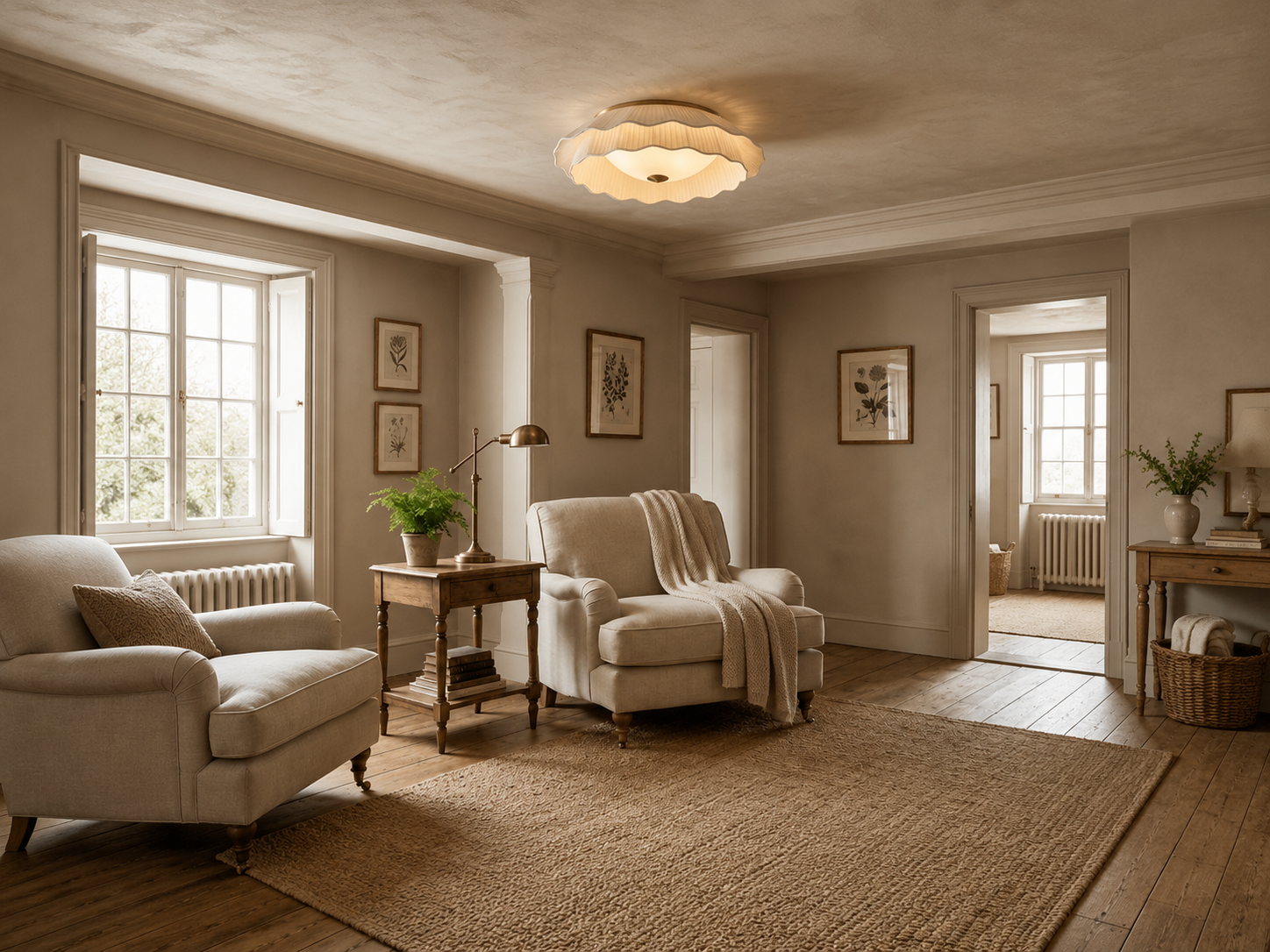

A complete science-informed home lighting article featuring three Xunlu Lighting flush-mount ceiling fixtures: solid wood, modern glass, and pleated fabric.
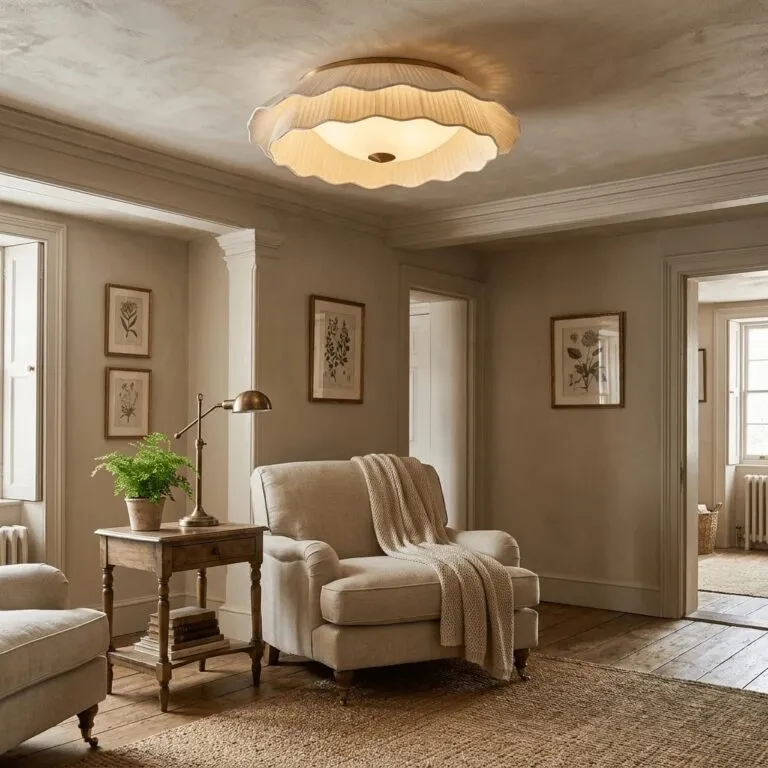
Why Ceiling Material Matters More Than Most Homeowners Think
When people choose a ceiling light, they often focus first on appearance. That makes sense—lighting is one of the most visible parts of a room. But from a comfort and performance perspective, material may be just as important as shape. The surface that surrounds a light source affects how light is diffused, how glare is controlled, how the fixture visually relates to walls and furniture, and how warm or quiet the room feels.
This is especially true with flush-mount ceiling lights, because these fixtures typically serve as a room’s main overhead source. A flush mount must do several jobs at once: provide useful ambient illumination, stay visually balanced on the ceiling, and avoid harsh brightness that can make a space feel flat or tiring. In that sense, wood, glass, and fabric are not merely style choices—they are lighting tools.
In this article, we look at three different ceiling-light approaches from Xunlu Lighting: the Solid Wood Ceiling Light – Wabi-Sabi Minimalist LED Flush Mount Lamp, the Modern Glass Ceiling Light – Silver LED Flush Mount Lamp, and the Fabric LED Ceiling Light – Elegant Pleated Wave Ceiling Lamp. Together they provide a useful comparison of how organic texture, reflective transparency, and soft diffusion can each shape a different atmosphere at home.
The Lighting Science Behind Comfortable Ceilings
Good home lighting is not just about brightness. Visual comfort depends on a mix of factors, including illuminance, glare control, contrast, color temperature, spectral quality, and how well light is distributed across the room. Design guidance from lighting authorities such as the U.S. Department of Energy, the Illuminating Engineering Society, and the International Commission on Illumination consistently shows that people experience light more positively when it is layered, well diffused, and appropriate for the task and time of day.
For residential spaces, the most practical design goal is usually not maximum brightness but balanced brightness. A room should feel bright enough to move safely, see faces clearly, and perform ordinary activities, yet soft enough to remain relaxing. This is why diffusers, translucent shades, and room-reflective surfaces matter so much.
Overhead lights can also create discomfort when the emitting area is too concentrated or directly visible. A larger luminous surface, or a shade that spreads light before it reaches the eye, typically reduces the feeling of harshness. Material selection therefore becomes a key part of comfort design.
Three Materials, Three Different Moods
| Fixture | Material character | Lighting effect | Best use |
|---|---|---|---|
| Solid Wood Ceiling Light | Natural solid wood + metal hardware | Warm, compact, calm, glare-softened ambient light | Hallways, entryways, bedrooms, studies |
| Modern Glass Ceiling Light | Glass diffuser/body + silver-toned finish | Clean, airy, reflective, visually light modern glow | Small living spaces, corridors, kitchens, modern apartments |
| Fabric Pleated Wave Ceiling Light | Pleated fabric shade + metal frame | Soft, wide, cozy, highly diffused ambient light | Living rooms, bedrooms, dining rooms, hotel-style interiors |
(1) Solid Wood Ceiling Light: Warmth Through Texture
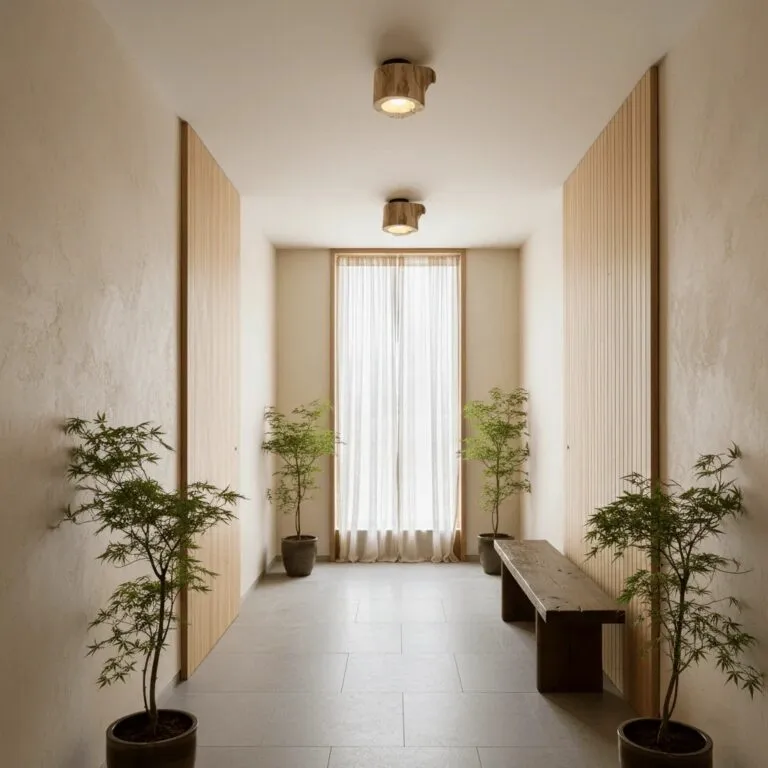
The solid wood model follows a wabi-sabi idea: the beauty of quiet material presence. According to the Xunlu product page, this flush-mount fixture uses natural solid wood with metal hardware, a 12W integrated LED, approximately 960–1080 lumens, and a warm 3000K color temperature. Its compact size—20 × 14 cm—makes it especially suitable for circulation zones and smaller rooms.
Why does wood work so well here? First, wood visually lowers the hardness of a ceiling surface. In an entryway or hallway, that can make the space feel less clinical and more intentional. Second, warm-toned finishes psychologically reinforce the warmth already suggested by a 3000K light source. This creates what designers often call material coherence: the color of the fixture and the color of the light support each other instead of fighting each other.
Because the fixture is compact, it is best understood as a calm architectural light rather than a large statement piece. It works particularly well in spaces where the ceiling should stay visually quiet.
(2)Modern Glass Ceiling Light: Lightness, Reflection, and a Cleaner Look
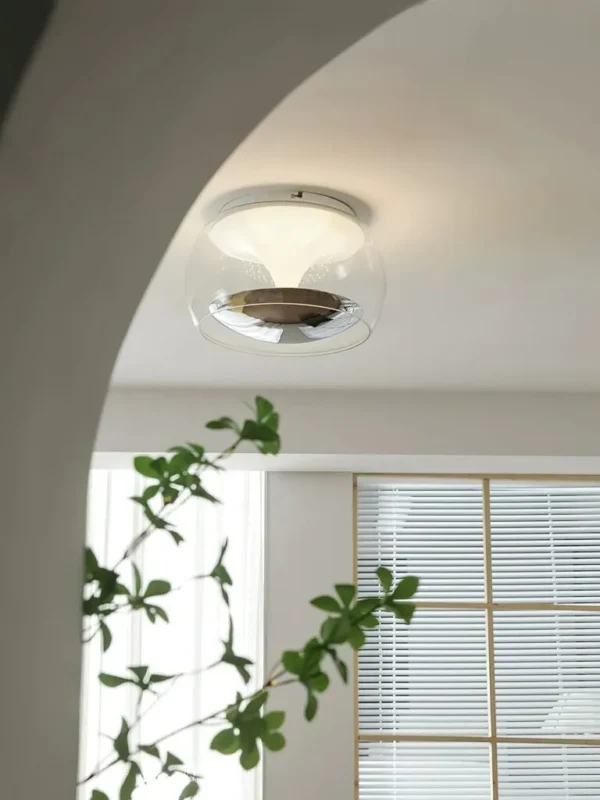
The modern glass ceiling light takes a different path. Visually, glass reduces heaviness. Where wood feels grounded and fabric feels soft, glass feels open and crisp. In a flush-mount application this is useful because ceilings can easily become crowded or visually dense, especially in apartments with moderate ceiling height. A glass fixture reflects surrounding light, catches daylight, and often appears less bulky than a more opaque shade of the same size.
From a lighting standpoint, glass can help preserve clarity and sparkle while still shielding the light source, depending on how the diffuser is designed. That makes it well suited to transitional spaces, kitchens, compact living areas, and modern interiors where the homeowner wants a cleaner, brighter impression.
The provided product image suggests a silver-finish flush mount with a rounded glass form and a soft central glow. That type of visual language usually pairs best with interiors that have white walls, pale timber, soft gray finishes, stone surfaces, or brushed-metal details. Because reflective materials can increase perceived brightness, glass ceiling lights often feel effective even before lumen numbers are considered.
If your design goal is to keep a room feeling fresh, uncluttered, and visually lighter, glass is often the strongest option of the three.
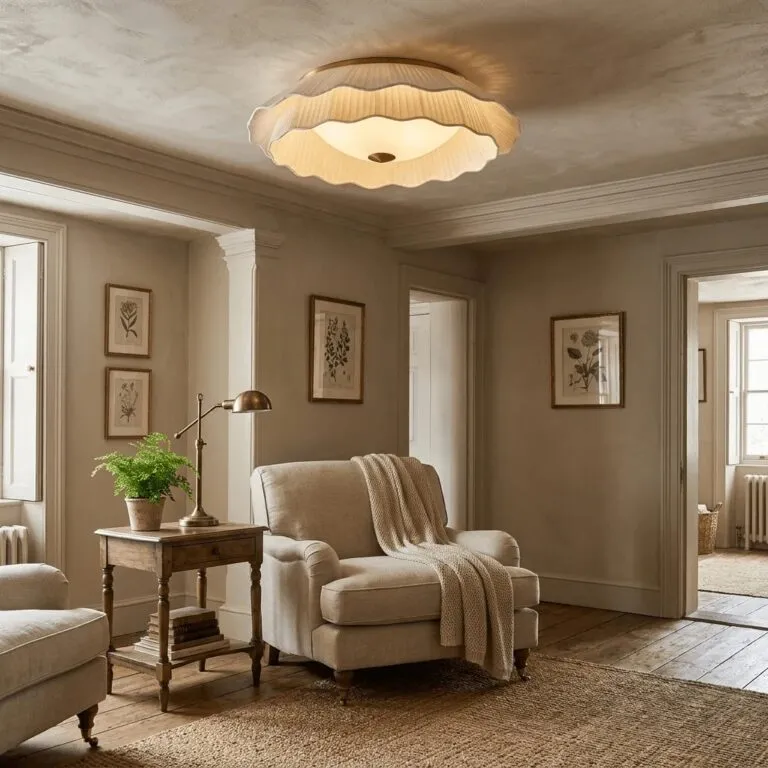
(3) Fabric Pleated Wave Ceiling Light: Diffusion and Atmosphere
The fabric ceiling light is the most atmosphere-driven of the three. On the Xunlu product page, it is described as a pleated fabric ceiling lamp with a 24W integrated LED, approximately 1200–1800 lumens, and selectable 3000K / 4000K / 6000K color temperatures. Its size is listed as 60 cm diameter by 15 cm height.
Fabric is naturally associated with softness, and in lighting that softness is not just decorative. A pleated textile shade increases visual texture while helping spread light more evenly across a broader visible surface. This matters because a larger apparent luminous area generally reduces the harshness people experience when looking toward the ceiling. The result is often a room that feels calmer and more comfortable.
This fixture is especially good for living rooms, bedrooms, and dining spaces—places where emotional tone matters as much as raw brightness. The wave-like silhouette also adds a sculptural ceiling presence without feeling aggressive or heavy.
Choosing the Right Color Temperature
Color temperature plays a major role in how each of these materials is perceived. Warm white light around 2700K–3000K tends to enhance wood tones, soften fabric, and make living spaces feel more restful. Neutral or cooler settings, such as 4000K or 6000K, can increase clarity and visual crispness, which may suit kitchens, circulation zones, or multipurpose spaces.
• 3000K: best for relaxed living rooms, bedrooms, hospitality-style warmth, and evening comfort.
• 4000K: useful where you want cleaner visual definition, such as dressing areas, transitional spaces, and mixed-use rooms.
• 6000K: bright and cool in appearance; more appropriate for task-oriented or highly contemporary applications than for late-evening relaxation.
Evening lighting deserves special attention. Scientific research on light exposure and circadian rhythm shows that cooler, brighter light later in the day can be more alerting and may interfere with natural sleep timing. That is one reason warm settings remain the safest default for living rooms and bedrooms.
Material, Reflectance, and Perceived Comfort
A useful way to compare these fixtures is through reflectance and diffusion. Wood absorbs and visually grounds light; glass reflects and transmits light; fabric diffuses and softens it. None of these is automatically ‘better’—the right choice depends on the room and the atmosphere you want.
• Choose wood when you want a quiet, natural ceiling accent and a warm, grounded emotional tone.
• Choose glass when you want freshness, visual lightness, and a more open modern impression.
• Choose fabric when you want the ceiling light itself to contribute softness and reduce apparent harshness.
This is also why one fixture can look perfect in one room and wrong in another. A glass ceiling light in a bright white apartment may feel elegant and airy, while the same fixture in a heavily textured rustic room may feel too cool. Likewise, a fabric light in a formal dining room can feel beautifully soft, but in a minimalist corridor it may feel visually too gentle if the architecture is very sharp.
Room-by-Room Recommendations
Entryway and hallway
The solid wood flush mount is especially effective here because it adds character without taking up visual space. In narrow circulation zones, a low-profile light that feels warm and architectural is often the most successful choice.
Living room
The fabric wave ceiling light is the strongest all-around option for a living room because it combines broader ambient light with a cozy appearance. If the living room is very modern and minimal, however, the glass model can also work beautifully.
Bedroom
For restful bedrooms, choose either the solid wood or fabric model on a warm setting. Both support a softer mood, though the fabric version offers a larger visual statement and a more diffused luminous presence.
Dining area
A flush mount is often used in dining areas where ceiling height is limited. The fabric fixture is ideal if you want a warm, hospitality-inspired feeling. The glass fixture is preferable if you want a cleaner, brighter contemporary tone.
Apartment and small-space use
In compact apartments, ceiling fixtures need to do more with less. Flush-mount designs are practical because they preserve headroom. Among the three, glass often feels the least visually heavy, while fabric often feels the softest, and wood feels the most intimate.
Why Layering Still Matters
Even a good ceiling light should not be expected to do everything alone. Comfortable residential interiors usually combine overhead ambient light with at least one additional layer: a floor lamp, table lamp, wall light, or focused reading source. Layering gives people control, reduces the need for excessive brightness from the ceiling, and improves the room’s sense of depth.
• Use the ceiling light for general ambient illumination.
• Add a table lamp or floor lamp near seating for evening comfort.
• Use wall lights to add vertical light and reduce flatness.
• Reserve focused task lighting for reading, desk work, food prep, or grooming.
This approach is often more energy-efficient and more visually comfortable than relying on one bright central source.
Product Highlights at a Glance
Solid Wood Ceiling Light – Wabi-Sabi Minimalist LED Flush Mount Lamp
• Material: natural solid wood + metal hardware
• Power: 12W integrated LED
• Luminous flux: approx. 960–1080 lm
• Color temperature: 3000K
• Voltage: AC 100–240V
• Size: 20 × 14 cm (7.87 × 5.51 in)
• Best for: hallway, entryway, bedroom, study
Modern Glass Ceiling Light – Silver LED Flush Mount Lamp
• Visual identity: modern silver finish with a rounded glass form
• Key strength: clean, airy, light-reflective flush-mount look
• Best for: modern apartments, compact living spaces, corridors, bright minimalist interiors
• Recommended note: confirm detailed dimensions and electrical specifications directly on the product page before project quoting
Fabric LED Ceiling Light – Elegant Pleated Wave Ceiling Lamp
• Material: pleated fabric lampshade + metal frame
• Power: 24W integrated LED
• Luminous flux: approx. 1200–1800 lm
• Color temperature: 3000K / 4000K / 6000K
• Voltage: AC 100–240V
• Size: 60 cm diameter × 15 cm height
• Best for: living room, bedroom, dining room, hotel-style interior
Final Thoughts
These three Xunlu Lighting ceiling fixtures show that home lighting quality is shaped as much by material and diffusion as by style. The solid wood model feels grounded and organic, the glass model feels fresh and visually light, and the fabric model feels soft and atmospheric. Each can be the right choice when matched to the room’s function, ceiling height, reflectance, and emotional goal.
If your priority is calm architectural warmth, choose wood. If your priority is visual cleanliness and modern lightness, choose glass. If your priority is softness, comfort, and an inviting ambient glow, choose fabric. The best ceiling light is not just the one that looks beautiful in a product photo—it is the one that makes the room feel better every day.