
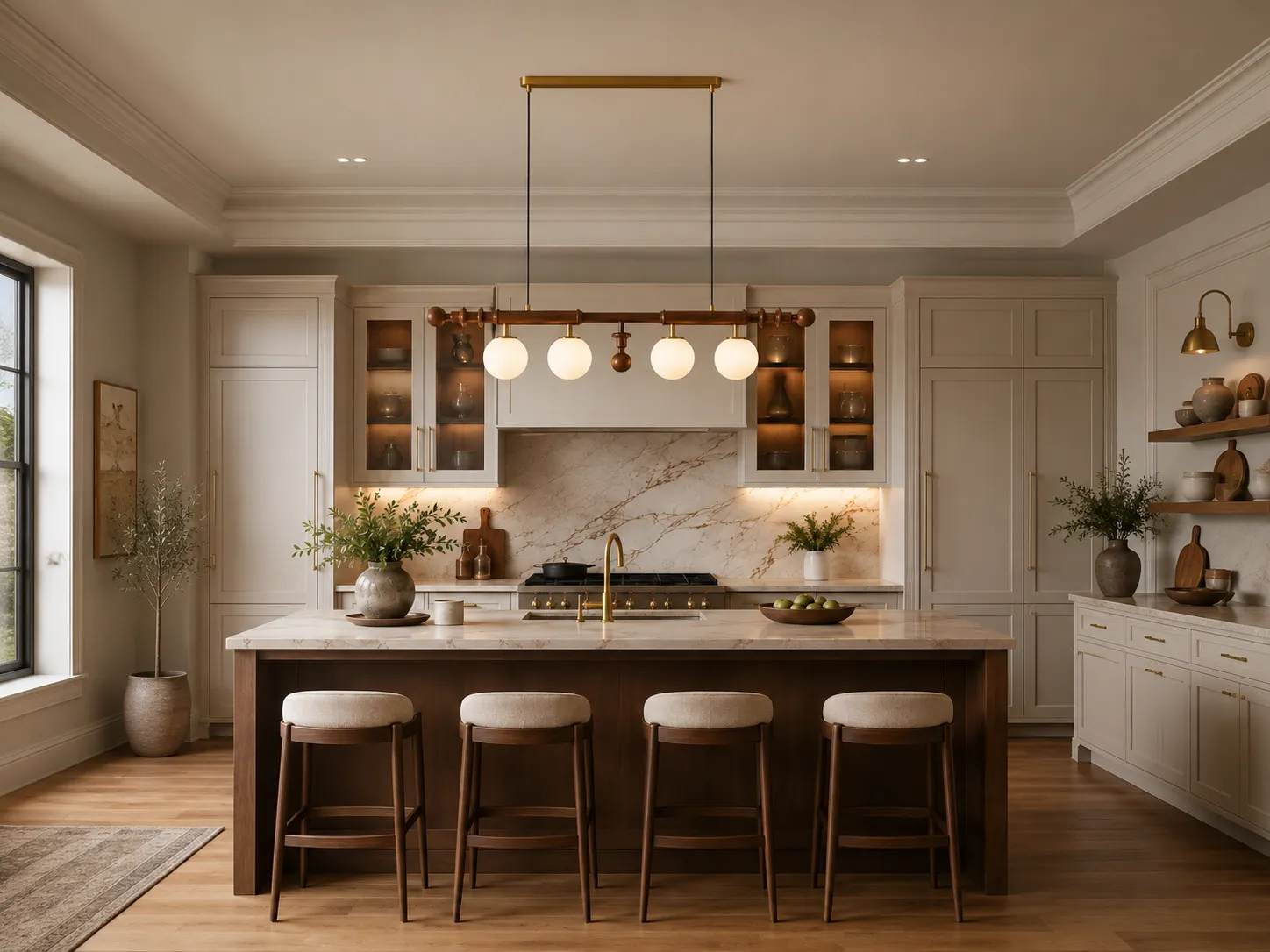

How proportion, diffusion, color temperature, and mounting height shape comfort above dining tables, kitchen islands, and work surfaces
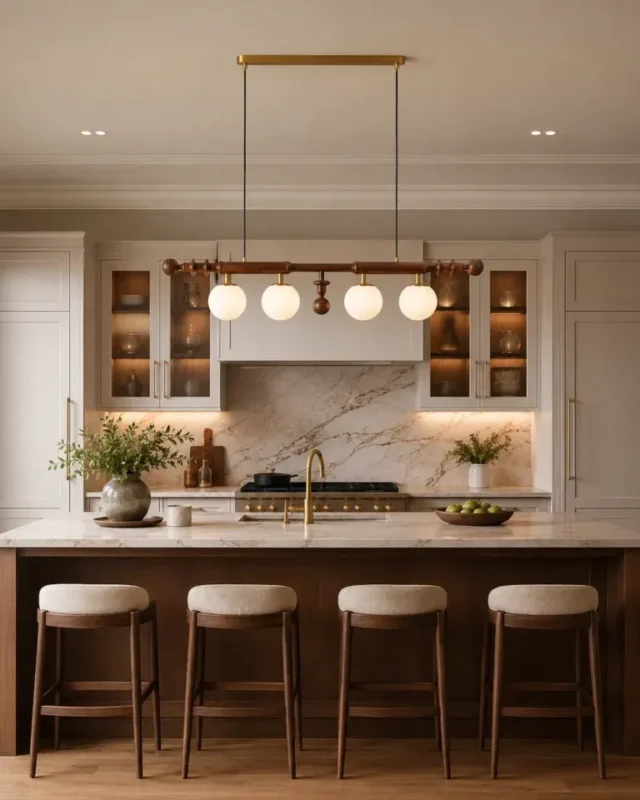
Why Linear Pendants Work So Well Over Long Surfaces
A dining table, kitchen island, executive desk, or reception counter is fundamentally a long horizontal task plane. A linear pendant follows that geometry, allowing light to be distributed across the same axis as the surface below. The result can be more visually coherent than relying on a single compact source centered above a long table, because a long luminous element reduces the distance between the source and the far ends of the work plane.Lighting quality is not determined by wattage alone. Useful design depends on luminous flux (lumens), distribution, mounting height, surface reflectance, glare control, color quality, and the relationship between the fixture and the surrounding room. The Illuminating Engineering Society (IES) treats both illuminance and uniformity as core design criteria, while the U.S. Department of Energy (DOE) emphasizes that LED performance is a combination of source efficacy and luminaire optical design.
Design principle
Think of a pendant as both an optical system and an architectural object. A good installation should illuminate the table, keep the bright source comfortable in the field of view, and visually align with the furniture below.
The Two Featured Fixtures at a Glance
| Feature | Modern Linear LED Pendant | Walnut | Wood & Opal Glass Linear Pendant | 4-Light |
|---|---|---|
| Primary materials | Aluminum + black walnut solid wood + acrylic diffuser | Solid wood + opal white high-borosilicate glass + antique brass-tone hardware |
| Light source | Integrated LED | 4 × replaceable G9 LED bulbs |
| Nominal output | 1,440–4,800 lm depending on size | Approx. 1,600–2,000 lm total |
| Power | 18–60W depending on length | 20W total |
| Approx. efficacy | ~80 lm/W based on listed output/power | ~80–100 lm/W based on listed output/power |
| CCT options | 3000K / 4000K / 6000K | 2700K / 3000K / 4000K |
| Best visual character | Minimal, architectural, slim | Decorative, warm, sculptural |
| Typical applications | Dining, island, office, meeting table, hospitality | Dining, island, bar, tea room, reception, boutique hospitality |
1. The Science of Even Light: Why Length Matters
Illuminance on a surface is commonly expressed in lux (lumens per square meter). In simplified terms, illuminance falls rapidly as distance from a light source increases. For a point-like source, the inverse-square relationship is often written as E ∝ 1/d². Real pendants are not point sources, but the principle is still useful: increasing the source-to-table distance reduces illuminance, while spreading the source along the table length can improve coverage at the ends.This is one reason linear fixtures are naturally suited to rectangular tables and islands. Rather than concentrating most luminous flux near the center, they extend the emitting area along the same direction as the surface. The goal is not simply “more light,” but a smoother transition between the brightest and dimmest areas—a concept related to uniformity, which IES includes alongside maintained illuminance in its lighting criteria.
2. Diffusion and Glare: Acrylic vs. Opal Glass
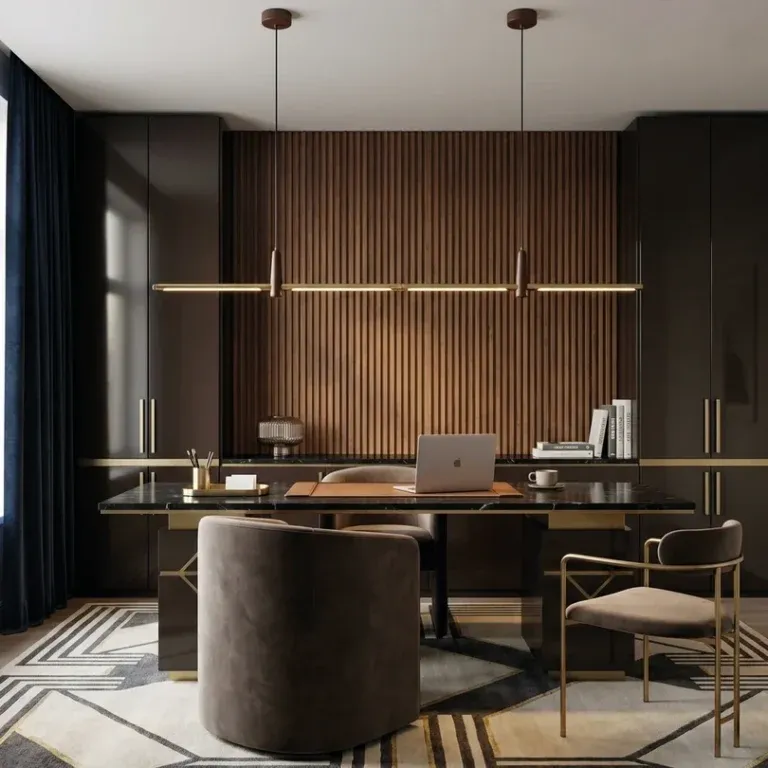
Glare occurs when a bright source or strong luminance contrast makes seeing uncomfortable or reduces visual performance. A diffuser lowers the apparent intensity of individual LED points by spreading light across a larger luminous surface. The Modern Linear LED Pendant uses an acrylic diffuser, while the 4-Light pendant uses opal glass globes. Both approaches soften the visual transition between the light source and its surroundings, but they create different aesthetics.
- Acrylic linear diffusion supports a continuous, modern light line and can provide a very clean architectural appearance.
- Opal glass turns each globe into a larger glowing surface, producing a softer decorative effect and reducing direct view of the lamp filament or LED package.
- The larger the apparent luminous area, the lower the luminance can be for a given amount of emitted light, which is generally favorable for visual comfort.
- Glare control still depends on mounting height, viewing angle, dimming level, and surrounding brightness—not only on the diffuser material.
3. Color Temperature: 2700K, 3000K, 4000K, or 6000K?
Correlated color temperature (CCT) describes the visual appearance of white light, from warm to cool. DOE notes that CCT is one of the key descriptors of LED light quality, while color fidelity is commonly evaluated with CRI or newer metrics such as TM-30.[2]
- 2700K: very warm and relaxed; especially suitable for intimate dining, boutique hospitality, and interiors with walnut, brass, beige, or cream finishes.
- 3000K: warm white; a versatile choice for residential dining rooms and kitchens where comfort and material warmth are priorities.
- 4000K: neutral white; useful when the pendant also supports food preparation, reading, meetings, or visually demanding work.
- 6000K: cool white; visually crisp and high in apparent brightness, but usually better suited to task-oriented or commercial settings than relaxed residential dining.
For rooms centered on wood and warm-toned finishes, 2700K–3000K usually reinforces the natural material palette. If one fixture must serve both ambience and concentrated work, 4000K can be a practical compromise. The 6000K option on the integrated LED model is best chosen intentionally rather than by default.
4. How Much Light Is Enough?
There is no single universal lumen number for every dining room because table size, ceiling height, wall color, daylight, shade transmission, and other luminaires all change the result. As a useful hospitality reference, an IES article notes 3–6 footcandles (roughly 32–65 lux) at restaurant dining tables, while also showing that very low levels can make menus and food difficult to see.[5] Residential dining can be designed more flexibly, especially when ambient and accent lighting are layered around the pendant.
The listed lumen values show a meaningful difference between the two products. The integrated linear LED ranges from approximately 1,440 lm at 90 cm to 4,800 lm at 300 cm, while the four-globe model is listed at approximately 1,600–2,000 lm. That means the first product can scale from a modest residential table to very long islands or meeting tables, whereas the second is more naturally positioned as a decorative, moderate-output centerpiece.
Simple sizing logic
Start with the furniture length, then choose a fixture that visually spans enough of that length to feel intentional without reaching the table edges. After that, verify mounting height and dimming so the brightness is comfortable at seated eye level.
5. Mounting Height and Proportion
The product page for the Modern Linear LED Pendant recommends approximately 70–90 cm above a dining table and 75–95 cm above a kitchen island.[3] These ranges are useful starting points because they balance three competing needs: adequate light on the surface, unobstructed sightlines across the table, and reduced glare from the fixture.
The 4-Light model has a 120 cm suspension length and adjustable installation spacing, which gives the installer more freedom to tune the relationship between the wood beam, glass globes, and furniture below.[4] In practice, final height should respond to ceiling height, user eye level, and whether the fixture is viewed primarily while seated or standing.
- Center the pendant over the table or island, not merely in the center of the room.
- Check the longest sightline through the space. The fixture should not block faces or important views when people are seated.
- If the light feels harsh, raising the fixture slightly or dimming it can reduce source brightness in the field of view.
- For a very high ceiling, avoid simply extending the suspension without considering scale; a longer fixture or larger visual mass may be needed.
6. Material Psychology: Why Wood Changes the Feel of a Room
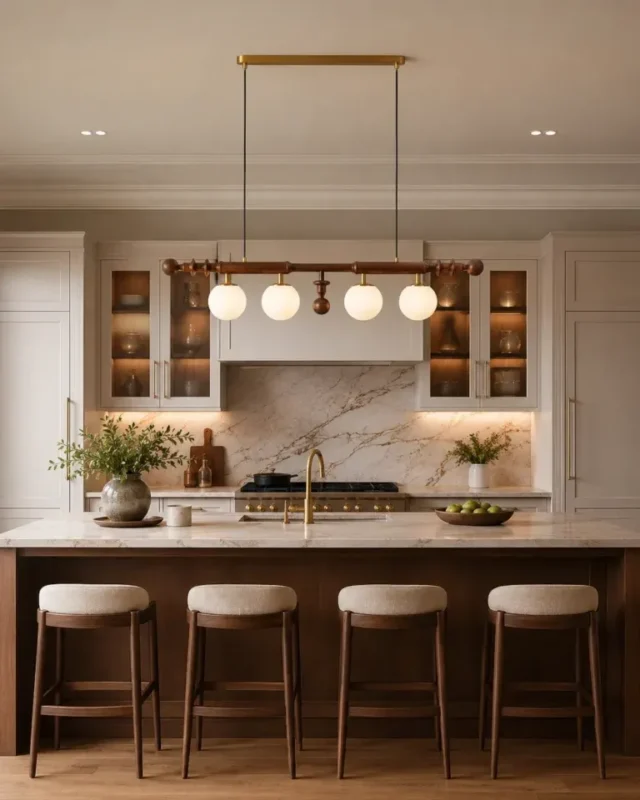
Wood is not only a decorative finish; it changes how a luminaire is perceived in relation to the architecture around it. Black walnut and deep walnut tones visually connect with timber cabinetry, dining tables, flooring, and warm neutral textiles. This can make a technically modern fixture feel less industrial and more residential.
The first pendant uses wood as a restrained accent against a slim aluminum body. The second makes wood the dominant structural gesture and combines it with antique brass-tone hardware and opal glass. As a result, the first reads as minimalist and precise, while the second reads as warmer, more sculptural, and more decorative.
7. Energy Efficiency and LED System Choice
DOE describes LED lighting as the most energy-efficient mainstream lighting technology and notes that optical control, dimming, and integration with controls are important advantages of the platform.[2] Based on the listed product data, the integrated linear model delivers about 80 lm/W across its size range, while the four-light model delivers approximately 80–100 lm/W from a listed 20W and 1,600–2,000 lm output.[3][4]
The two products also represent two maintenance strategies. An integrated LED can create a thinner, more continuous luminous form because the LED module is built into the fixture. Replaceable G9 lamps, by contrast, make it easier to replace individual light sources or change lamp characteristics later. Neither approach is universally better; the choice depends on whether minimal form or serviceability is the stronger priority.
8. Where Each Fixture Works Best
Modern Linear LED Pendant | Walnut Hanging Lamp
- Long dining tables where a continuous line of light feels visually calm and proportional.
- Kitchen islands, especially when a clean modern ceiling composition is preferred over multiple small pendants.
- Home offices and executive desks where 4000K can support a more task-focused atmosphere.
- Meeting rooms and reception areas where the 180–300 cm sizes can match long furniture.
- Modern, Nordic, Japandi, and warm-minimal interiors that combine dark wood with metal accents.
Wood & Opal Glass Linear Pendant | 4-Light
- Dining rooms where the fixture should function as a decorative centerpiece as well as a source of light.
- Kitchen islands with warm cabinetry, marble, natural wood, or brass details.
- Tea rooms, cafés, club lounges, and boutique hotels where opal globes create a softer hospitality mood.
- Wabi-Sabi, Japanese-inspired, modern Oriental, French vintage, and natural-luxury interiors.
- Spaces where replaceable G9 lamps are preferred for maintenance or future lamp changes.
9. A Practical Layered-Lighting Plan
A pendant rarely needs to light the entire room by itself. Better visual comfort usually comes from layered lighting: the pendant illuminates the table or island, ambient light lifts the overall room brightness, and accent light adds depth to walls, artwork, shelving, or architectural surfaces. This reduces the contrast between a bright table and a dark background, which can make a space feel more comfortable even without increasing the pendant output dramatically.
- Pendant layer: focused, visually dominant light over the main horizontal surface.
- Ambient layer: recessed downlights, ceiling light, indirect cove lighting, or wall-wash illumination.
- Accent layer: cabinet lighting, art lighting, wall sconces, or decorative lamps.
- Control layer: dimmers or scene controls so dining, cleaning, entertaining, and work can use different light levels.
10. Which One Should You Choose?
| If your priority is… | Choose… | Why |
|---|---|---|
| A very slim modern profile | Modern Linear LED Pendant | Integrated LED and a continuous diffuser create a clean architectural line. |
| A warmer decorative centerpiece | Wood & Opal Glass 4-Light | Wood, antique brass, and opal globes create stronger visual character. |
| Very long tables or counters | Modern Linear LED Pendant | Six lengths from 90 to 300 cm provide more scale options. |
| Replaceable light sources | Wood & Opal Glass 4-Light | Four G9 LED lamps can be replaced individually. |
| More CCT flexibility toward cool white | Modern Linear LED Pendant | 3000K, 4000K, and 6000K options. |
| Very warm residential ambience | Wood & Opal Glass 4-Light | 2700K, 3000K, and 4000K options plus opal diffusion. |
Final Takeaway
The strongest linear-pendant installations are not simply the brightest. They are the ones in which fixture length, mounting height, diffusion, CCT, material palette, and room lighting work together. The Modern Linear LED Pendant is the stronger choice when you want a thin architectural line, scalable lengths, and integrated LED efficiency. The Wood & Opal Glass 4-Light is the stronger choice when you want a richer decorative object with warm wood, soft glowing globes, and replaceable lamps.
For either fixture, treat the pendant as the focal task layer rather than the only source in the room. Pair it with softer ambient and accent light, keep the mounting height comfortable for seated sightlines, and select a color temperature that supports both the room materials and the activities taking place below. That combination creates a space that looks refined in photographs and feels comfortable in everyday use.