


How Sculptural Indirect Wall Lighting Creates Softer, More Comfortable Modern Interiors
Why Wall Lighting Matters More Than It Looks
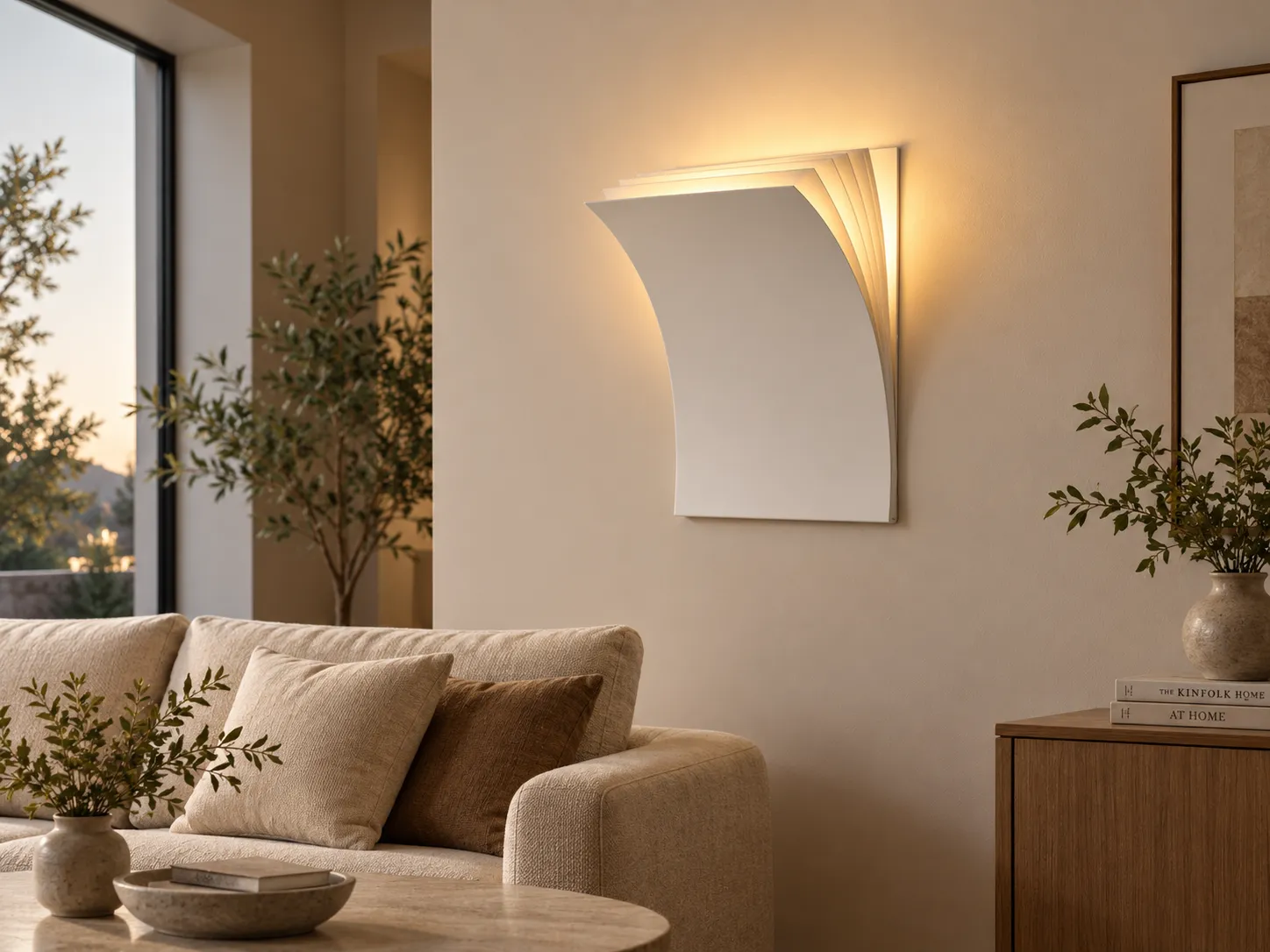
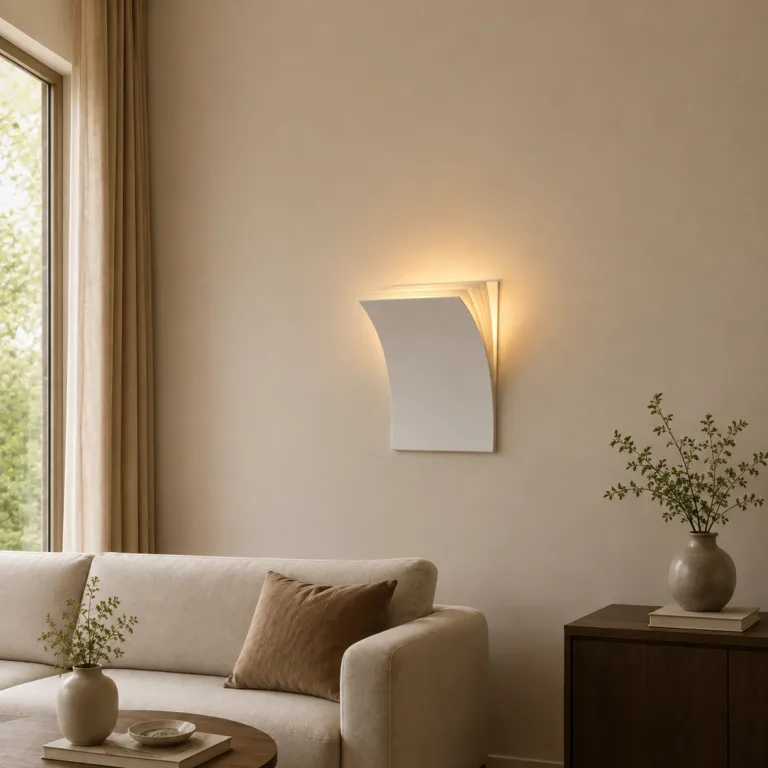
A wall light does more than brighten a surface. Because it sits inside the field of view and interacts directly with walls, finishes, artwork, and furniture, its distribution pattern can strongly influence perceived comfort and atmosphere. The Modern Metal Wall Lamp from Xunlu Lighting uses a curved, layered metal form to shield the light source and send much of the light upward and outward, creating a softer luminous gradient instead of a harsh point of brightness.
This matters in contemporary interiors, where fewer decorative objects often mean each source of light becomes visually important. A sculptural wall sconce can therefore function as architecture, ambient lighting, and decoration at the same time.
| Design language | Curved, layered, architectural wall sconce |
| Body | High-quality metal with matte baking-paint finish |
| Light source | Replaceable G9 LED bulb |
| Recommended light | 3000K warm white for relaxed residential spaces |
| Optical idea | Upward / indirect glow with source shielding to reduce visual harshness |
| Suggested spaces | Living rooms, bedrooms, hallways, boutique hotels and apartments |
1. The Science of Softer Light: Shielding and Indirect Distribution
Visual discomfort is not caused only by “too much light.” It is also affected by where brightness appears in the field of view, how large the bright area is, and how strong the contrast is between the source and its background. The CIE framework for discomfort glare treats source luminance, apparent source size, position, and background luminance as key variables. In practical home design, one useful response is to keep the brightest element from being directly exposed whenever possible.
The layered metal shade of this wall lamp helps hide the lamp from common viewing angles. Light then reflects from the upper wall and the surfaces of the fixture, making the luminous area feel larger and less concentrated. That does not mean glare is eliminated in every installation, but it can make the wall light noticeably gentler than an exposed bare lamp with the same nominal output.
2. Why Warm White Light Works So Well in Bedrooms and Living Rooms
For evening residential use, warm-white light is often chosen because it resembles the warmer appearance of low-angle daylight and traditional incandescent sources. The product is recommended around 3000K, with other color-temperature options available. Color temperature does not determine brightness, but it does change the visual character of a room: lower CCTs usually read as warmer and more intimate, while higher CCTs appear cooler and more alerting.
In spaces used before sleep, a warmer, dimmable light source can also be a sensible strategy for reducing unnecessary short-wavelength light exposure late in the evening. Light at night can influence circadian physiology; the effect depends on intensity, spectrum, duration, timing, and individual sensitivity. For that reason, good bedroom lighting is best designed around controllability rather than a single “perfect” color temperature.
3. Layered Lighting: Why One Fixture Should Not Do Everything
A comfortable room usually combines ambient, task, and accent light. Wall sconces are particularly effective as the middle layer: they can soften the perimeter of the room, add vertical brightness, and reduce the visual contrast between a bright ceiling light and darker walls. This makes the room feel more balanced without requiring the wall sconce to provide all of the task illumination.
In a living room, pair the sconce with a floor or table lamp near seating. In a bedroom, use it with a lower-output bedside source or dimmable ceiling light. In a hallway, a sequence of sconces can create rhythm and wayfinding while preserving a calm ceiling plane.
4. The Role of Vertical Illumination in Perceived Brightness
People do not judge a room’s brightness only by the light level on the floor or a table. Brightness on walls and other vertical surfaces contributes strongly to the visual impression of the whole space. A wall light that illuminates its surrounding surface can therefore make an interior feel luminous and welcoming even when the electrical power is modest.
This is one reason indirect and wall-washing strategies are widely used in hospitality and residential design: they turn a large architectural surface into part of the luminous composition. The curved shade on this sconce produces a concentrated halo near the fixture that fades gradually into the wall, adding depth without filling the entire wall with uniform light.
5. A Replaceable G9 LED Is a Practical Design Choice
The fixture uses a replaceable G9 LED lamp rather than a permanently integrated light engine. That makes maintenance straightforward: when the light source reaches the end of its service life, the lamp can be replaced without discarding the decorative metal body. It also gives the user some flexibility to choose a compatible lamp with the desired color temperature and light output.
LED technology is well suited to this type of decorative wall lamp because it can provide useful light with relatively low power and lower radiant heat than incandescent sources. Actual performance still depends on the quality of the selected G9 LED, especially its lumen output, color rendering, flicker behavior, and thermal management.
6. Color Rendering: A Small Specification With a Big Visual Effect
Color rendering describes how faithfully a light source reveals the colors of objects compared with a reference illuminant. In homes, stronger color quality helps wood tones, fabrics, skin tones, artwork, and food look more natural. When selecting a replacement G9 LED for this fixture, a CRI of 80 is generally acceptable for basic residential use, while CRI 90+ is preferable in bedrooms, living rooms, dining areas, and other design-sensitive spaces.
7. Where This Curved Wall Sconce Works Best
Living rooms: Use one sconce as a sculptural accent near a sofa, sideboard, artwork, or reading corner. Its warm halo adds depth to neutral walls and complements timber, stone, linen, and plaster finishes.
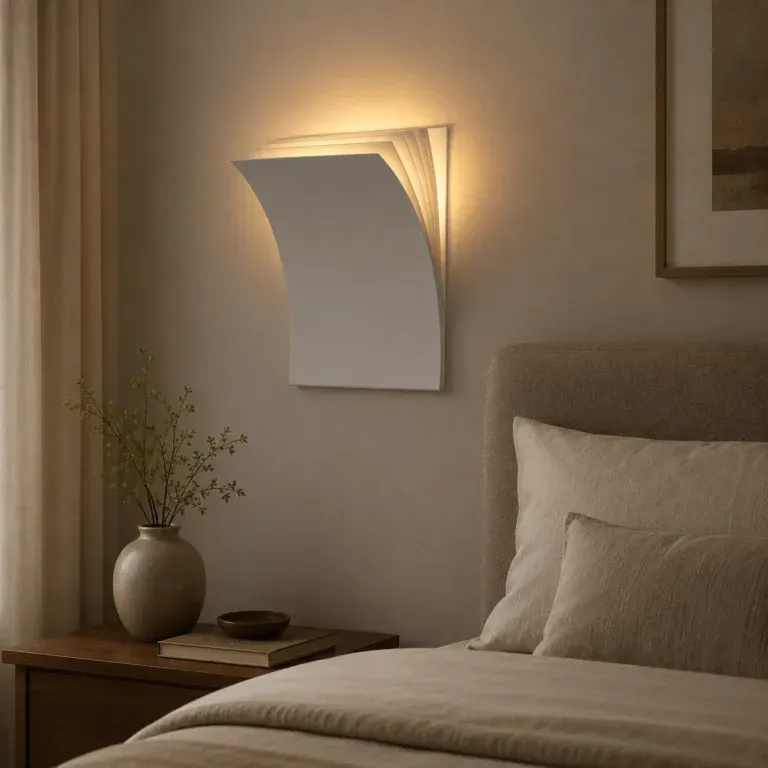
Bedrooms: Place it where direct views of the lamp are minimized from the pillow position. Warm light and dimming are especially useful here, because bedroom lighting should support both practical visibility and a lower-stimulation evening atmosphere.
Hallways and transitions: Repeated wall lights can create visual rhythm and make circulation spaces feel intentional rather than leftover. Keep spacing consistent and avoid installing the centerline too close to eye level if the lamp is visible from a long corridor.
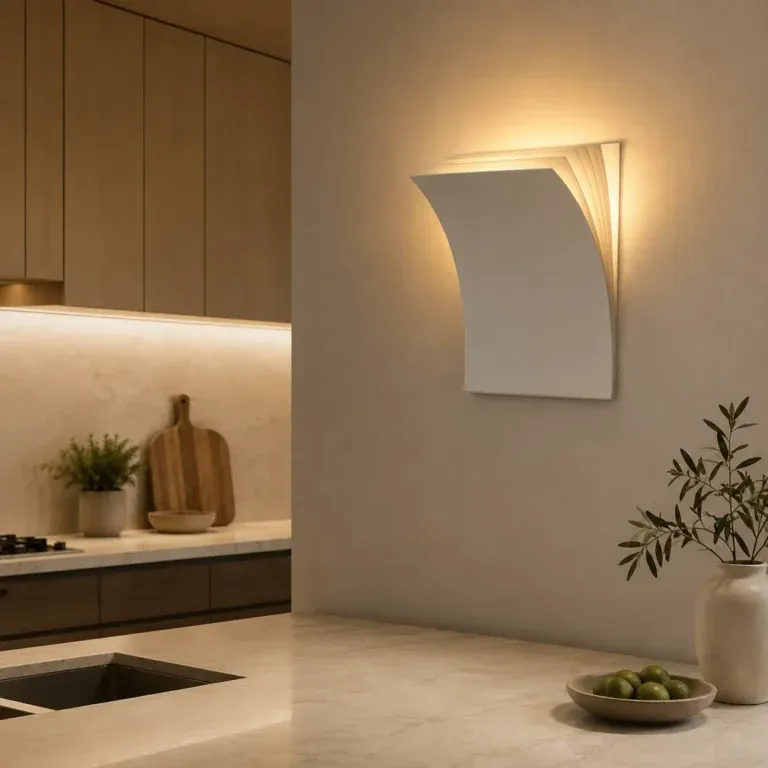
Kitchen / dining zones: Use the sconce as ambient or accent light rather than primary countertop task lighting. It works especially well on short feature walls, beside cabinetry, or near dining corners where a soft vertical glow can balance brighter work lighting.
Hospitality interiors: Boutique hotels, restaurants, and apartment lobbies can use the sculptural profile as a decorative motif, particularly in interiors based on warm neutrals and tactile natural materials.
8. Installation and Comfort Tips
• Choose the mounting height by considering real eye positions—standing, seated, and lying down—not by following a single universal number.
• Use dimming when possible. A lamp that is comfortable at full output during early evening may still feel too bright late at night.
• Avoid placing the sconce directly opposite glossy glass, mirrors, or polished stone if reflections would expose the bright source.
• For bedside use, confirm that the light source remains shielded from the pillow position.
• In kitchens, keep the wall lamp separate from required task lighting over worktops and sinks.
• Use a qualified electrician and a compatible G9 LED within the fixture’s electrical limits.
9. Styling the Fixture in Organic-Modern Interiors
Although the lamp is made from metal, the curved layered form keeps it from feeling industrial. In warm white, it pairs naturally with limewash, textured plaster, oak, walnut, travertine, boucle, linen, and matte ceramics. The strongest results come from repeating a limited palette: warm neutral walls, one or two wood tones, and a restrained group of tactile materials.
Because the shape itself is expressive, leave some visual breathing room around the fixture. A crowded gallery wall can compete with its silhouette; a simpler wall allows the light-and-shadow effect to become part of the decoration.
Conclusion: Lighting as a Quiet Architectural Detail
The Modern Metal Wall Lamp | Curved LED Wall Sconce demonstrates a useful principle in residential lighting: comfort often comes from controlling brightness, not simply adding more lumens. Its layered metal form shields the light source, produces a warm upward halo, and turns the wall itself into part of the lighting composition.
Used as one layer within a broader lighting plan, it can make bedrooms, living rooms, hallways, kitchens, and hospitality interiors feel softer, warmer, and more visually resolved—while also functioning as a small piece of sculptural architecture.