

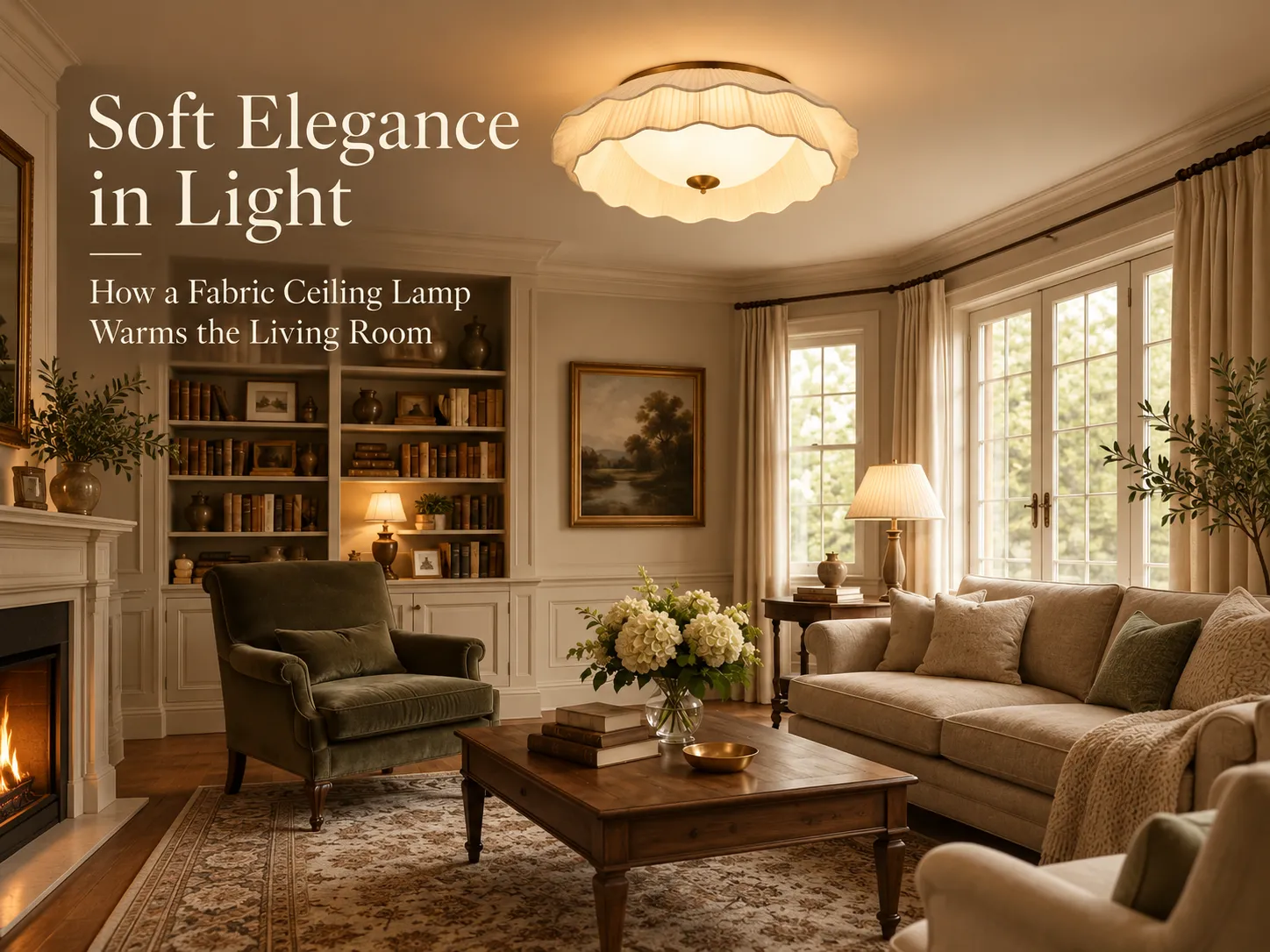

How a Pleated Wave Ceiling Lamp Creates Warmth, Visual Comfort, and a More Layered Home
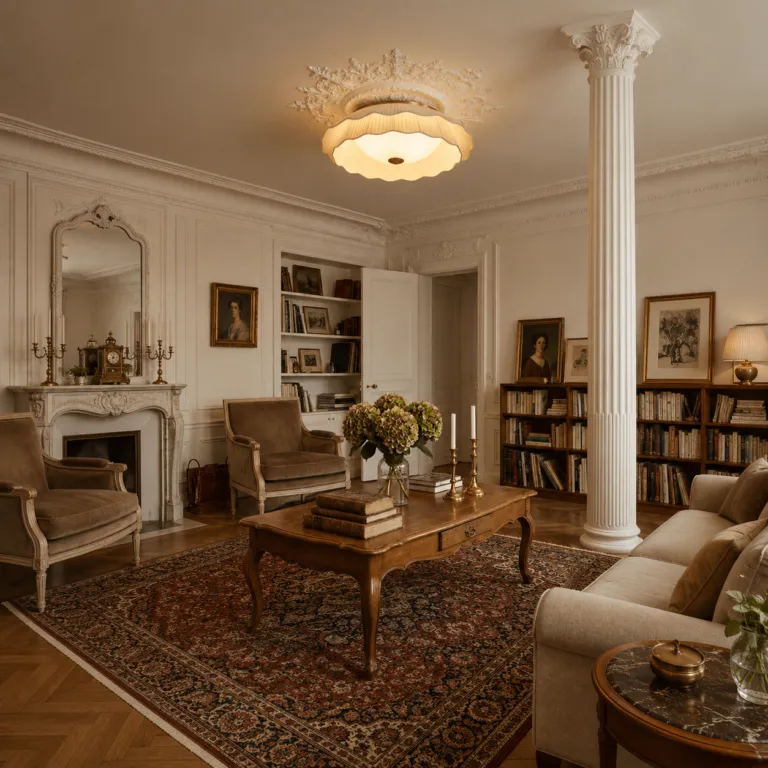
Why Soft Ceiling Light Changes the Feeling of a Room
Ceiling lights often have to do two jobs at once: provide useful ambient illumination and remain visually comfortable when people look upward. A fabric diffuser changes the character of that light. Instead of presenting a small, high-luminance source, the pleated shade spreads brightness over a larger apparent area and introduces gentle variations of light and shadow across its wave-shaped edge.
The featured flush-mount fixture combines a warm cream fabric shade, metal support frame, and integrated LED source. Its low-profile form keeps the room open, while the layered fabric silhouette adds softness that hard-edged downlights cannot provide. The product is specified at 24W, approximately 1200-1800 lumens, and three selectable color temperatures: 3000K, 4000K, and 6000K.
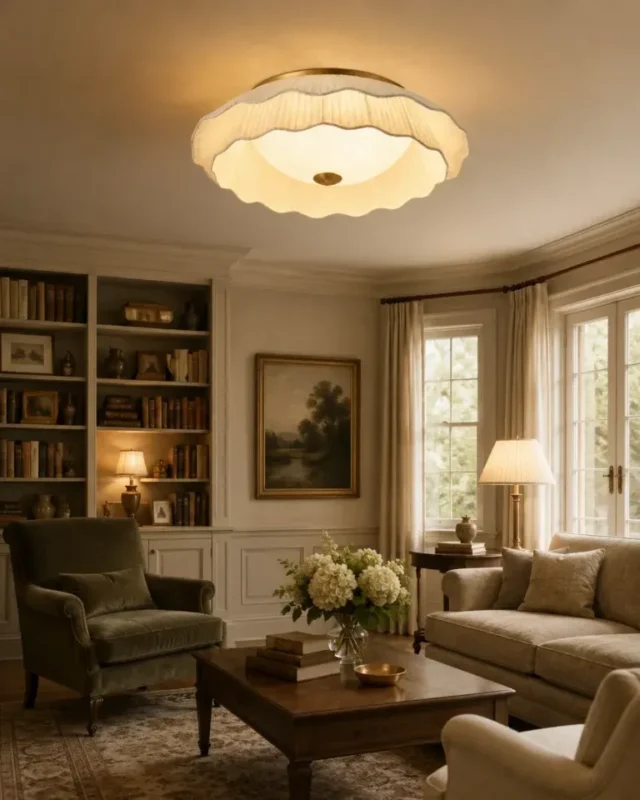
The result is best understood as an ambient layer rather than a complete lighting solution by itself. Comfortable homes use several sources with different purposes: ceiling light for orientation, lamps for reading, wall or shelf light for depth, and daylight whenever it is available.
The Science of Diffusion and Visual Comfort
Visual comfort depends on more than total lumens. CIE lighting guidance evaluates both the quantity and quality of illumination, including glare limitation and color quality. A bright point source can feel uncomfortable even when the average room illuminance is modest, while a larger diffusing surface can appear calmer because luminance is distributed over a wider area.
What the fabric shade actually does
The textile layer scatters transmitted light and softens sharp contrast at the luminaire. Pleats also change the local angle and thickness through which light travels, producing subtle brightness gradients. This adds visual texture, but it also means some light is absorbed. Shade color, weave density, liner material, and aging all influence delivered output.
Why “soft” does not automatically mean glare-free
Diffusion reduces the harshness of visible LEDs, but comfort still depends on source luminance, viewing angle, room brightness, mounting height, and time of day. A ceiling fixture viewed from a reclined sofa can be more prominent than the same fixture viewed while standing. Dimming and nearby secondary light sources help prevent the ceiling from becoming the only bright object in a dark field of view.
Lumens are not lux
The published 1200-1800 lumen range describes light leaving the luminaire. Illuminance on a table or floor is measured in lux and depends on distribution, ceiling height, room geometry, reflectance, and distance. For exact project performance, use photometric data or test a sample in the intended room rather than estimating from wattage alone.
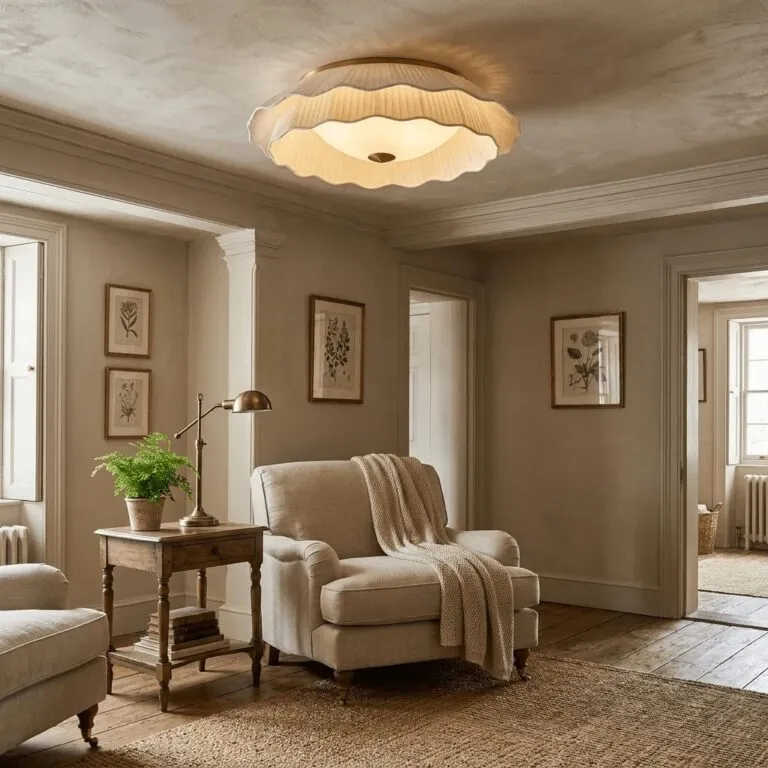
A Sculptural Form That Still Feels Residential
The wave edge gives the fixture a floral, cloudlike profile without becoming visually heavy. Pleating adds a familiar textile language found in curtains and lampshades, helping the ceiling feel connected to the furnishings below. The warm ivory finish works especially well with oak, walnut, antique brass, cream upholstery, limewash, and traditional architectural trim.
Scale and ceiling relationship
At 60 cm in diameter and 15 cm high, the fixture has enough visual presence for many bedrooms, living rooms, dining rooms, and hotel-style suites while remaining relatively close to the ceiling. Actual suitability depends on room area, ceiling height, furniture layout, and the amount of competing visual detail. Confirm dimensions against the room before installation.
Use repetition carefully
One fixture can act as a centered focal point. In a larger open plan, several fixtures may create rhythm, but repeated decorative forms can quickly become busy. When multiple units are required, align them with architectural bays or functional zones rather than simply dividing the ceiling into equal rectangles.
Choosing Color Temperature With Intention
The product offers 3000K, 4000K, and 6000K settings. Correlated color temperature describes the apparent warmth or coolness of white light; it does not by itself describe color accuracy, brightness, or spectral quality. The correct choice depends on materials, time of use, daylight, and the atmosphere the room should support.
3000K: warm and relaxed
A 3000K setting usually pairs naturally with cream fabric, timber, warm paint, and evening use. It is a strong default for bedrooms, lounges, and dining areas where the goal is comfort rather than clinical crispness.
4000K: neutral and clearer
A 4000K setting can make white walls and task surfaces feel more neutral. It may suit mixed-use rooms where reading, cleaning, or daytime activity is important, provided it is coordinated with nearby lamps and under-cabinet lighting.
6000K: cool and visually active
A 6000K setting appears distinctly cool in most residential interiors. It may feel appropriate for specific high-activity or display conditions, but can clash with warm fabric and traditional furnishings. Judge the option in the actual room and avoid assuming that cooler light is automatically brighter or more efficient.
Color consistency matters
A room usually feels more coherent when adjacent light sources share compatible color temperatures. If the ceiling light is 3000K, consider keeping table and floor lamps near the same range unless contrast is deliberate. Also confirm the switching sequence and whether the selected color setting is retained after power is turned off.
Room-by-Room Applications
Living room
Use the ceiling light as a broad ambient layer, then add a reading lamp beside seating and a lower accent source near shelving or artwork. Separate controls let the room shift from daytime activity to a quieter evening scene.
Bedroom
Choose the warmer setting and keep brightness adjustable where possible. Bedside lamps should provide localized reading light so the ceiling fixture can be dimmed before sleep. Check the diffuser from the pillow position to ensure it does not dominate the field of view.
Dining room
A flush mount can be useful where ceiling height does not suit a pendant. Center it on the table or on the room’s architectural axis, and supplement it with wall light or candles for depth. Good color rendering is particularly valuable for food, timber, textiles, and skin tones.
Study, library, or quiet corner
The fabric fixture can establish a calm background, but focused reading light is still needed. Place the task lamp so the hand and body do not cast strong shadows across the page, and balance it with modest ambient light to reduce extreme contrast.
Efficiency, Heat, and Maintenance
LED technology converts a greater share of electrical input into useful light than traditional incandescent lighting. Even so, LEDs and their drivers still produce heat. That heat must be managed through the luminaire structure and surrounding air; fabric should never obstruct intended ventilation or contact components not designed for it.
A practical efficiency calculation
Using the published range, the simple luminaire efficacy is approximately 50-75 lumens per watt (1200-1800 lm divided by 24W). This is a rough product-page calculation, not a laboratory certification. Optical losses, tolerances, color-temperature setting, driver performance, and measurement method can affect the result.
Keeping fabric looking clean
- Turn off power and allow the fixture to cool before cleaning.
- Use a soft dry brush, clean microfiber cloth, or low-suction upholstery attachment if permitted by the manufacturer.
- Avoid soaking, harsh chemicals, and abrasive rubbing, which can distort pleats or discolor fibers.
- Control airborne grease and smoke; a fabric shade is generally better suited to living spaces than directly above a cooking zone.
Integrated LED planning
Because the light source is integrated, confirm expected service life, driver availability, warranty terms, and whether the LED or driver can be replaced. Long life depends strongly on thermal management, operating hours, ambient temperature, component quality, and control compatibility.
Product Snapshot
| Attribute | Published product information |
|---|---|
| Product type | Fabric LED flush-mount ceiling light |
| Design | Pleated wave shade in ivory white / warm cream |
| Materials | Fabric lampshade with metal frame |
| Light source | Integrated LED, 24W |
| Published output | Approximately 1200–1800 lm |
| Color temperature | 3000K / 4000K / 6000K |
| Voltage | AC 100–240V, 50/60Hz |
| Installation | Flush-mount ceiling installation |
| Published size | 60 cm diameter × 15 cm high |
| Applications | Living rooms, bedrooms, dining rooms, apartments, and hotel suites |
Before You Install
- Confirm the exact color-temperature switching behavior, dimming compatibility, and driver specification.
- Check ceiling structure, junction-box compatibility, supply voltage, grounding, and local certification requirements.
- Compare the fixture diameter and height with doors, beams, sprinklers, detectors, and ceiling ornament.
- Use suitable fixings for the ceiling material and the fixture weight; do not rely on decorative plaster alone.
- Keep fabric clear of heat sources, moisture, cooking grease, and unintended contact with electrical components.
- Have mains-voltage installation completed and tested by a qualified electrician under local rules.
The Best Result Comes From Balance
This pleated fabric ceiling light is most successful when it is treated as part of the room’s material and lighting composition. Its broad luminous surface softens the visual presence of the LED source; its wave form adds character; and its selectable color temperatures allow the atmosphere to be adjusted. None of those features removes the need for good placement, layered controls, and task-specific light.
Start with the activity, not the fixture. Decide where people read, converse, dine, and rest. Then use the ceiling light to establish a calm ambient field, and add focused or accent lighting only where it contributes. The aim is not maximum brightness. It is enough light, in the right place, with comfortable contrast and a coherent relationship to the interior.
Elegant Pleated Wave Ceiling Lamp – Click to view the product