


Mushroom Floor Lamp with Side Table | A Science-Based Home Lighting Guide to Color Temperature, Luminous Flux, Color Rendering, and Spatial Scale
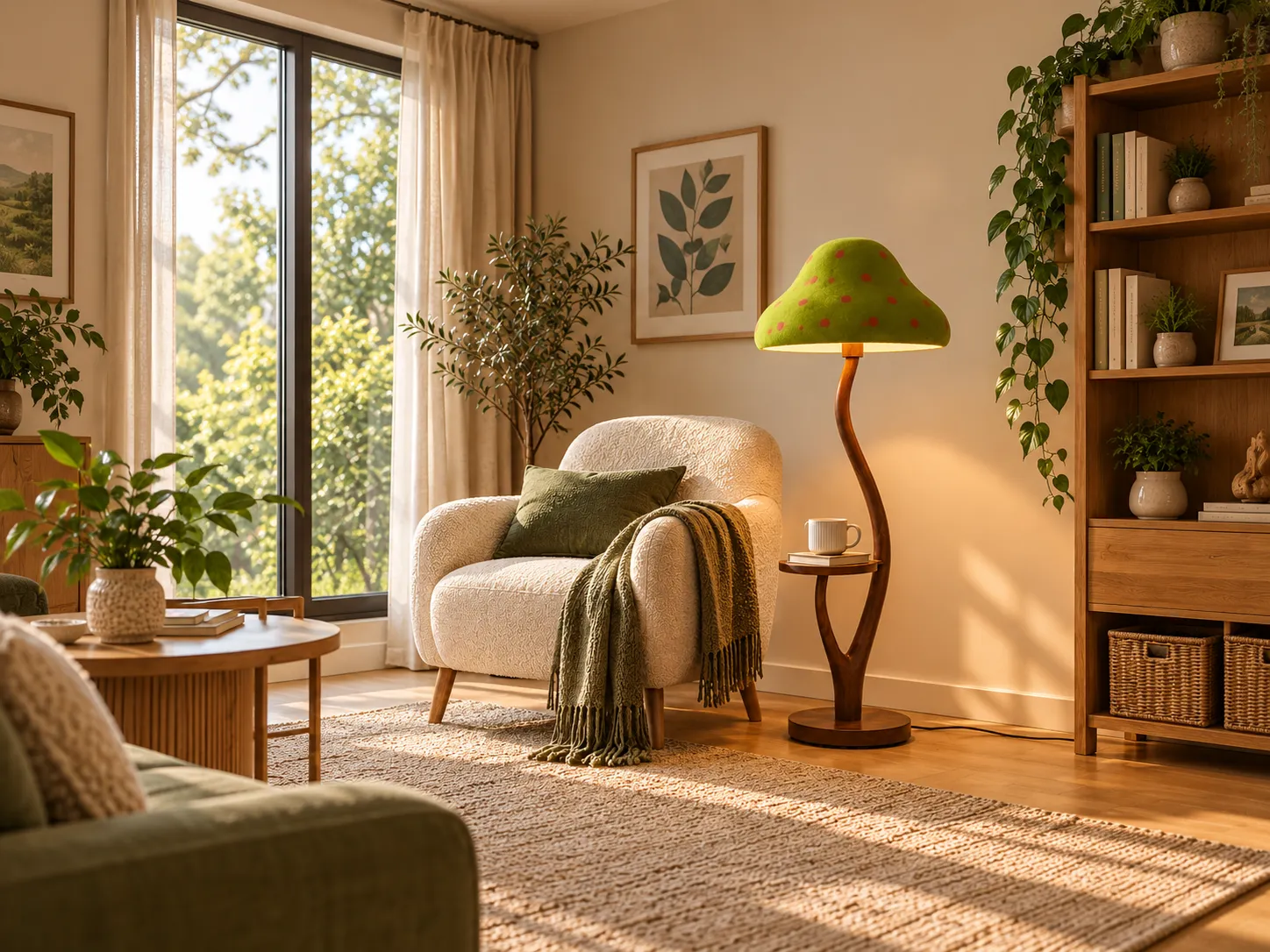
Hero image: a home application concept showing the mushroom floor lamp beside a reading chair, with its integrated side-table function.
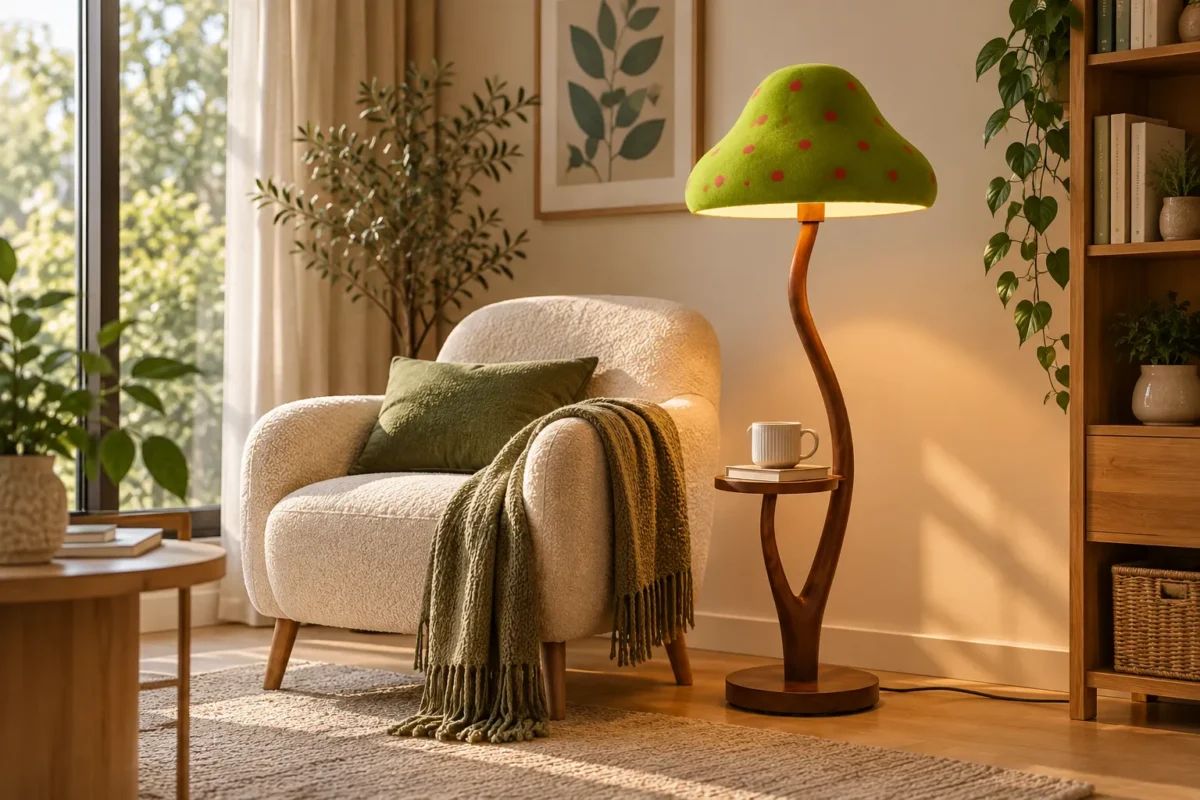
CORE IDEA | Good residential lighting is not about making a room as bright as possible. It is about placing the right amount, color, and direction of light where real life happens. A mushroom floor lamp with a built-in side table combines task lighting, ambient lighting, and a compact piece of furniture within one footprint.
01 From “Lighting Fixture” to “Lifestyle Hub”: Why Integrated Floor Lamps Fit Modern Homes
Modern homes—especially apartments, children’s rooms, guest rooms, and compact living rooms—often do not lack furniture; they have too many separate functions competing for limited floor area. Beside a sofa, you may need a lamp, a small surface for a drink, and a place to set down a phone or book. Every additional item occupies space and adds visual fragmentation. By integrating the lamp stem, local lighting, and an approximately 30 cm side table, one object can support more daily activities with less clutter.
Xunlu Lighting’s Mushroom Floor Lamp with Side Table combines a mushroom-shaped shade, a wood-grain structure, and a small round table. According to the product page, the lamp is 145 cm high, the shade is 40 cm in diameter, and the side table is 55 cm high. These proportions relate well to seated living: the shade sits above a seated user’s eye line, while the table is close to the typical working height of a sofa arm, lounge chair, or bedside surface. This helps place light near the activity zone while keeping a cup, book, or glasses within easy reach. [1]
Visually, the green dome and red polka dots create a strong identity, while the wood-grain structure balances the playful pattern with a natural material expression. This is not a “disappearing” minimalist fixture; it behaves more like a character in the room. In cream-toned interiors, nature-inspired Nordic spaces, relaxed retro schemes, playful children’s rooms, or boutique hospitality settings, it can serve as a deliberate focal point.
Key Product Specifications (Based on Public Product-Page Information)
| Specification | Value | Specification | Value |
|---|---|---|---|
| Overall Height | 145 cm / 57.09 in | Shade Size | Ø40 × H26 cm |
| Side Table | Ø30 cm; H55 cm | Base | Ø30 cm |
| Lamp Holder | E27 × 1 | Maximum Power | 40W |
| Suggested CCT | 2700K Warm White | Estimated Output | Approx. 400–800 lm |
| Voltage | AC 100–240V | Installation | Floor-standing / Plug-in |
| Main Materials | Resin, metal, fabric | Net Weight | Approx. 5.2 kg |
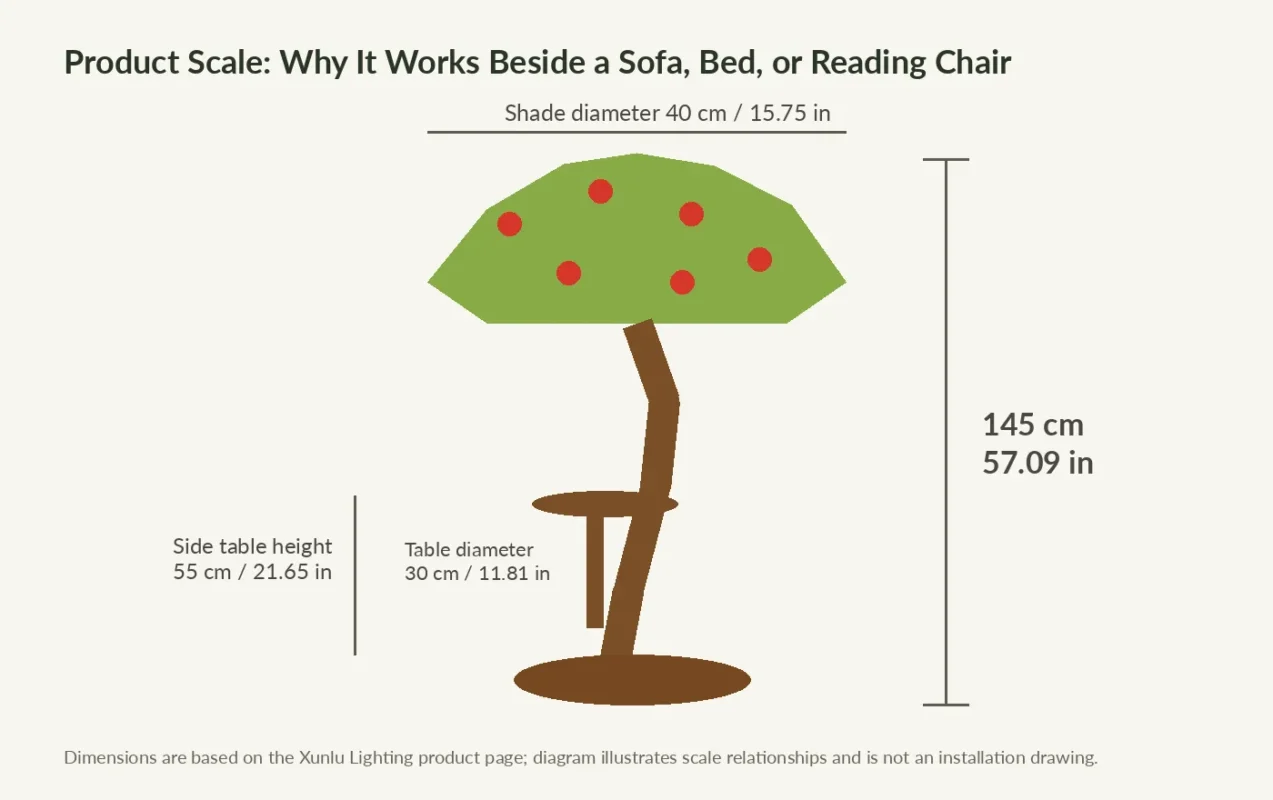
Figure 1 | Scale relationship based on the published product dimensions; intended for space planning, not as an installation drawing.
02 Lighting Science: Why 2700K, 400–800 lm, and a Diffusing Shade Matter
A residential lamp should not be judged only by appearance—or by wattage. More useful indicators include luminous flux (lm), correlated color temperature (K), color rendering (CRI / TM-30), and glare control.
2.1 Color Temperature Is Not Brightness: 2700K Means Warm-White Light
The U.S. Department of Energy explains that lower correlated color temperature (CCT) values appear visually warmer, while higher values appear cooler. Around 2700K is generally considered warm white and is widely used in residential, dining, and relaxation settings. [2] This does not mean that 2700K is automatically “healthier” or “more premium.” Rather, its warmer appearance often suits evening spaces where a calm, intimate, low-stimulation atmosphere is desired.
Nighttime lighting should also be considered in terms of intensity and direction. An Illuminating Engineering Society review emphasizes that reducing light intensity at night is one of the most direct ways to limit unnecessary nighttime light exposure. It also recommends using warmer light where appropriate and putting light where it is actually needed instead of keeping the whole room brightly illuminated. [5] A floor lamp is therefore often most valuable in the evening not because it can “light the whole room,” but because it can keep a local zone visible, comfortable, and layered.
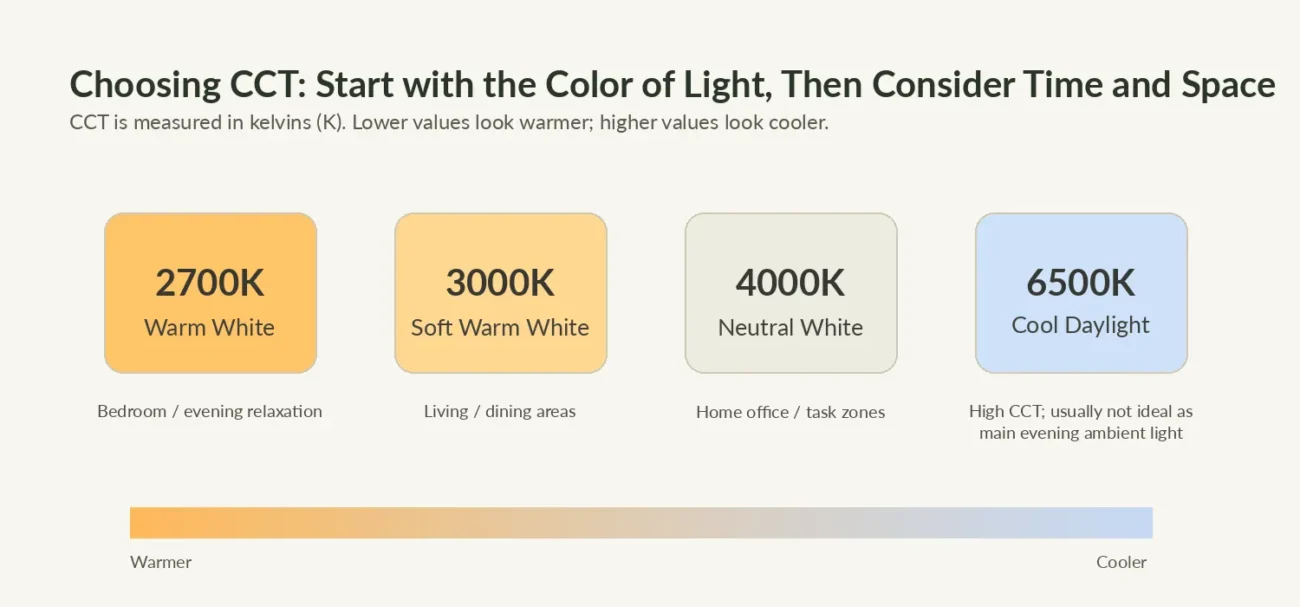
Figure 2 | Typical visual tendencies and residential uses of common color temperatures. Color temperature describes the color appearance of light; it does not directly measure brightness.
2.2 400–800 lm: Better Suited to Local Lighting Than to a Living-Room Main Light
Luminous flux, measured in lumens (lm), describes the total amount of visible light emitted by a source. The product page’s suggested range of approximately 400–800 lm is typically more appropriate for local lighting beside a sofa, bed, lounge chair, or reading nook. The illuminance that actually reaches a book or tabletop also depends on shade transmittance, bulb position, distance from the user, and the reflectance of surrounding surfaces, so lumens cannot be converted into one fixed tabletop lux value without considering the full setup.
For relaxing, conversation, phone use, or short periods of reading, a lower-to-mid lumen level can be a comfortable starting point. For extended reading of small text, the reading surface should receive more direct and stable task lighting, while the bright bulb or inner surface of the shade should remain out of the direct line of sight to reduce glare.
2.3 Color Rendering Affects Whether Objects Look “Like Themselves”
The U.S. Department of Energy recommends at least CRI 80 for indoor lighting; CRI 90 or above generally indicates better color fidelity. [3] In residential interiors, higher color rendering can help reveal subtle differences in wood grain, green textiles, skin tones, food, and artwork. NIST also notes that a light source’s spectral distribution strongly influences how we judge object colors. Simply appearing to be “white light” does not guarantee that all colors will look natural. [4]
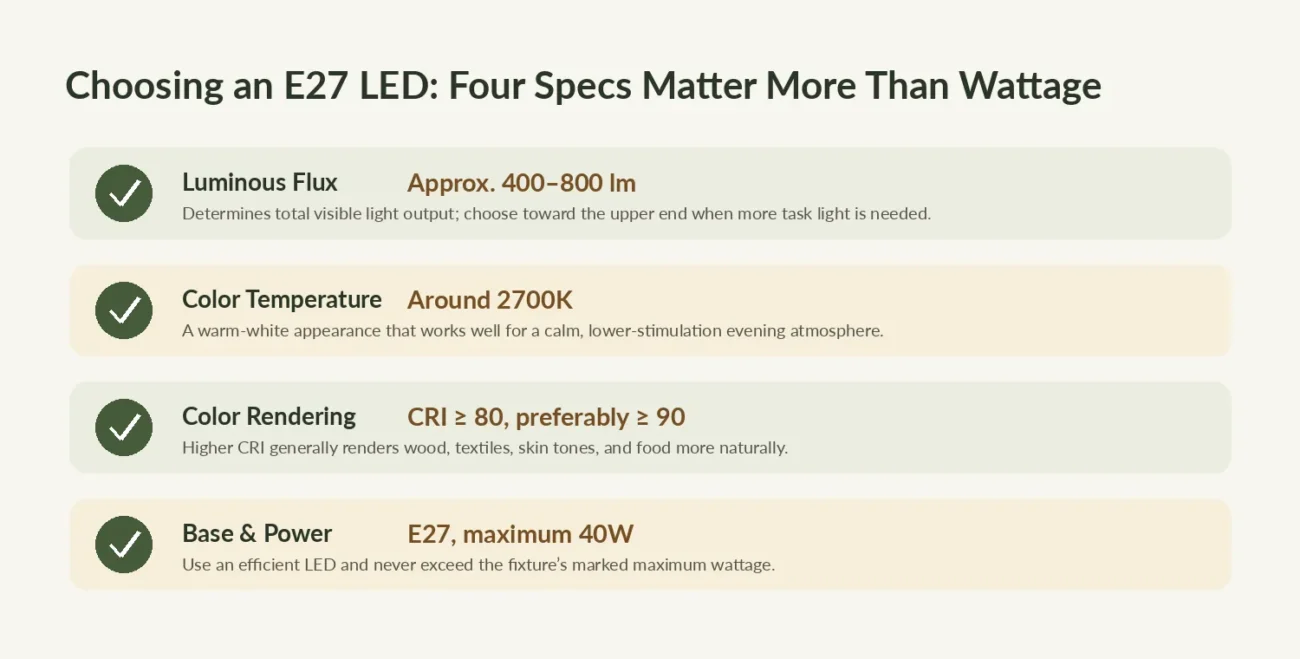
Figure 3 | Four bulb specifications to check first when selecting an E27 LED for this floor lamp.
03 Layered Lighting: How a Floor Lamp Becomes Part of the Whole Room
High-quality residential lighting usually comes from multiple layers of light rather than a single high-output source. U.S. Department of Energy residential lighting guidance also discusses room lighting through combinations of direct, indirect, and task-oriented fixtures, noting that the actual number and type of luminaires should respond to room size, surface reflectance, and the activities taking place. [6]
In everyday interiors, this can be simplified into three layers: ambient light supports movement and overall visibility; task light supports activities such as reading, writing, grooming, or food preparation; and accent light shapes contrast, background brightness, and visual focus. The mushroom floor lamp sits between the latter two roles—providing local light beside a chair while also creating a calmer evening atmosphere when the main overhead lighting is not needed.
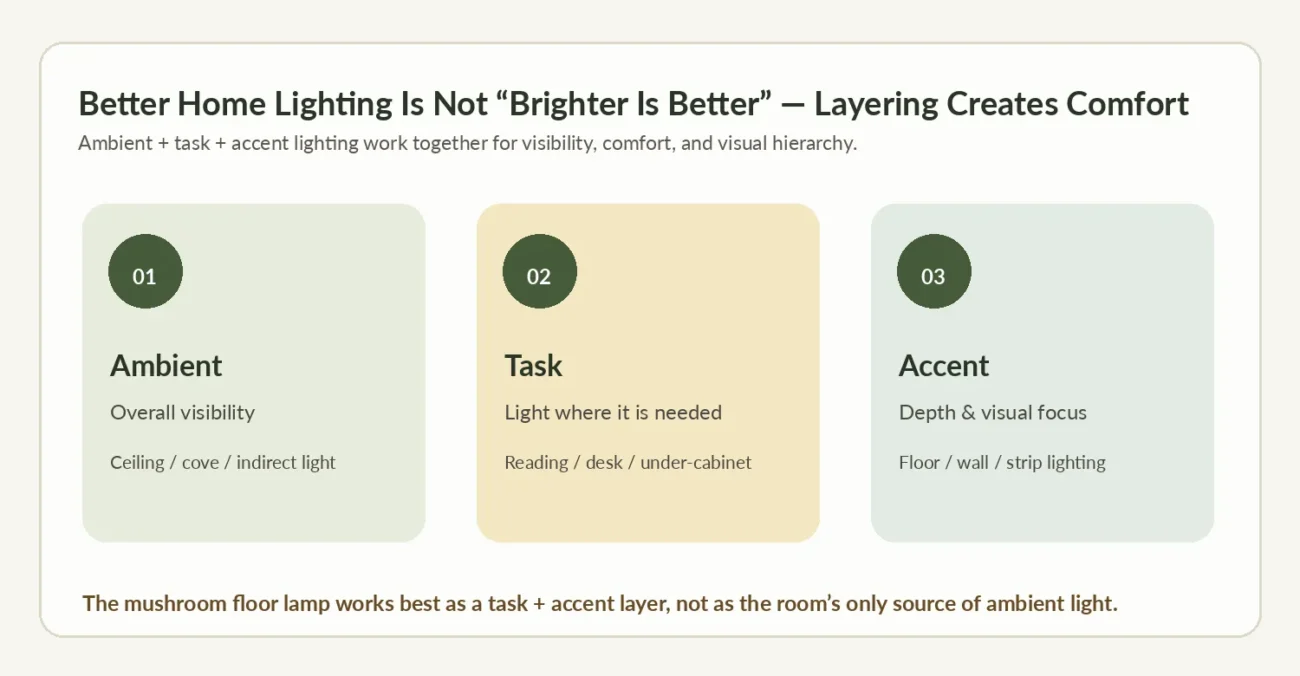
Figure 4 | Three layers of residential lighting: a floor lamp is a useful supplement for local task lighting and accent lighting.
04 Five Places Where This Lamp Works Best: From the Living Room to a Child’s Room
4.1 Beside the Sofa: Keep Seated Activities Within Arm’s Reach
Beside the sofa is one of the most natural locations for this type of product. The shade provides soft local light, while the integrated table can hold a coffee cup, remote control, glasses, or the book currently being read. Position the shade slightly above the seated eye line where possible so the bright opening is not directly visible, and keep the circulation path clear so the power cord does not cross a frequently used walkway.
4.2 Reading Nook: Work with Daylight Instead of Competing with the Window
During the day, stable natural light should do as much of the work as possible; the floor lamp can supplement it toward dusk and in the evening. If a strong hand shadow falls across the page, move the lamp to the side opposite the dominant hand so light approaches the reading surface from the side/front. For extended reading, add more clearly directed task lighting rather than relying only on distant ambient light.
4.3 Bedside: One Piece Instead of a Separate Nightstand + Table Lamp
In a compact bedroom, the integrated side table can reduce the number of separate furniture pieces. Warm-white light around 2700K can support a visually softer evening atmosphere. Before sleep, use only as much light as needed for the activity instead of keeping the entire bedroom at a high brightness level.
4.4 Child’s Room: Playful Form Should Be Paired with Practical Safety
The mushroom form and polka-dot shade have a playful character, but a child’s room also requires attention to stability, cable management, and bulb surface temperature. Use an efficient LED bulb, place the base on a flat and stable floor, and route the cable and switch where they are less likely to create a trip hazard. The fixture is intended for indoor use and should not be placed in wet zones or where splashing is likely.
4.5 Boutique Hospitality / Commercial Corners: Use One Memorable Object Instead of Many Small Decorations
In a boutique guest room, relaxed café corner, or reception lounge, a visually distinctive lamp can function as both a decorative focal point and a useful source of light. Compared with layering many small ornaments, one sculptural, material-rich, functional floor lamp can create a stronger photographic memory while still supporting everyday use.
05 Styling the “Green Mushroom + Wood Grain” for a Grown-Up Interior
The strongest visual feature is the green shade with red polka dots. To keep it sophisticated in an adult living room or bedroom, the goal is not to add more bright colors, but to control the background.
- Use cream, beige, light gray, or warm wood tones as the large-area base, allowing the green shade to become the main visual statement rather than competing with other saturated colors.
- Repeat materials rather than repeating colors—for example, add a wood bookshelf, rattan basket, wool throw, or linen curtain so the wood-grain structure feels naturally integrated.
- Plants can echo the green shade without requiring every accessory in the room to be green.
- The red polka dots already add enough playfulness. Other accents can stay restrained in terracotta, brown, or small touches of black to avoid a stack of competing high-saturation colors.
- When the lamp is on, warm-white light will reinforce the warmth of wood and beige textiles. If the room also has a main ceiling light, keeping the color temperatures reasonably close can reduce the patchy feeling of “yellow here, white there.”
06 Bulb Selection and Everyday Use: Turning Specifications into Real Experience
The fixture uses one E27 lamp holder with a maximum rated power of 40W. In a modern home, prioritize an efficient LED rather than interpreting “max 40W” as a requirement to use a 40W bulb. LED wattage primarily indicates power consumption; perceived brightness is better understood through lumens.
- For atmosphere first: start around 400–500 lm, 2700K, and CRI ≥ 80.
- For more reading support: consider closer to 700–800 lm and prioritize CRI ≥ 90. If the fabric shade is dense and reduces light transmission, adjust based on the real installed result.
- If you want dimming, the bulb, switch, and dimming method must be compatible. Mismatched dimming components can cause flicker or unstable operation.
- Never exceed the maximum wattage marked on the fixture. Switch off the power and allow the bulb to cool before replacement.
- Keeping the fabric shade clean can help maintain more even light transmission. Follow the material-care instructions and electrical-safety requirements when cleaning.
07 Common Misconceptions: “Eye Protection,” “Sleep-Friendly,” and “Warmer Is Always Better”
Home-lighting marketing often compresses complex visual science into simple labels. A more careful statement is that comfortable lighting results from the combined effects of brightness, spectrum, direction, glare, contrast, timing, and individual visual needs. A label such as “2700K,” “blue-light free,” or “eye-care lamp” by itself cannot establish a specific medical or sleep benefit.
Warm light at night can often create a visually calmer, lower-stimulation atmosphere, but nighttime light intensity is equally important. IES guidance identifies reducing intensity as an important step in limiting nighttime light exposure. [5] In practice, a more sensible pre-sleep strategy is usually to reduce overall brightness, limit bright overhead light, localize illumination, avoid staring directly at bright emitting surfaces, and still provide enough task light when real reading is required.
08 Space-Planning Checklist Before You Buy
- Confirm that the 145 cm overall height will not interfere with wall switches, curtains, cabinet doors, or other moving elements.
- Reserve a stable, level area at least large enough for the Ø30 cm base; avoid placing the base partly on the edge of a thick, soft rug where it may tilt.
- The side table is about 30 cm in diameter and is best treated as a temporary surface for small items—not as high-capacity storage or heavy-load furniture.
- Check the nearest power outlet and route the cord along a wall or furniture edge whenever possible to reduce trip risk.
- For children’s rooms or pet-active areas, prioritize cable restraint and fixture stability.
- If the main room lighting is 4000K and the floor lamp uses 2700K, expect a visible color-temperature zone. If you prefer a more unified look, keep the color temperatures within the same scene reasonably close.
09 FAQ | Common Questions About a “Floor Lamp + Side Table”
Q1: Can 400–800 lm serve as the main light for a living room?
Usually not. That output range is better suited to local lighting or ambient supplementation. Overall living-room lighting should be planned according to floor area, ceiling height, surface colors, and the other luminaires in the space.
Q2: Will 2700K look too yellow?
Whether it feels “too yellow” depends on personal preference, wall color, and the surrounding lighting. 2700K is a typical warm-white appearance. If you prefer a crisper look, 3000K can be a good alternative; within one visual scene, avoiding large color-temperature differences generally produces a more coherent result.
Q3: Is there a meaningful difference between CRI 80 and CRI 90?
CRI 90 often renders skin tones, wood, and textiles more naturally, and the difference can be especially noticeable in warm and red objects. CRI is not the only color-quality metric, however; TM-30 provides a broader description of color rendering. [3]
Q4: What does a fabric shade contribute?
A fabric shade can shield the bare source and diffuse light, reducing direct brightness and hard shadows. The actual result depends on fabric density, color, bulb position, and light output.
Q5: Which interior styles suit this lamp best?
Nature-inspired Nordic, cream-toned interiors, relaxed retro rooms, child-friendly spaces, boutique hospitality, and playful contemporary homes can all work well. The key is to use neutral colors and natural materials as the background so the lamp’s sculptural form becomes the focal point.
Conclusion | A More Comfortable Home Needs Better-Placed Light, Not Simply More Light
The value of the mushroom floor lamp is not limited to its playful appearance. It combines lighting, a side table, and a decorative focal point in one product, addressing a very real challenge in modern homes: how to place light where it is needed, keep everyday objects within easy reach, and preserve personality without using more floor area than necessary.
From a lighting-science perspective, its warm-white 2700K appearance, approximately 400–800 lm of local output, light-softening fabric shade, and compatibility with high-CRI LED bulbs can all be understood through the lens of visual comfort and real use—not exaggerated health claims. Place it beside a chair that people genuinely sit in, a sofa where reading actually happens, or a bedroom that benefits from fewer but more functional objects, and it moves from being a novelty lamp to becoming part of everyday life.
Xunlu Lighting | Lighting Manufacturer · OEM & ODM Custom Lighting Solutions
Email: sales@xunlulighting.com · Website: xunlulighting.com
References & Further Reading
[1] Xunlu Lighting. Mushroom Floor Lamp with Side Table | Nordic Lighting. Product specifications and publicly available parameters. Accessed September 16, 2026.
[2] U.S. Department of Energy. Purchasing Energy-Efficient Light Bulbs. Guidance on correlated color temperature (CCT) and typical residential color-temperature applications.
[3] U.S. Department of Energy. LED Basics. Information on CRI, TM-30, and color quality for indoor LED lighting.
[4] National Institute of Standards and Technology (NIST). “The Eye of the Beholder: How Lighting Affects Our Color Perception,” 2023. Discussion of spectral power distribution and color perception.
[5] Illuminating Engineering Society (IES). “A Circadian Prescription.” Design principles related to nighttime light intensity, color temperature, and light direction.
[6] U.S. Department of Energy. Strategy Guideline: High Performance Residential Lighting. Guidance on layered lighting and room-by-room residential lighting strategies.
Mushroom Floor Lamp with Side Table | Click to view the product