

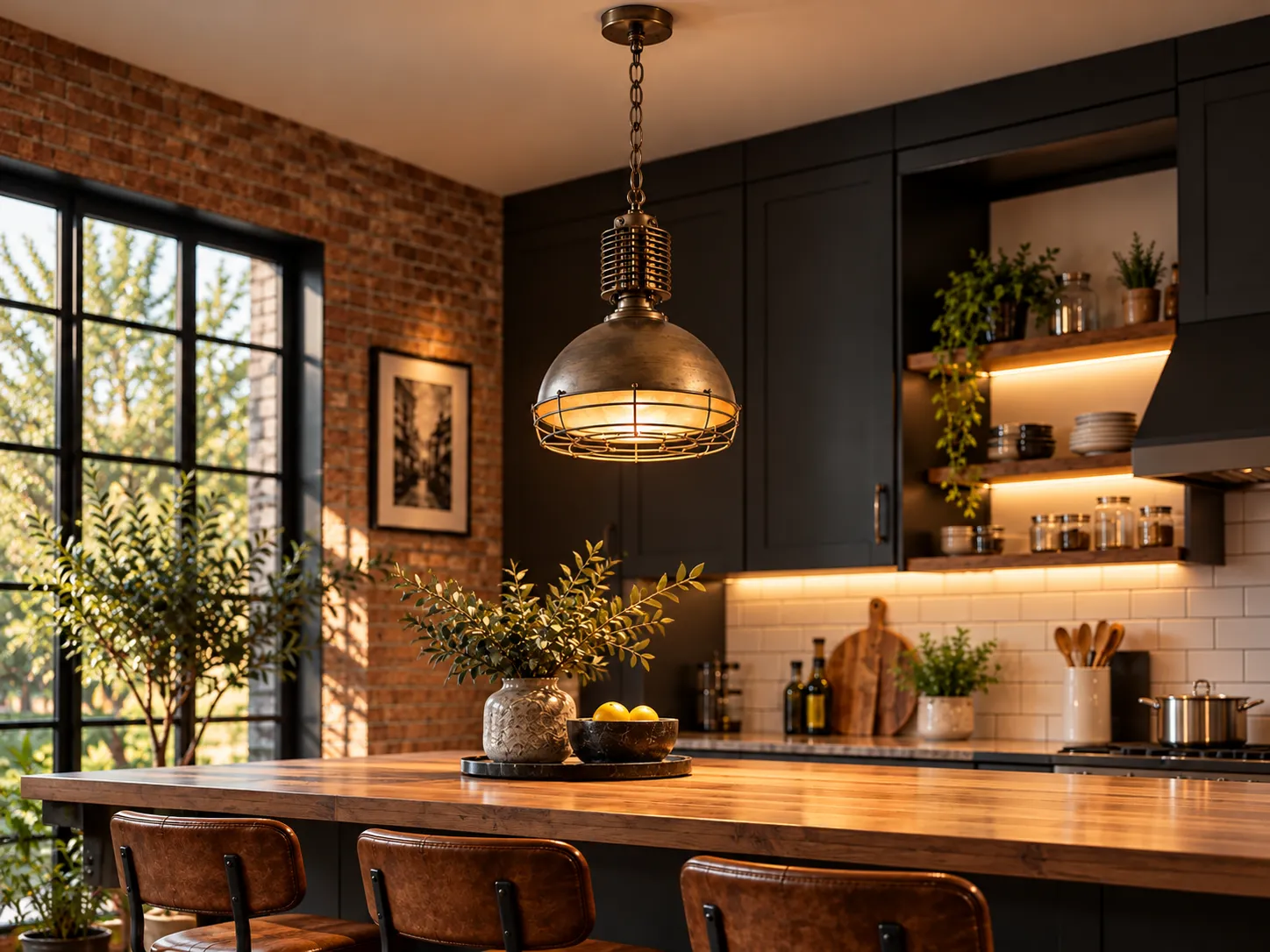

Design ideas, sizing, lighting science, installation, and care for kitchens, dining rooms, and cafés.
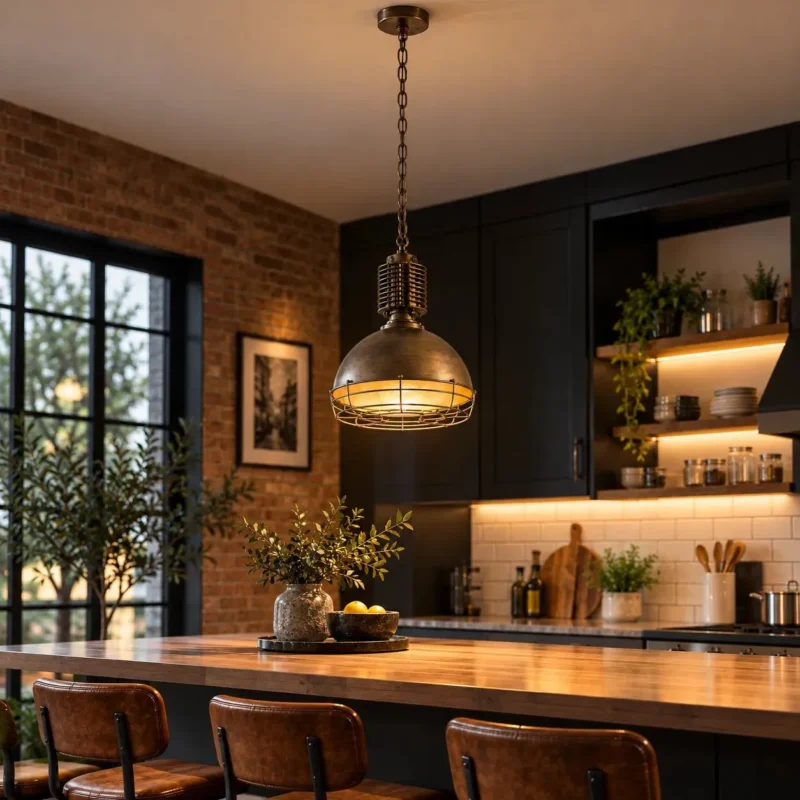
Why Industrial Pendant Lighting Still Works in Modern Interiors
Industrial pendant lights draw from the practical forms of early workshop and warehouse lighting: generous metal shades, visible hardware, suspended chains, and utilitarian proportions. When combined with warm timber, exposed brick, or matte cabinetry, a single pendant can create an intentional focal point without making a room feel overly decorated.
The Vintage Industrial Pendant Light from xunlulighting combines a substantial metal shade and protective cage detailing. Its shape gives visual weight to open-plan kitchens, loft dining rooms, and hospitality spaces. However, appearance and light performance should be evaluated separately: the shade controls where light travels, while the installed bulb determines much of the actual light output and color.
1. Layer Light Instead of Relying on One Fixture
A pendant above an island provides a visually focused pool of light and can help define a gathering zone. It should not automatically be treated as the sole source of task illumination for food preparation. Complement it with under-cabinet lighting, ceiling downlights, or other well-positioned task fixtures.
The Illuminating Engineering Society (IES) distinguishes ambient lighting from task lighting and explains how their combination supports a space more effectively than depending on one lighting layer. Accent lighting can add definition to shelves, wall texture, and architectural details. For a kitchen, consider the pendant the decorative focal layer, with practical counter illumination handled as a coordinated system.
2. Choosing the Right Size and Finish
The product is listed in two diameters and three finishes. The dimensions below are the manufacturer’s published listing values, not measurements made for this article.
| Variant | Metric | Imperial |
|---|---|---|
| Smaller shade | Ø50 × H62 cm | Ø19.69 × H24.41 in |
| Larger shade | Ø80 × H62 cm | Ø31.50 × H24.41 in |
| Chain adjustment | Up to 150 cm | Up to 59.06 in |
Antique bronze develops a heritage, workshop-inspired look; black creates stronger contrast in urban lofts and contemporary cafés; silver generally works with lighter, more understated industrial palettes. Before choosing Ø80 cm, compare the actual shade diameter against the table or island width and surrounding sightlines.
3. Hanging Height: Comfort, Visibility and Safety
For a pendant above a dining table or kitchen island, a common preliminary design range is roughly 75–90 cm (30–36 in) between the tabletop and the lowest point of the fixture. This is a rule of thumb, not a universal building-code requirement. Adjust for occupant height, ceiling height, the unusually deep 62 cm body, and visibility across the room.
In walk-through areas, check applicable local electrical and building rules for minimum clearance. Large pendants should not obstruct doors, circulation routes, sprinklers, or other ceiling equipment. Because the published chain is adjustable, a qualified installer can set the final drop after checking the ceiling structure and mounting system.
4. Bulb Selection: Lumens, Watts, and Color Temperature
The listed fitting uses one E27 socket, with a maximum lamp wattage of 60 W; the brand recommends an 8–15 W LED bulb. The listing estimates approximately 800–1,600 lumens depending on the chosen bulb, rather than guaranteeing that output from the fixture itself. Verify the real bulb’s package for lumens, wattage, suitability for enclosed or shaded fittings, and compatibility with any dimmer.
Watts describe electrical power consumption, not visible brightness. Lumens measure total light emitted by the source. Illuminance at a countertop is measured in lux and depends on the bulb, shade geometry, mounting height, nearby surfaces, and competing ambient light. Thus, total bulb lumens should not be presented as a verified lux measurement on a work surface.
For a relaxed vintage effect, 2700–3000 K bulbs tend to provide a warm-white appearance. Neutraler lighting around 3500–4000 K may be useful in task-oriented environments if the room’s overall design calls for it. Kelvin describes the appearance of white light rather than its brightness. If dimming is wanted, confirm that both the LED lamp and control are dimmable.
5. Styling Ideas for Three Different Spaces
Kitchen Islands: Balance Practicality and Character
A single wide shade can anchor a compact island. Echo its metal finish in handles or stools while using timber and textiles to keep the room welcoming. For knife work and meal preparation, avoid creating hand shadows by relying only on the central downlight; place supplementary counter lighting where it reaches the actual task area.
Dining Rooms: Build a Comfortable Pool of Light
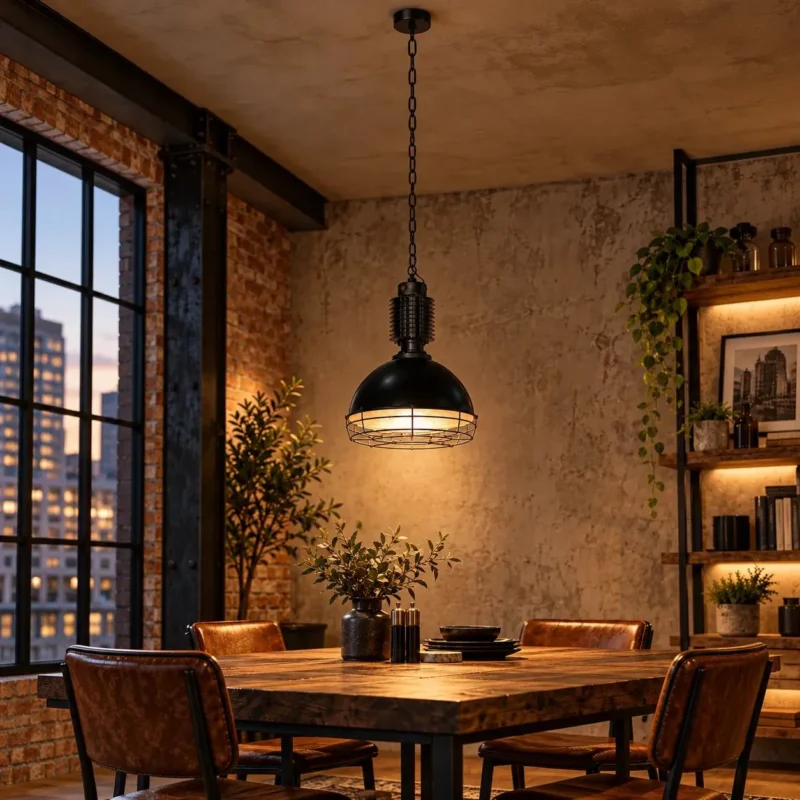
Position the pendant over the table rather than over the geometric center of the room if those locations differ. A warm LED bulb and controlled light distribution can bring dishes, wood surfaces, and tabletop details into visual focus. Test seated and standing sightlines before fixing the final height.
Cafés and Hospitality: Repeat a Simple Visual Language
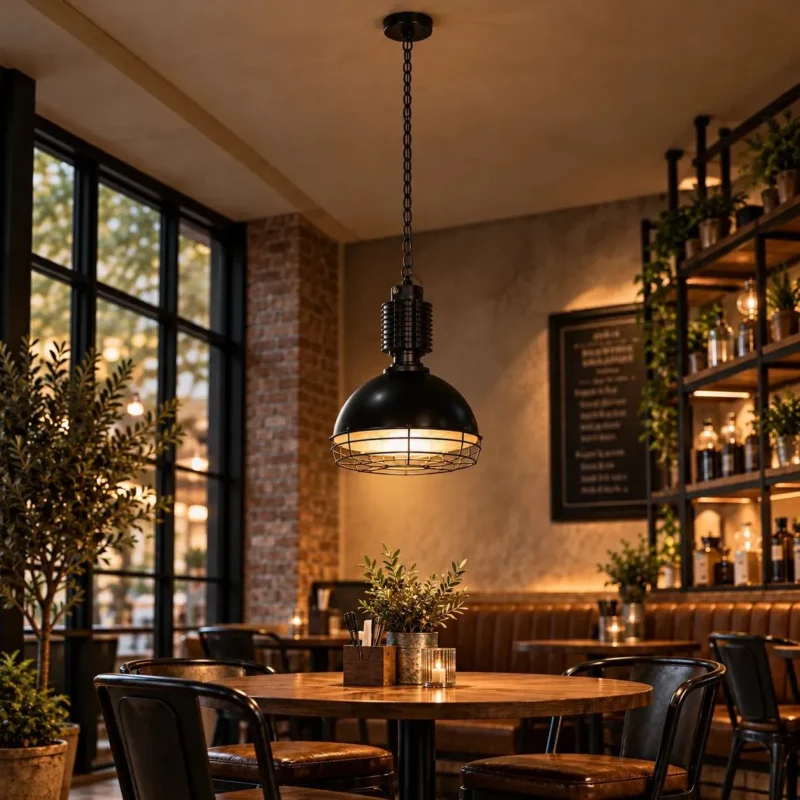
In commercial interiors, industrial shades offer a consistent visual cue across seating and counter zones. Repeat finish and scale thoughtfully, but coordinate illumination with dedicated circulation, service, and safety lighting. Any project must meet local code and the needs of staff and guests.
6. Construction, Installation, and Maintenance
The product page specifies iron and aluminum construction, a protective metal cage, and an adjustable hanging chain. The decorative cage should not be assumed to provide impact resistance or a particular safety rating beyond what the manufacturer has documented. Before purchase, confirm the fixture’s actual weight and ceiling mounting method, and ensure the support is rated for the total load.
Have electrical connections completed by an appropriately qualified electrician in accordance with local requirements. Disconnect power before replacing bulbs or cleaning. Let the lamp cool; remove dust with a dry microfiber cloth, and avoid soaking electrical components or abrasive cleaners that could damage the finish. In hospitality settings, inspect chain links, fasteners, and wiring at scheduled maintenance intervals.
7. Quick Questions Buyers Ask
Is this lamp bright enough for a whole kitchen?
Not necessarily. The final illumination depends on the selected bulb and room geometry; task lighting may still be needed over working surfaces.
Can I use an Edison-style LED lamp?
Yes, if it has the compatible E27 base and fits within the published electrical, size, and thermal requirements. An Edison-style LED can give a vintage look with lower power use than traditional incandescent filament bulbs.
Which version is best for a dining area?
A 50 cm shade may suit modest tables, whereas the 80 cm version is more prominent. The correct choice depends on the measured furniture, mounting height, and room proportions, not room type alone.
Can the chain be shortened?
The product listing states an adjustable 150 cm suspension chain. Confirm the practical minimum drop and any electrical cord adjustments with the supplier and installer.
Final Thoughts: Industrial Style with a Lighting Plan
Good industrial lighting combines form, function, and proportion. A textured metal shade can make a kitchen or dining room feel memorable, but the strongest results come from choosing a suitable bulb, coordinating other lighting layers, controlling glare, and setting the correct mounting height.
Explore the Vintage Industrial Pendant Light at xunlulighting for finish and size options. For project quantities or specification questions, contact our team before placing an order.
Vintage Industrial Pendant Light-Click to view the product