

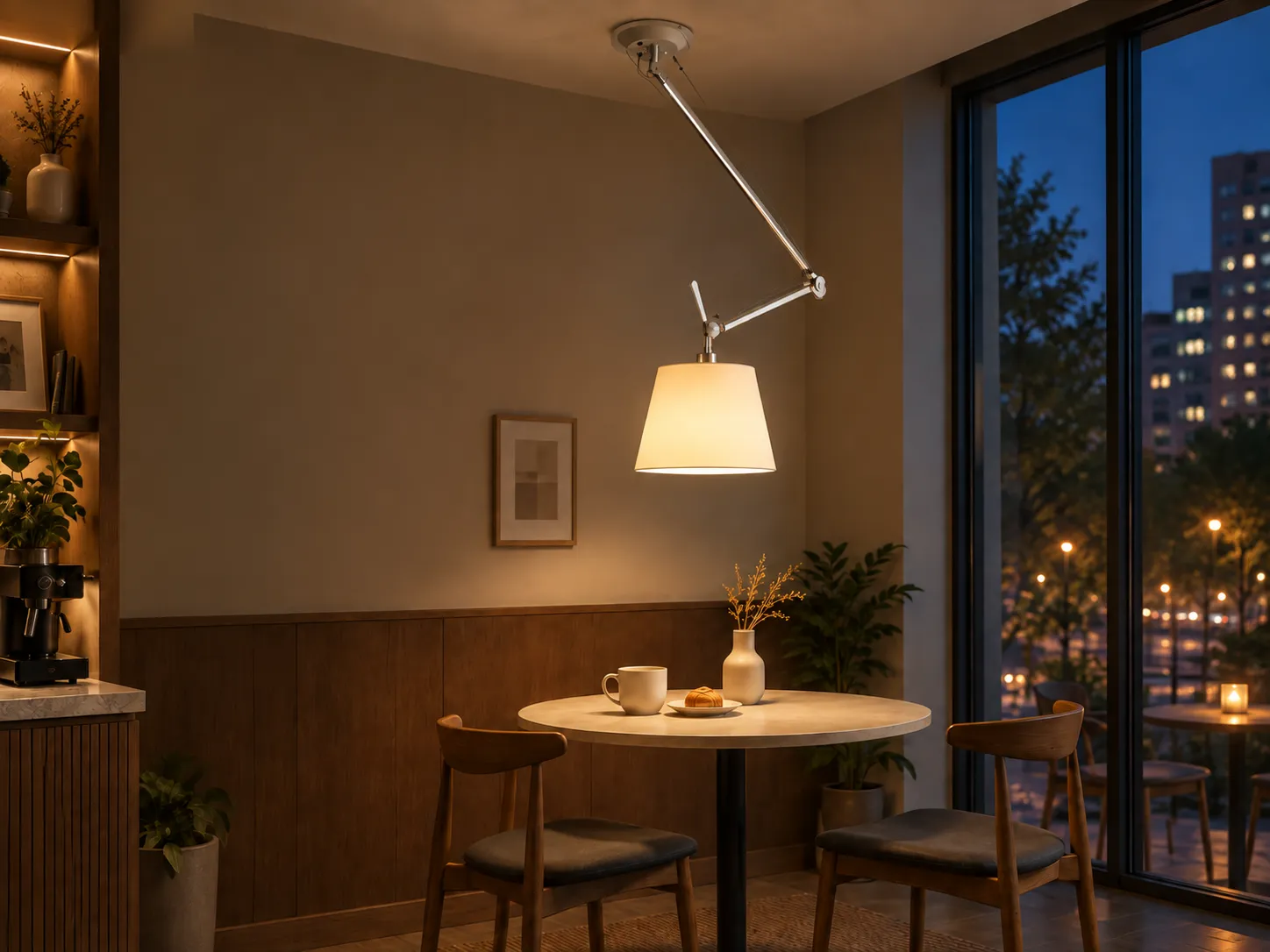

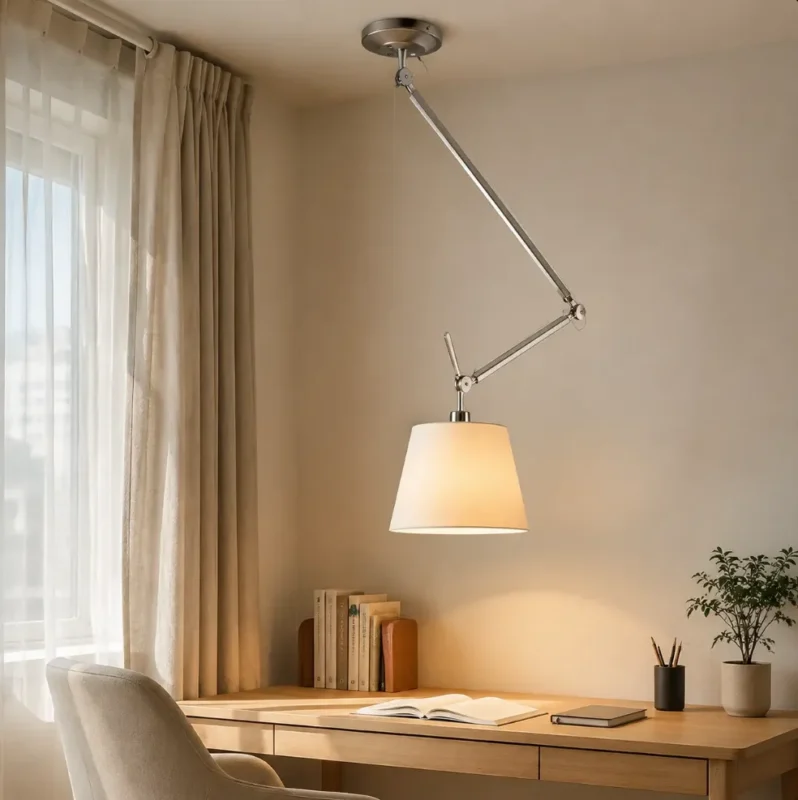
Hero image: the Pivot Arc Adjustable Pendant Light used above a reading and work area.
Today’s lighting needs to do more than simply brighten a room. In contemporary homes, people expect a fixture to support daily activities, complement interior design, and help shape the mood of the space. This is especially true in open-plan kitchens, home offices, reading corners, breakfast nooks, and compact dining areas, where the same zone may need to serve different purposes throughout the day.
The Pivot Arc Adjustable Pendant Light stands out because it combines mechanical flexibility with soft, comfortable illumination. Its articulated dual-arm structure allows the light to extend outward and reposition more effectively than a fixed pendant, while the white fabric shade diffuses the light into a gentler, more residential glow. The result is a fixture that feels both practical and sculptural.
In this article, we will look closely at the official specifications, the design language, the lighting performance, the role of color temperature and color rendering, ideal application scenarios, installation guidance, and bulb recommendations. The goal is not only to describe the product, but to explain why it works so well in real spaces.
1. Product Overview: What Kind of Pendant Light Is This?
According to the product page, this fixture belongs to the Pivot Arc Adjustable Series and is categorized as an adjustable pendant light. Its styling can be described as modern minimalist, Scandinavian-inspired, functionalist, and lightly industrial. Instead of relying on decorative excess, it uses a clean structural silhouette, polished chrome-toned metal parts, and a white fabric shade to achieve a refined and contemporary presence.
That combination gives the lamp a broad design compatibility. It works especially well in interiors that emphasize pale walls, wood surfaces, natural textiles, restrained palettes, and uncluttered forms. In other words, it can sit comfortably within modern minimalist, Japandi, Nordic, contemporary apartment, and soft-industrial environments.
Official Specifications
| Item | Specification |
|---|---|
| Series | Pivot Arc Adjustable Series |
| Product Type | Adjustable Pendant Light |
| Style | Modern Minimalist / Industrial / Scandinavian / Functionalist |
| Main Material | Aluminum + Metal |
| Shade Material | Fabric |
| Finish | Chrome + White |
| Light Source | 1 × E27 Replaceable Bulb |
| Recommended LED Wattage | 8–12W |
| Maximum Wattage | 40W |
| Input Voltage | AC 110–240V |
| Color Temperature | 3000K / 4000K / 6000K depending on bulb selection |
| Reference Luminous Output | Approx. 800–1,200 lm depending on bulb |
| Ceiling Canopy | Ø24 cm / Ø9.45 in |
| Upper Arm Length | 70 cm / 27.56 in |
| Lower Arm Length | 36 cm / 14.17 in |
| Maximum Arm Extension | Approx. 106 cm / 41.73 in |
| Shade Size | Ø36 × H26 cm / Ø14.17 × H10.24 in |
| Suspension Type | Adjustable Dual Pivot Arm |
| Recommended Wall Clearance | Minimum 30 cm / 11.81 in within the arm movement area |
| Weight | Approx. 3.5 kg / 7.72 lb |
| Package Size | Approx. 82 × 43 × 32 cm / 32.28 × 16.93 × 12.60 in |
| Suitable Areas | Dining Room / Kitchen / Bar / Café / Study / Studio / Creative Office |
Note: Actual brightness, color temperature behavior, and dimming performance depend on the specific E27 bulb selected.
2. Design Analysis: Why Is It More Interesting Than a Fixed Pendant?
2.1 The articulated arm structure turns lighting position into a usable design tool
A standard pendant light is usually locked beneath its ceiling point. Once installed, its lighting coverage is largely fixed. The Pivot Arc design is different. Because it uses an upper arm, a lower arm, and pivot joints, the fixture can reach outward and reposition its light distribution more effectively. This gives it a practical advantage over conventional pendants, particularly in spaces where the activity below the light may change.
For example, a desk may be used for reading in the morning, computer work in the afternoon, and relaxed browsing or journaling in the evening. A kitchen island may function as a prep surface, a breakfast area, and a casual social hub. A fixture that can visually and functionally “move” with those patterns offers more than decoration—it supports real living behavior.
2.2 The white fabric shade softens the light
The fabric shade plays an equally important role. Compared with bare-bulb fixtures or clear glass shades, a fabric shade diffuses light more gently. This helps reduce harsh brightness and improves visual comfort, especially when the light hangs within the direct field of view. That softer light quality is one reason fabric-shade fixtures are often preferred in residential interiors, reading corners, and dining areas where comfort matters as much as visibility.
2.3 Chrome structure plus white shade creates a balanced visual tone
The polished chrome-toned structure introduces a clean, crisp, lightly industrial edge, while the white shade keeps the fixture from feeling cold or overly technical. Together they create a balance between engineered precision and domestic warmth. This makes the lamp easy to place in interiors that mix stone, wood, linen, plaster, matte paint, and other natural or lightly textured finishes.
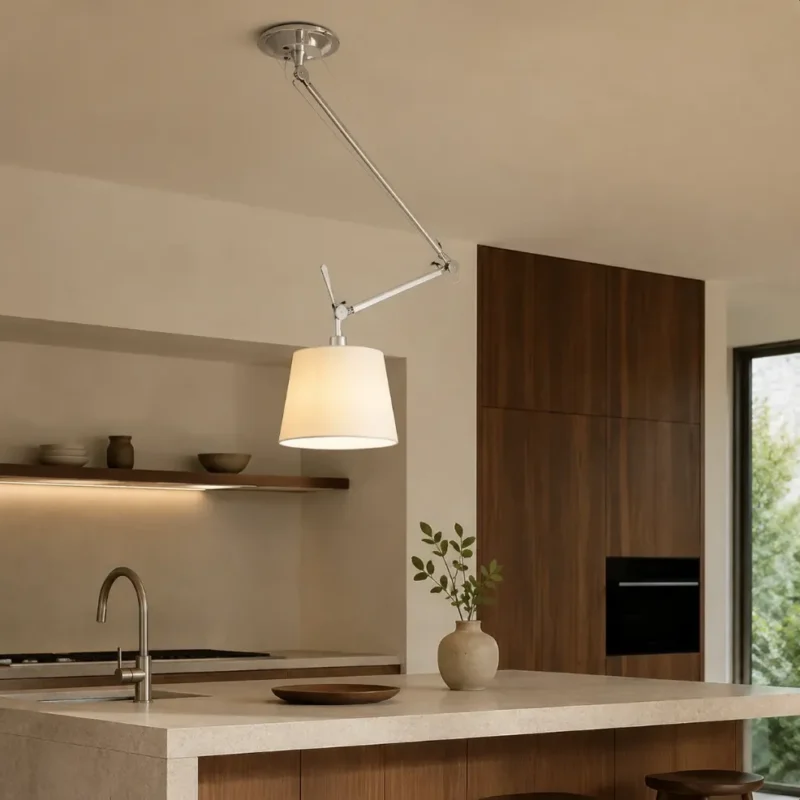
Inserted image 1: above a kitchen island, the extended arm structure helps direct light where food preparation and conversation happen.
3. Lighting Science: Why This Fixture Works Well in a Home
3.1 Good lighting is about matching the task, not simply maximizing brightness
In residential lighting, brighter is not always better. A successful lighting plan matches the light level and light character to the activity taking place. Reading, writing, and food preparation typically need clearer task lighting, while dining, relaxing, and evening use benefit from a softer atmosphere. Because this lamp uses an E27 replaceable bulb, users can select a brightness level that fits their needs—generally within the approximate 800–1,200 lumen range mentioned on the product page.
This flexibility is important. It means the same fixture can lean more toward task lighting or more toward ambient mood lighting depending on the chosen bulb and, where compatible, a dimming setup.
3.2 Color temperature matters: 3000K, 4000K, and 6000K each create a different experience
Color temperature strongly affects how a space feels. Around 3000K, the light is warm and inviting, making it a popular choice for dining zones, reading corners, and evening relaxation. Around 4000K, the light becomes more neutral and balanced, which many people prefer for desks, kitchens, and multi-purpose work areas. Around 6000K, the light appears cooler and more daylight-like, which can support clarity and alertness but may feel too stark for some residential settings if not carefully balanced.
For this particular fixture, 3000K and 4000K are often the most practical choices. The soft diffusion of the fabric shade works especially well with warm or neutral-white LED bulbs, helping the lamp maintain both comfort and usefulness.
3.3 Color rendering is equally important—CRI 90+ is strongly recommended
Brightness and color temperature are only part of the story. Color rendering index, or CRI, describes how accurately a light source reveals colors. In a home environment, better color rendering improves the appearance of wood grain, textiles, food, books, stone surfaces, and skin tones. When this fixture is used over a kitchen island, breakfast nook, or desk, pairing it with a CRI 90 or higher LED bulb will usually produce a noticeably better visual result than a lower-CRI alternative.
3.4 One pendant should not do everything: layered lighting is still essential
Another important principle in lighting design is layering. Even an excellent pendant light should not be expected to illuminate an entire room on its own. In a kitchen, this fixture will perform best when paired with recessed downlights, under-cabinet lighting, or subtle indirect light. In a study or lounge setting, it may work alongside wall lights, floor lamps, or a softer general ambient layer. Layered lighting reduces harsh contrast, improves comfort, and gives the room a more complete and sophisticated atmosphere.
4. Real-Space Applications: Where Does This Lamp Perform Best?
4.1 Desk and reading corner
In the desk scene you provided, the fixture functions almost like an architectural alternative to a task lamp. Because it is suspended above the work area rather than occupying desk space, it helps keep the tabletop cleaner and visually lighter. At the same time, it can deliver focused light to the reading plane while preserving a calm, uncluttered look.
4.2 Kitchen island and prep area
In open-plan kitchens, island lighting needs to support more than one activity. The island may be used for food preparation, casual meals, laptop use, or conversation with guests. The Pivot Arc is well suited to these changing functions because its extended geometry brings the light toward the working surface instead of leaving it tied too rigidly to the ceiling point. The fabric shade also helps soften the visual effect, making it more comfortable than some exposed-bulb pendant options.
4.3 Small dining table, café corner, or evening nook
The third scene shows how effective the fixture can be at night. With a warm LED bulb, the lamp creates a soft pool of illumination that feels intimate without being gloomy. This makes it appropriate for a small dining table, a coffee corner, a studio meeting point, or a quiet hospitality setting where atmosphere matters.
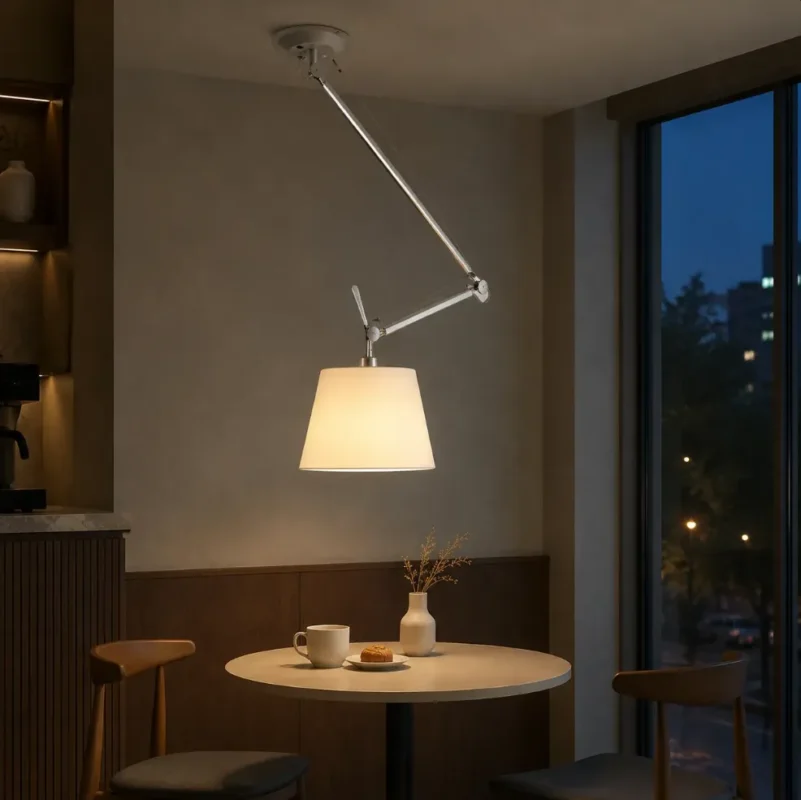
Inserted image 2: in an evening dining setting, the fixture produces a calm and intimate atmosphere when paired with a warm LED bulb.
5. Bulb Recommendations: How to Get the Best Performance
| Use Area | Recommended Bulb | Suggested CCT | Why It Works |
|---|---|---|---|
| Desk / Reading Area | 8–10W LED, CRI 90+ | 4000K | Balanced clarity for reading and work while still maintaining comfort. |
| Kitchen Island / Prep Zone | 10–12W LED, CRI 90+ | 4000K | Provides clearer task visibility for food preparation and daily use. |
| Dining Nook / Coffee Corner | Approx. 8W dimmable LED | 3000K | Warmer light creates a more relaxed and welcoming atmosphere. |
| Creative Studio / Light Commercial Area | 10–12W LED | 4000K–6000K | Supports stronger visual clarity where a more task-oriented environment is preferred. |
Practical tip: If budget allows, choose a flicker-controlled, high-CRI, dimmable LED bulb. That combination can significantly improve both comfort and flexibility.
6. Installation Guidance
- Plan the mounting position carefully. Because the fixture uses a moving arm structure, its occupied space is not limited to the canopy point alone.
- Respect the recommended wall clearance of at least 30 cm within the arm movement zone to avoid collision with walls, cabinets, or trim.
- For dining tables and islands, aim for the light distribution to fall on the actual working or gathering surface rather than simply centering the fixture visually.
- For desks, consider the seated eye line so that the lamp provides useful illumination without becoming visually intrusive.
- If you want the fixture to adapt to morning, daytime, and evening use, pair it with a compatible dimmable bulb and suitable control system.
- Electrical connection and ceiling mounting should be handled by a qualified installer, especially when considering load-bearing support and long-term safety.
7. Maintenance and Long-Term Use
Maintenance is relatively straightforward. The metal structure can be cleaned with a soft, dry cloth, while the fabric shade should be dusted regularly and kept away from excessive grease or moisture. Because the fixture uses a replaceable E27 bulb, it also offers good long-term flexibility. Users can refresh the light quality later by changing the bulb rather than replacing the entire fixture, which is a practical advantage for evolving homes and projects.
8. Who Is This Fixture Best For?
The Pivot Arc Adjustable Pendant Light is especially well suited to people who want more than a static decorative pendant. It is a good choice for:
- homeowners who prefer modern minimalist, Nordic, Japandi, or soft-industrial interiors;
- users who want a single fixture to combine decorative impact with genuine functional lighting;
- people who dislike harsh glare and prefer softer, diffused light;
- kitchen, dining, and study areas where the light needs to reach beyond a fixed ceiling point;
- creative residential or hospitality spaces that benefit from both flexibility and strong visual identity.
9. Frequently Asked Questions
Q1. Is this lamp better for residential or commercial use?
A. It can work in both. In homes it is especially effective above desks, islands, and compact dining areas. In light commercial settings it suits cafés, studios, bars, and creative offices.
Q2. Will a fabric shade reduce brightness too much?
A. A fabric shade softens and diffuses the light, but the actual brightness still depends mainly on the bulb chosen. With an appropriate 8–12W LED bulb and layered lighting, it can perform very well in most localized applications.
Q3. Which color temperature should I choose?
A. For most homes, 3000K and 4000K are the most practical options. Choose 3000K for warmth and atmosphere, and 4000K for a cleaner balance between comfort and task visibility.
Q4. Can this fixture be dimmed?
A. The fixture uses an E27 replaceable bulb socket. Dimming depends on whether the selected bulb and the control system are both dimming-compatible.
Q5. What is the biggest installation consideration?
A. The most important factor is planning the movement range of the arms. Unlike a fixed pendant, this design needs spatial clearance as well as a secure ceiling mounting point.
10. Final Thoughts
What makes the Pivot Arc Adjustable Pendant Light compelling is the way it balances design expression and everyday usefulness. The articulated arm brings genuine positional flexibility, the fabric shade improves comfort, and the replaceable E27 bulb keeps the fixture adaptable over time. In real interiors, that combination is valuable. It means the lamp is not only visually distinctive, but also genuinely easier to live with.
For anyone designing a home or hospitality space that values both atmosphere and performance, this fixture offers a thoughtful alternative to ordinary fixed pendants. It can act as a focal point, a task light, and a mood-setting element at the same time—provided it is paired with the right bulb and integrated into a layered lighting plan.
Heritage Antique Brass Double-Light Wall Sconce with Pleated Fabric Shades | Click to view product