

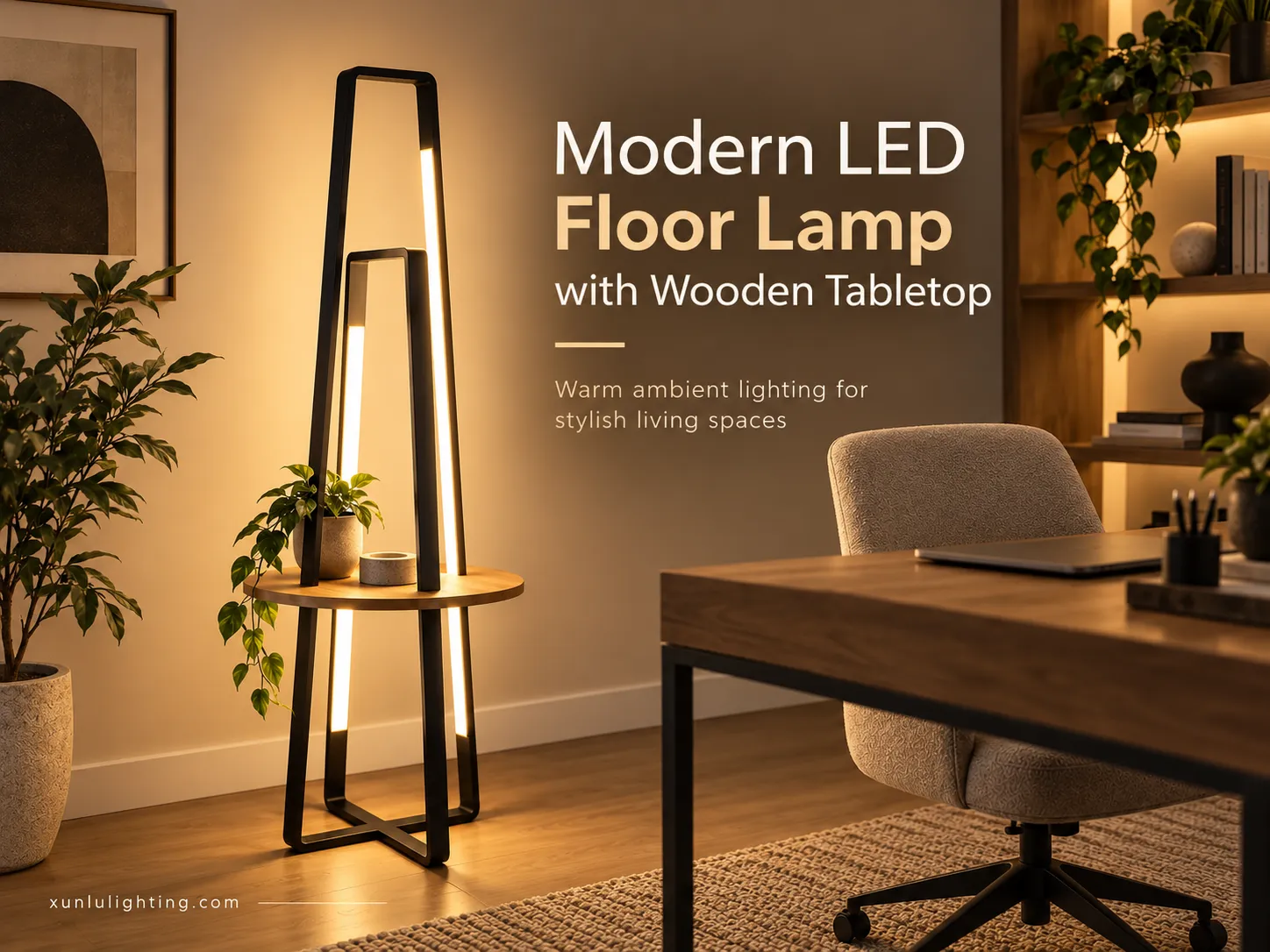

A practical guide to layered lighting, color temperature, placement, and multifunctional design using Xunlu Lighting’s Nordic-inspired floor lamp as a case study.
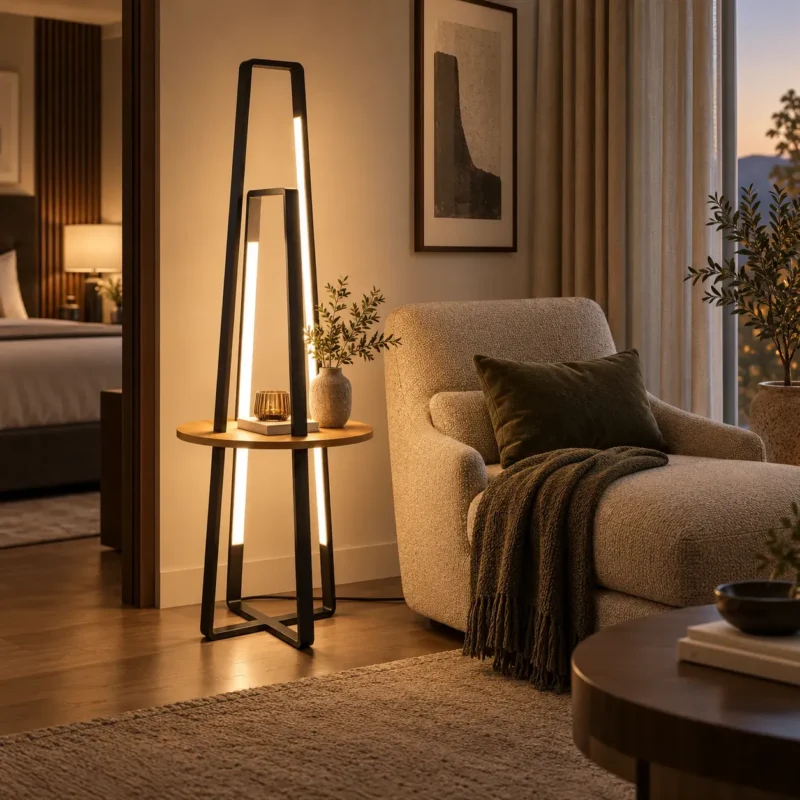
Modern homes increasingly ask one object to do more than one job. A floor lamp can provide ambient illumination, shape a comfortable corner, and—when a tabletop is integrated into the structure—replace a separate side table. The result is a compact lighting-and-furniture solution that is especially useful in apartments, bedrooms, home offices, hotel rooms, and relaxed lounge spaces.
Product snapshot
Product Specifications
| Design | Integrated LED floor lamp with natural wooden tabletop |
| Materials | Iron frame, natural rubber wood, aluminum LED profile, acrylic diffuser |
| Finish | Matte black frame with natural wood tabletop |
| Dimensions | Ø 60 cm × H 160 cm (23.62 × 62.99 in) |
| Power | 30W integrated LED |
| Color Temperature | 3000K / 4000K / 6000K adjustable |
| Approx. Output | 1800–2500 lm |
| Suggested Applications | Living room, bedroom, reading corner, home office, hotel and lounge |
1. Why multifunctional lighting works in real homes
In compact interiors, every piece of furniture consumes both floor area and visual attention. Combining a side table and floor lamp reduces the number of separate objects competing for space. The lamp’s open geometric frame keeps the silhouette visually light, while the circular wood surface introduces a warmer material note that can soften the feel of black metal.
This kind of hybrid object is useful beside an armchair, next to a bed, or at the edge of a home-office zone. The tabletop can hold a book, cup, phone, small plant, or decorative object, while the vertical LED elements add an illuminated architectural line rather than the concentrated “hot spot” associated with a small exposed lamp source.
2. What the vertical LED form changes about the room
The tall, narrow frame creates light at multiple heights, which can make a room feel more visually balanced than relying only on ceiling fixtures. Because the illuminated elements extend vertically, they can contribute to both the lower visual field and the surrounding wall surface. When the lamp sits near a pale wall, reflected light can broaden the apparent source and create a softer background luminance.
That matters because visual comfort depends not only on total lumens, but also on luminance contrast: an extremely bright source in an otherwise dark room can feel harsh even when the overall light level is modest. A diffuser helps spread the emitted light over a larger visible area. The product uses an acrylic diffuser and is described by the manufacturer as providing soft, uniform, anti-glare illumination; in practice, comfort will still depend on viewing angle, room reflectance, distance, and the brightness setting of other lights in the room.
3. Choosing between 3000K, 4000K, and 6000K
Color temperature describes the apparent color of white light. Lower values look warmer and more amber; higher values look cooler and more bluish. This lamp offers three settings—3000K, 4000K, and 6000K—so the same fixture can support different moods and activities.
Choosing the Right Color Temperature
| Setting | Visual Character | Good Uses | Practical Note |
|---|---|---|---|
| 3000K | Warm white | Evening living rooms, bedrooms, lounges | Pairs naturally with wood, beige, brown and other warm finishes. |
| 4000K | Neutral white | Home office, reading, mixed-use daytime spaces | A balanced setting when you want clearer contrast without an obviously cool appearance. |
| 6000K | Cool white | Short-duration task-oriented use where a crisp appearance is preferred | Can feel visually intense in a dim room; use with enough surrounding light and avoid assuming “cooler” automatically means healthier. |
4. Evening light: comfort without overclaiming “circadian” benefits
Light is an important environmental signal for the human circadian system. CIE guidance notes that light exposure in the evening and at night can influence sleep timing and melatonin-related responses, with the effect depending on characteristics such as spectrum, intensity, duration, and timing. This does not mean that every warm lamp is automatically “circadian friendly,” nor that one fixture can determine sleep quality by itself.
A sensible home-lighting approach is therefore behavioral as well as technical: use brighter, more stimulating light when it is useful during the day, and reduce unnecessary brightness later in the evening. For a lounge or bedroom, 3000K is often visually comfortable because it harmonizes with warm interiors and supports a relaxed atmosphere. More important than the label alone is keeping the overall evening environment from being excessively bright.
5. Lumens are not the same thing as useful task illuminance
The product specification lists an approximate luminous flux of 1800–2500 lumens. Lumens describe the total visible light emitted by a source, but they do not tell you how much light actually reaches a book, desktop, floor, or wall. Illuminance is measured in lux and changes with distance, distribution, orientation, and nearby surfaces.
That distinction is why professional lighting recommendations are typically based on illuminance at a task or surface rather than only on fixture lumens. The Illuminating Engineering Society (IES) maintains recommended maintained illuminance criteria for many applications, including residential environments. For a home, the practical takeaway is simple: treat a floor lamp as one layer in the room, then add dedicated task lighting where fine visual work requires it.
6. Where this lamp works best
Living-room reading corner
Place the lamp beside an armchair with the tabletop within easy reach. The vertical light becomes part of the room’s ambient layer, while the table replaces a small side table. A rug, upholstered chair, and warm-toned materials can visually connect the black frame and natural wood top to the rest of the space.
Bedroom
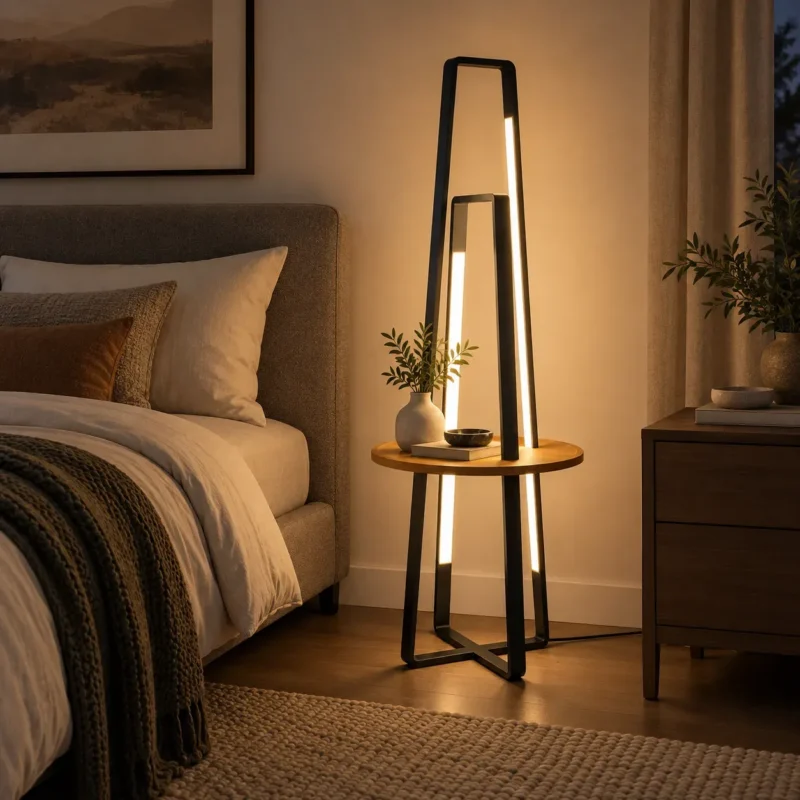
Beside the bed, the integrated surface can hold a book or small accessory. Use the warmer setting for a softer evening atmosphere. Because the lamp is 160 cm tall, allow enough negative space above and around it so the silhouette does not visually collide with wall art or tall furniture.
Home office
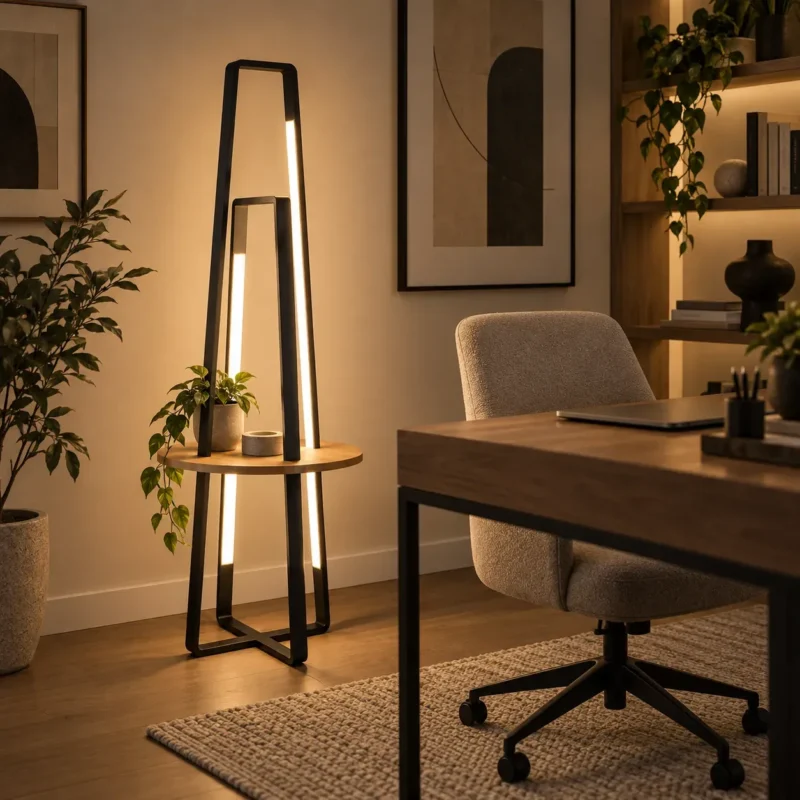
The lamp works well as a secondary light source near a desk, especially where a ceiling light alone makes the room feel flat. The 4000K setting can create a neutral appearance for daytime work, while a dedicated desk lamp may still be appropriate for close reading or detailed tasks.
Hospitality and lounge spaces
In hotel suites, cafés, lounges, or reception areas, multifunctional lighting can help reduce furniture count while maintaining a polished visual identity. The strong vertical geometry reads as decorative even when the lamp is off, and the tabletop adds a functional surface without needing another small table.
7. Placement and spacing: small decisions that improve the result
The manufacturer suggests a wall distance of approximately 30–80 cm. That range gives you room to tune the visual effect. Closer placement can increase the amount of light that reaches and reflects from the wall; greater distance can make the fixture read more clearly as a sculptural object. The best position depends on wall color, furniture layout, viewing angle, and the other light sources in the room.
• Keep the walking path clear. The lamp has an approximate 40 × 40 cm base footprint, so avoid narrowing busy circulation routes.
• Use the tabletop as a functional surface, but avoid visually overcrowding it. One or two objects usually preserve the lamp’s clean geometry better than a dense arrangement.
• Balance bright and dark areas. If the lamp is the only source switched on in a large room, the contrast may feel stronger than intended. A second low-level source can make the scene more comfortable.
• Coordinate materials rather than matching them perfectly. Matte black works well with walnut, oak, stone, boucle fabric, linen, and other restrained finishes.
8. Energy and maintenance considerations
Integrated LED systems can provide high light output from relatively modest electrical power compared with older incandescent technologies. This model is rated at 30W. Actual energy use depends on operating time, and long-term performance depends on LED quality, thermal management, driver design, and environmental conditions.
Because the light source is integrated, maintenance is different from a conventional lamp with a replaceable bulb. Before purchase, it is useful to understand the warranty, driver accessibility, and service options. For cleaning, disconnect power first, wipe the metal and wood surfaces with a soft dry or slightly damp cloth, and avoid abrasive cleaners on the acrylic diffuser.
9. A calm interior comes from relationships, not a single fixture
The strongest quality of this type of lamp is not simply its shape or brightness. It is the way it organizes a small zone: vertical light defines the corner, the wood tabletop creates utility, and the black frame adds graphic structure. Used as part of a layered lighting plan, it can make a reading corner, bedroom edge, or lounge area feel intentional without adding visual clutter.
For homes that favor Nordic, minimalist, contemporary, or warm-modern interiors, the combination of matte black metal, natural wood, and adjustable white light is flexible enough to move between decorative and practical roles. The key is to choose the light setting and placement for the actual activity, rather than treating one brightness or color temperature as universally ideal.
Modern LED Floor Lamp with Wooden Tabletop – Click to view the product