

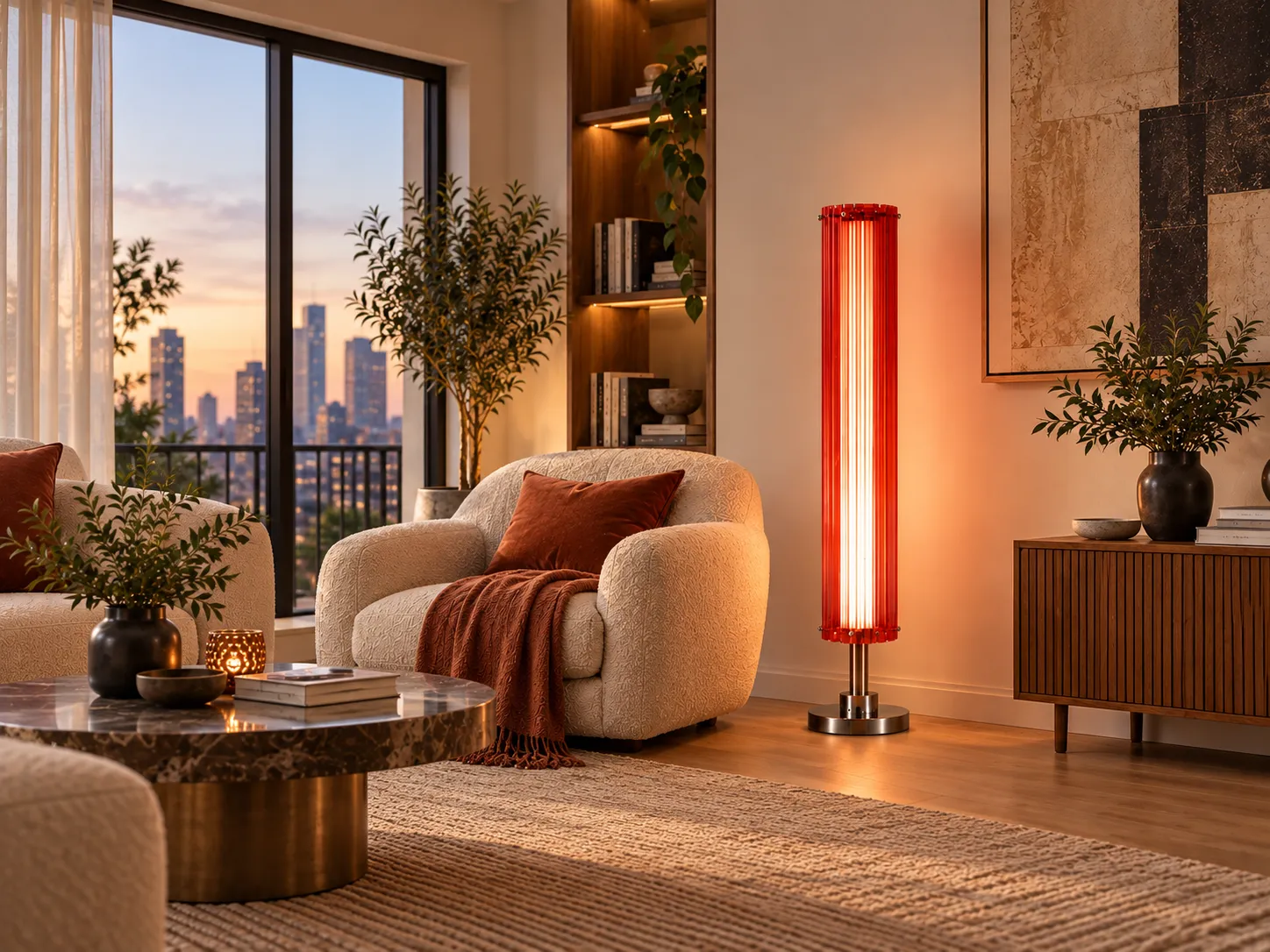

How a Modern Sculptural LED Light Adds Color, Atmosphere, and Visual Structure to Contemporary Interiors
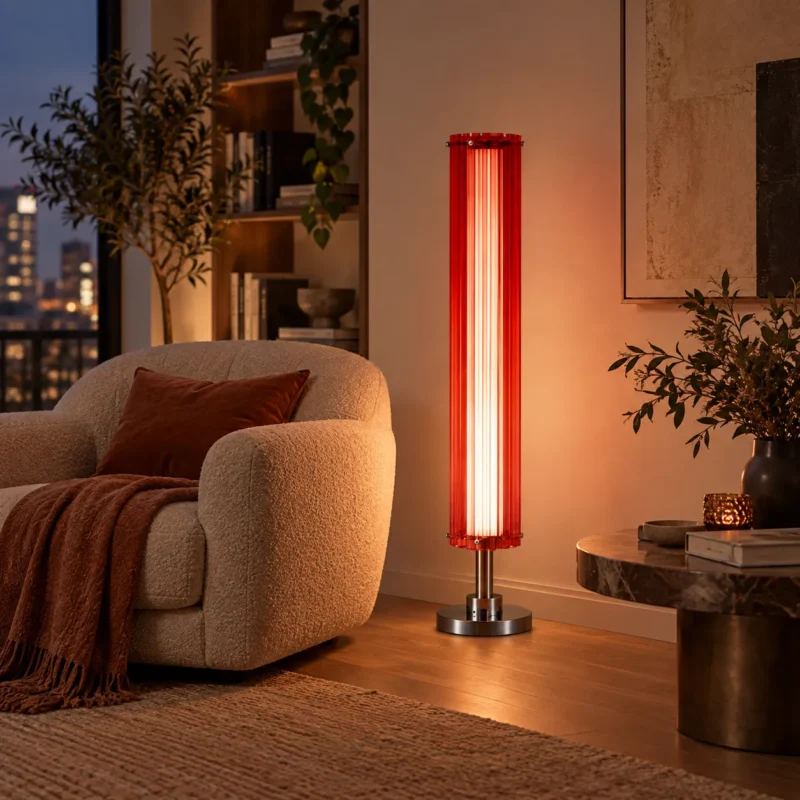
Featured image: Red ribbed acrylic floor lamp used as a warm sculptural accent in a contemporary living room.
Product Focus: Red Acrylic Floor Lamp | Modern Sculptural LED Light
Modern luxury lighting · 3000K warm white · CRI ≥95 · 18W integrated LED · sculptural acrylic design
Product Specifications at a Glance
The following values are manufacturer-listed specifications for this model. These values should be treated as product data rather than independent laboratory measurements.
| Specification | Manufacturer-listed value |
|---|---|
| Product Type | Modern red ribbed acrylic floor lamp / sculptural acrylic floor lamp |
| Lighting Style | Modern luxury lighting, contemporary artistic lighting, retro-futuristic accent lighting |
| Main Materials | Acrylic + carbon steel |
| Shade Material | Ribbed transparent acrylic panel with internal light-diffusing element |
| Metal Finish | Chrome-plated metal |
| Overall Height | 116 cm / 45.67 in |
| Shade Diameter | 18 cm / 7.09 in |
| Base Diameter | 20 cm / 7.87 in |
| Approx. Weight | 3.2 kg / 7.05 lb |
| Light Source | 1 integrated LED system |
| Rated Power | 18 W |
| Voltage | AC 100–240 V, 50/60 Hz |
| Color Temperature | 3000K warm white |
| Listed Light Output | Approx. 900–1200 lm |
| Color Rendering Index | CRI ≥95 |
| Control | Foot switch |
| Cable Length | Approx. 200 cm / 78.74 in |
| Recommended Wall Distance | 30–50 cm / 11.81–19.69 in |
| Typical Applications | Living room, bedroom, lounge, hotel suite, gallery, showroom, premium retail |
Introduction: A Floor Lamp That Behaves Like an Object of Art
The Red Acrylic Floor Lamp is designed to do more than fill a room with light. Its slim cylindrical body, saturated transparent red shell, and luminous inner core give it the presence of a sculptural object even when the lamp is switched off. Once illuminated, the lamp begins to operate in two registers at the same time: it works as ambient lighting, and it also works as a visual focal point that contributes color, rhythm, and atmosphere to the room.
This dual function is particularly useful in contemporary interiors where lighting is expected to perform both technically and emotionally. In residential spaces, a floor lamp often sits closer to the eye than a ceiling fixture, so its form matters almost as much as its brightness. A bold floor lamp can connect seating, soften architectural corners, highlight materials such as wood and stone, and create a more intentional evening mood.
The product page positions this model for living rooms, bedrooms, hotels, galleries, and premium commercial spaces. That positioning makes sense. The lamp has enough character to anchor a design scheme, but its vertical footprint remains compact, allowing it to fit into corners, next to lounge seating, beside beds, or near reception and waiting areas where decorative impact is important but floor area is limited.
1. Why Sculptural Lighting Matters in Contemporary Interiors
Interior lighting is usually discussed in layers: general illumination for basic visibility, task lighting for focused activities, and ambient or accent lighting for mood. A tall decorative floor lamp belongs mainly to the ambient-and-accent layer. It does not need to overpower the entire room; instead, it should help shape how the room feels after the main overhead lights are reduced or switched off.
The Red Acrylic Floor Lamp supports this layered approach because its illuminated core creates a comfortable vertical glow while the red acrylic enclosure turns the fixture itself into a designed object. Rather than disappearing into the background, the lamp contributes identity to the room. This is valuable in modern homes where furniture profiles tend to be clean and materials are carefully selected; a strong vertical lamp can supply contrast and keep the space from feeling visually flat.
In hotels, boutiques, or gallery-inspired residences, decorative lighting often helps communicate brand tone. A sculptural lamp with a refined finish can signal warmth, confidence, and design awareness. Because this model uses a simple cylinder instead of a highly complex silhouette, it stays contemporary and versatile while still offering a distinctive signature.
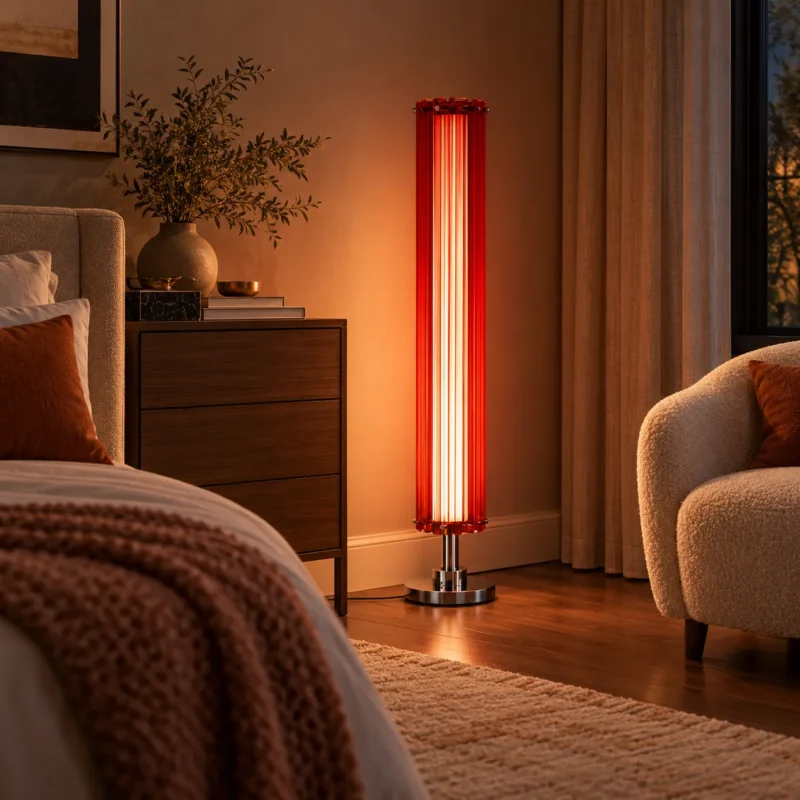
Inspiration image: the lamp creates a warm accent beside a bed and lounge chair in a private interior.
2. Material Logic: Red Ribbed Acrylic and Chrome-Plated Metal
Acrylic is frequently chosen in lighting because it is lightweight, durable, highly workable, and capable of transmitting or diffusing light effectively. Compared with ordinary clear glass, acrylic can achieve bold color saturation with less fragility and reduced weight, which is especially useful for floor-standing fixtures that may be repositioned in daily use.
The red acrylic used here is significant for two reasons. First, it gives the lamp its immediate visual identity. Sunset red is warmer and more interior-friendly than a cold, primary red, so it feels decorative rather than harsh. Second, the transparent acrylic shell allows the lamp to preserve depth. When light passes through a transparent colored medium, the observer perceives both illumination and color filtering, which creates a richer visual result than an opaque painted surface would.
The vertical ribbed texture adds another layer of performance. Ribbing introduces fine striations that catch, refract, and visually multiply light. This can soften glare while making the lamp appear more dynamic from different viewing angles. The chrome-plated base and metal details then balance the warmth of the acrylic with a crisp, reflective counterpoint. Together, these materials create a product that feels both decorative and technically resolved.
3. Warm White at 3000K: Why the Light Looks Comfortable
The manufacturer lists this lamp at 3000K, which places it in the warm-white range commonly used for living spaces, hospitality environments, and evening-oriented rooms. Correlated color temperature (CCT) describes the apparent color of white light. Lower Kelvin values look warmer and more yellow-red, while higher values appear cooler and more blue-white.
A 3000K source is especially compatible with this design because it reinforces the red and amber tones already present in the acrylic shade and in common interior finishes such as walnut wood, bronze metal, terracotta textiles, beige plaster, and soft leather. In a living room or bedroom, 3000K usually feels calm and welcoming, helping the fixture contribute to atmosphere rather than clinical brightness.
It is important to note that 3000K is not automatically dim; CCT is about the color appearance of light, not the amount of light. Designers often choose 3000K because it supports visual relaxation in the evening and blends well with other warm decorative sources such as table lamps, wall sconces, and shelf lighting. In hospitality settings, it also tends to photograph attractively and enhances the perceived richness of materials.
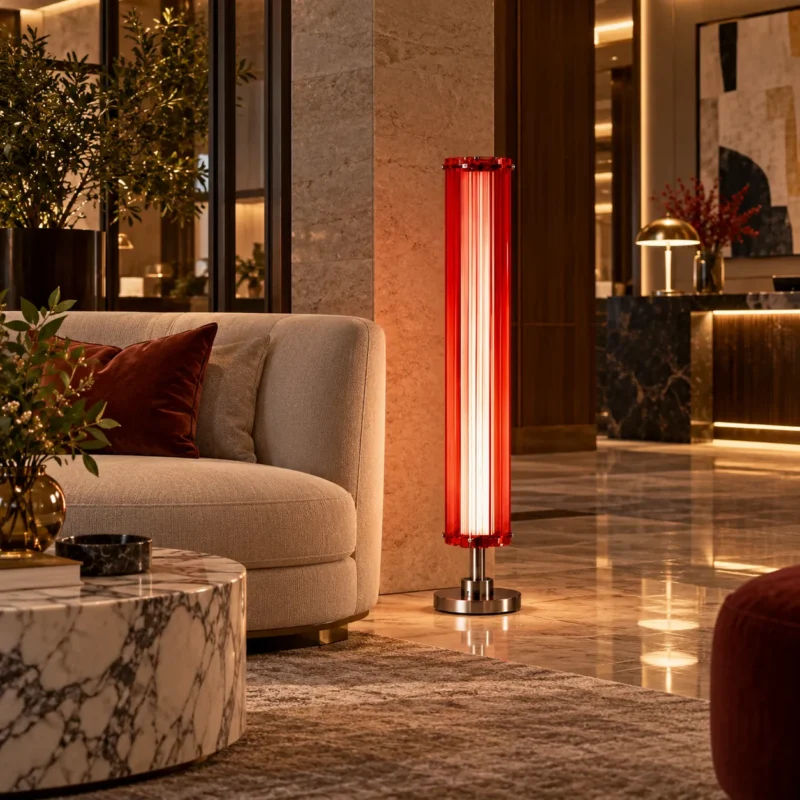
Application image: the lamp used as a statement lighting piece in a luxury lobby-style environment.
4. CRI ≥95 and the Importance of Color Accuracy
Another notable specification is the listed Color Rendering Index of CRI ≥95. CRI is a standard metric used to indicate how accurately a light source reveals object colors in comparison with a reference source. While CRI does not tell the whole story of spectral quality, a high CRI value generally suggests better visual fidelity, especially in spaces where fabric tones, wood grain, artwork, skin tones, and food presentation matter.
For a decorative lamp like this one, high color rendering is valuable because the product is often used near people and materials that benefit from nuanced appearance. In a lounge corner, for example, cushions, books, ceramics, and plants will tend to look more natural and vivid under higher-quality light. In a boutique or hotel suite, a high-CRI source can contribute to a more premium visual impression.
This is also relevant to the lamp itself. Because the fixture depends heavily on the relationship between emitted light and colored acrylic, good spectral quality helps the red enclosure appear fuller and more refined. Poorer color rendering could make the lamp feel flatter or less sophisticated. High CRI therefore supports both the environment and the product’s own visual performance.
5. Reading the Lumen and Wattage Data Realistically
The listed output is approximately 900–1200 lumens from an 18W integrated LED system. On paper, that places the lamp in the decorative-ambient category rather than the primary whole-room-lighting category. In practice, this means the lamp is well suited to adding glow, atmosphere, and localized visual comfort, but it should ideally be part of a broader lighting plan rather than the only light source in a large room.
This is not a drawback. Decorative floor lamps are often most successful when they avoid excessive brightness. Overly bright accent lamps can produce uncomfortable contrast at eye level, especially in seating areas. A controlled ambient output is generally better for evening use, hotel guest rooms, and upscale residential interiors where softness is preferred over uniform brightness.
Real-world illumination always depends on more than the raw lumen number. Diffuser losses, room reflectance, placement, the opacity of surrounding finishes, and the distance between the fixture and nearby walls all influence perceived performance. When placed 30–50 cm from a wall, as the manufacturer recommends, the lamp can add a secondary glow behind the fixture, extending its apparent luminous presence without relying only on direct output.
6. Placement Strategies for Residential and Hospitality Use
In a living room, the lamp works especially well beside a lounge chair, next to a curved sofa, or near a side table where it can anchor a conversation area. Because the body is slim, it is appropriate for corners that need visual height but cannot accept bulky furniture. Pairing it with neutral upholstery allows the red acrylic to stand out, while darker wood and stone finishes deepen the atmosphere created by the warm light.
In a bedroom, the fixture functions less as a reading lamp and more as mood lighting. Positioned near a dresser, beside a lounge chair, or opposite the bed, it can create a soft evening environment and introduce a boutique-hotel character. Because it has a compact footprint, it is also a useful solution in smaller bedrooms where wall space is limited but a decorative accent is desired.
For boutique hotels, galleries, and premium retail, the lamp can be used near reception desks, in waiting areas, at transition zones, or inside styled room vignettes. The sculptural cylinder photographs well, reads clearly from a distance, and can help reinforce a brand palette that includes terracotta, burgundy, amber, or brass tones. It is a fixture that naturally supports storytelling as much as illumination.
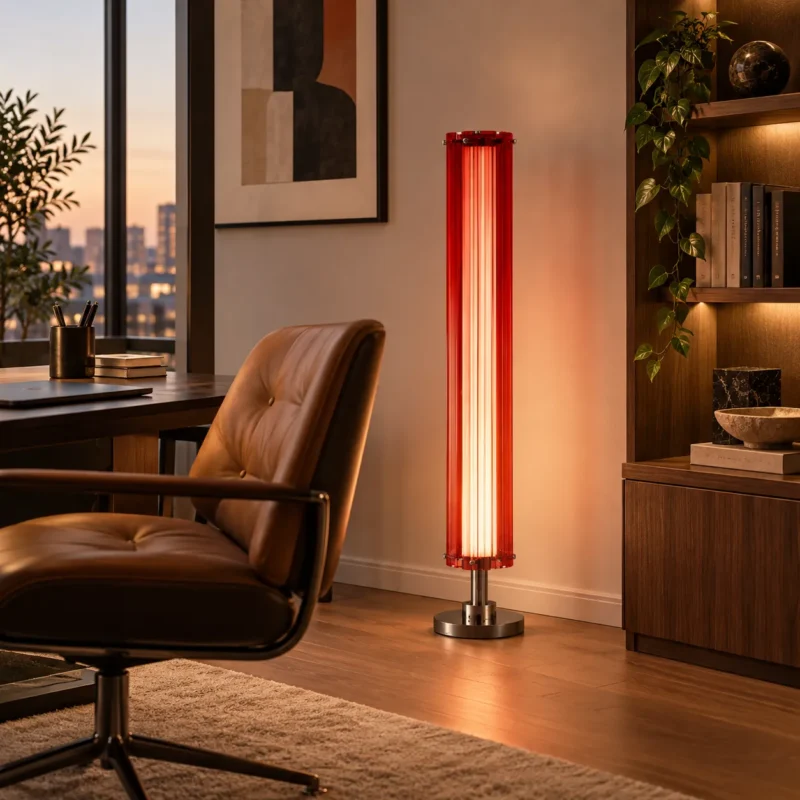
Application image: the lamp brings color and atmosphere to a home office or reading area.
7. Styling Ideas: What This Lamp Pairs With Best
The most successful companion palette for this lamp tends to include warm neutrals and tactile materials. Off-white boucle seating, walnut cabinets, brushed or plated metals, stone coffee tables, tobacco leather, and soft brown or rust textiles all harmonize with the red acrylic body. These combinations help the lamp feel integrated rather than isolated.
The fixture can also function as a bridge between minimalist and more expressive interiors. In restrained rooms, it supplies a controlled dose of color and personality. In richer, more layered interiors, it can echo other warm accents such as terracotta cushions, red-toned artwork, or amber decorative glass. Because the lamp is vertically disciplined and geometrically simple, it avoids becoming visually chaotic even when the surrounding room contains texture and pattern.
Designers should, however, pay attention to repetition. If a room already contains strong saturated reds in many places, the lamp may work best as a tonal complement rather than an exact match. Repeating the lamp’s color once or twice in smaller accents is usually enough to make the composition feel intentional.
8. Maintenance, Safety, and Buying Considerations
Acrylic surfaces should generally be cleaned with a soft microfiber cloth and a cleaner that is suitable for acrylic or other plastics. Abrasive pads and harsh solvents can scratch or haze the surface over time. Regular dust removal is helpful because dust becomes more visible on illuminated transparent materials than on opaque ones.
The integrated LED source simplifies daily use, but buyers should still confirm important project details such as driver serviceability, expected LED lifespan, plug type, and dimming compatibility if a customized version is required. The listed AC 100–240V input is useful for international applications, especially in hospitality or export contexts, but procurement teams may still want to verify region-specific electrical and certification requirements before placing larger orders.
As with any decorative floor lamp, stability and cord management matter. The metal base and foot switch are practical inclusions, and the 200 cm cable provides reasonable placement flexibility. In open circulation routes, it is worth positioning the cable carefully so the product remains both elegant and safe in day-to-day use.
Conclusion: A Decorative Light with Real Interior Value
The Red Acrylic Floor Lamp succeeds because it combines bold visual identity with usable warm ambient light. Its ribbed transparent acrylic shade, warm 3000K LED source, high CRI specification, and slim architectural profile make it suitable for interiors that want more personality without sacrificing polish. It is not only a source of light; it is a material accent, a compositional marker, and a conversation piece.
For homeowners, designers, and hospitality buyers looking to introduce a memorable vertical element into a room, this lamp offers a compelling balance of atmosphere and sculptural presence. Used thoughtfully within a layered lighting plan, it can enrich contemporary living rooms, boutique bedrooms, lounges, galleries, and premium retail environments with both color and calm.
Red Acrylic Floor Lamp | Modern Sculptural LED Light | Click to View Product