

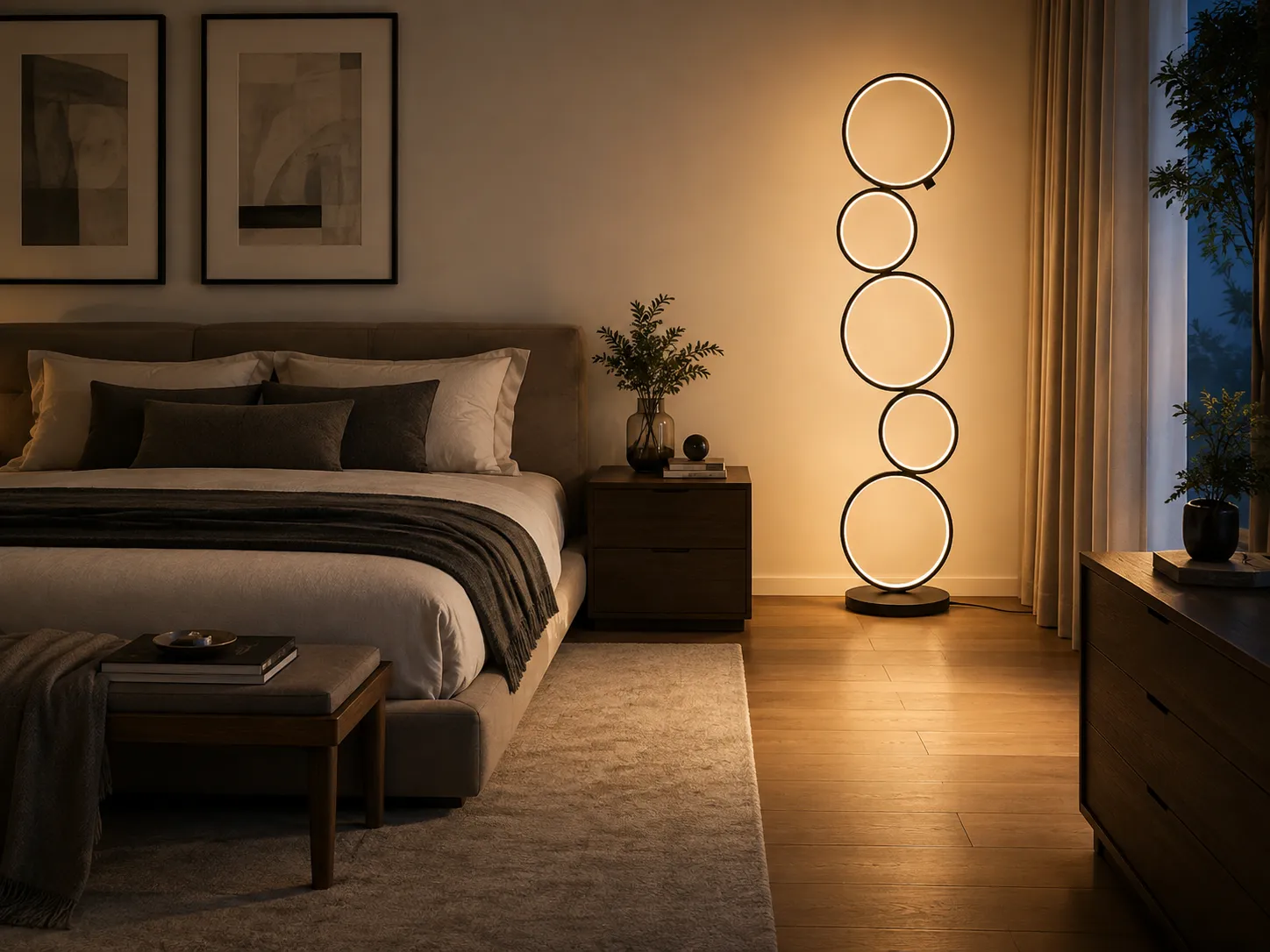

A science-based guide to ambient light, glare control, color temperature, and placement
Featured product: Modern Black Glass Globe Floor Lamp | LED Lighting
xunlulighting.com
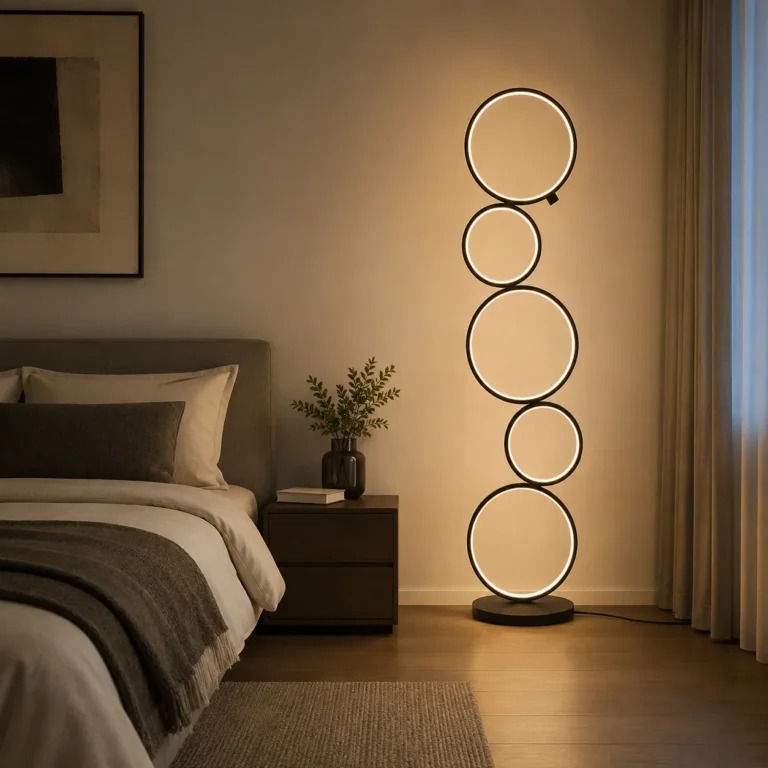
Why Floor Lighting Changes More Than Brightness
Good residential lighting is not simply a question of adding more lumens. A room can be technically bright and still feel flat, harsh, or visually tiring. What matters is how light is distributed across surfaces, where the brightest sources sit in the field of view, how warm or cool the light appears, and whether the lighting pattern matches the activity taking place.
That is why a sculptural floor lamp can have a disproportionate effect on the way a living room feels. Positioned at eye level or slightly above, it adds vertical brightness, creates gentle contrast, and introduces a second layer of light that complements ceiling fixtures. In practice, this can make a room feel more dimensional while helping avoid the uncomfortable ‘single bright source in the middle of the ceiling’ effect.
The Modern Black Glass Globe Floor Lamp from Xunlu Lighting is a useful example. It combines three smoked-glass globes on a slender black frame with a natural black marble base. The lamp is approximately 160 cm high, uses three integrated LED modules totaling 15 W, and is specified at roughly 1000–1500 lumens with selectable 3000 K, 4500 K, and 6500 K color temperatures.
1. Layered Lighting Creates Visual Depth
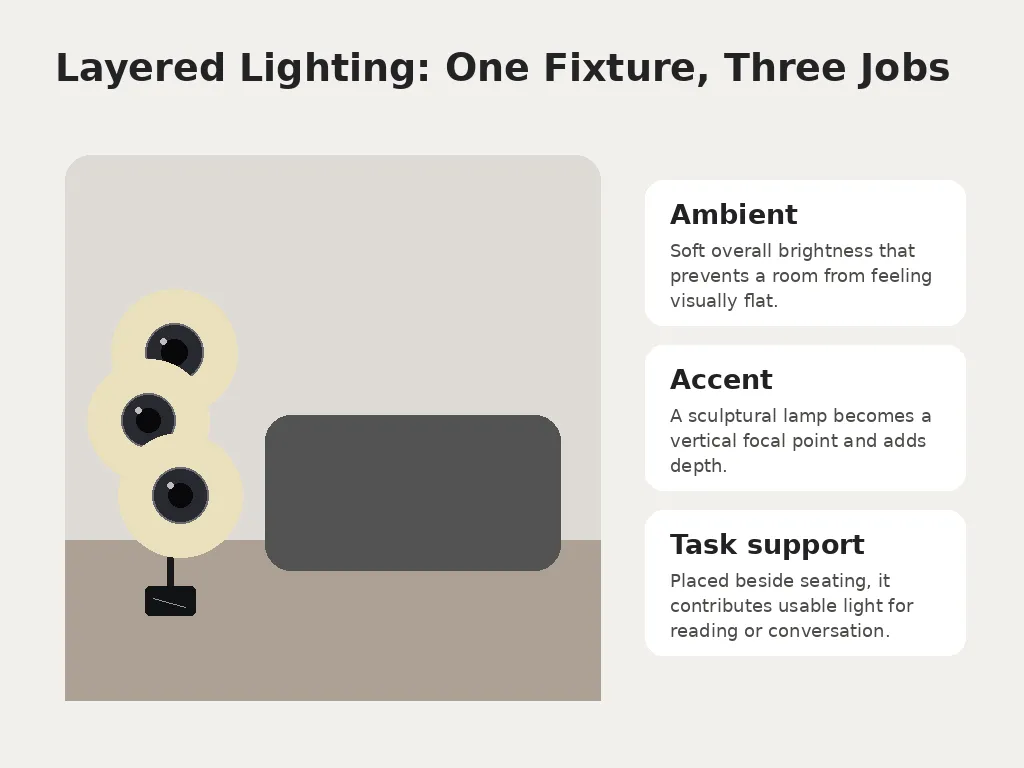
Lighting designers often separate illumination into ambient, task, and accent layers. The categories overlap, but the principle is simple: different light sources should do different jobs. Ceiling lighting can provide general illumination, a table or reading lamp can support detailed tasks, and decorative light can shape the visual hierarchy of the room.
A floor lamp with several luminous elements is especially useful because it can bridge these layers. The globes contribute ambient brightness, the vertical composition acts as an accent object, and placement beside a sofa can add useful light near a reading or conversation area.
Research on residential lighting has found that satisfaction is associated not only with brightness but also with sufficiency and uniformity. In other words, people tend to respond better when the lighting feels adequately distributed through the room rather than concentrated in one glaring zone. This supports the practical value of adding a secondary light source at a different height.
2. Why Diffusion and Shielding Matter for Glare
Glare occurs when a source is too bright relative to its surroundings or is positioned where it competes directly with the visual task. In homes, glare is especially noticeable when an exposed LED point source is visible from a sofa, bed, or desk.
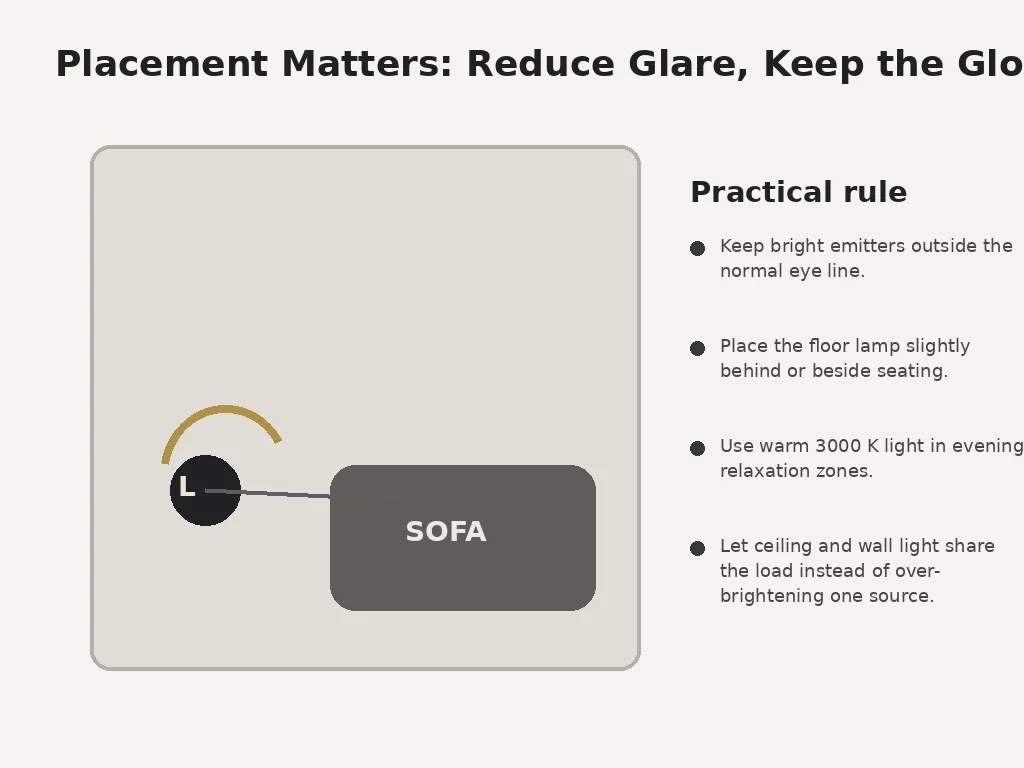
Smoked or diffusing glass can soften the perceived brightness of the source by spreading light over a larger apparent area and reducing the sharpness of direct LED images. It does not eliminate glare automatically, but it can improve visual comfort when the lamp is correctly placed. The most important practical step is still to keep the brightest parts of the lamp slightly outside the normal line of sight.
For a living-room floor lamp, a good starting position is beside or slightly behind the sofa rather than directly in front of the seated viewer. This allows the lamp to brighten nearby walls and furniture while reducing direct source visibility.
3. Choose Color Temperature for the Time of Day
Correlated color temperature (CCT) describes whether white light appears visually warm or cool. Lower values such as 2700–3000 K appear warmer, while 4500–6500 K appears cooler. Higher CCT is not inherently ‘better’ or brighter; it simply changes the spectral appearance of the light.
For evening living spaces, 3000 K is usually the most natural choice because it supports a relaxed atmosphere and reduces the amount of short-wavelength-rich light compared with cooler settings. The U.S. Department of Energy notes that 3000 K and 3500 K are among the most common preferences for interior applications, while CIE guidance on non-visual responses to light recommends keeping evening and night exposure relatively low and biased away from strong short-wavelength stimulation when practical.
The 4500 K setting can be useful in daytime or in mixed-use spaces where a cleaner neutral appearance is desired. The 6500 K setting is much cooler and may suit short-duration functional use, but it is generally less comfortable for a cozy evening living room.
4. Brightness: Think in Layers, Not in One Number
The featured lamp is listed at approximately 1000–1500 lumens. That is enough to make a noticeable contribution to a living room, but total lumens alone do not tell you how bright the room will feel. The final result depends on shade transmission, distance, wall reflectance, ceiling height, furniture colors, and how much other lighting is already present.
A practical strategy is to let the floor lamp provide only part of the room’s light. Pair it with a moderate ceiling source and, where needed, a task lamp. This produces a more balanced luminance pattern and gives you more control over mood than simply installing a single high-output fixture.
Dark walls, charcoal upholstery, and smoked glass absorb more light than white walls and pale fabrics. If your room uses deep colors, you may need additional indirect light or a brighter ceiling layer. In a pale room, the same lamp can feel more luminous because walls and ceilings return more light to the space.
5. Where This Lamp Works Best
| Location | Why it works | Recommended setting |
|---|---|---|
| Beside a sofa | Adds vertical light and a sculptural focal point without occupying a large footprint. | 3000 K for evening; 4500 K for daytime |
| Reading corner | Contributes local brightness and reflected light around the chair. | 3000–4500 K depending on task |
| Bedroom lounge area | Creates softer, lower-level illumination than strong ceiling light. | 3000 K |
| Entry or hallway console | Adds depth and visual interest to narrow or under-lit spaces. | 3000–4500 K |
| Hotel or lounge setting | Provides decorative ambience with a premium black-marble and smoked-glass look. | 3000 K |
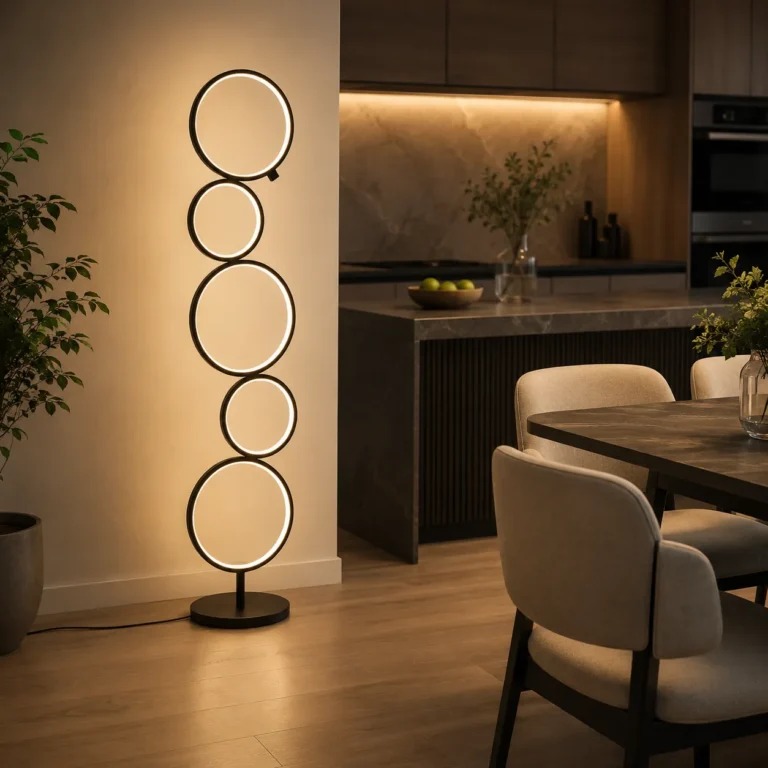
6. A Simple Living-Room Lighting Recipe
- Start with general ambient light from a ceiling fixture or indirect cove lighting.
- Place the floor lamp beside or slightly behind the main sofa, ideally where the glowing globes are not directly centered in the seated line of sight.
- Use the 3000 K mode after sunset for a warmer, calmer appearance.
- Add a focused reading lamp only if detailed tasks require more local illumination.
- Dim or switch off unnecessary overhead light in the late evening so the room transitions from functional brightness to a more relaxed luminance pattern.
7. Design Notes: Why the Black, Glass, and Marble Combination Works
From an interior-design perspective, the lamp’s materials create contrast at three levels. The black metal frame provides a thin graphic line, the smoked glass introduces depth and reflection, and the marble base adds visual weight at floor level. This makes the fixture feel intentional even when it occupies a relatively narrow footprint.
Because the globes are distributed vertically, the eye reads the lamp as a tall architectural element rather than a compact object. That can help a low, furniture-heavy room feel more balanced. It is especially effective beside sofas, lounge chairs, and consoles where most furniture mass sits below eye level.
Smoked glass also interacts strongly with surrounding materials. Against pale plaster, travertine, cream upholstery, or light oak, it creates crisp contrast. Against darker walls or leather, it produces a quieter monochromatic look. In both cases, the illuminated globes become the visual anchor.
Final Takeaway
A well-chosen floor lamp is not just an accessory. It is a tool for redistributing light, controlling visual hierarchy, and changing how a room feels after sunset. The strongest result comes from combining moderate brightness, a comfortable viewing angle, and a warmer evening color temperature. Used this way, a sculptural smoked-glass floor lamp can add warmth and depth without relying on excessive light output.