

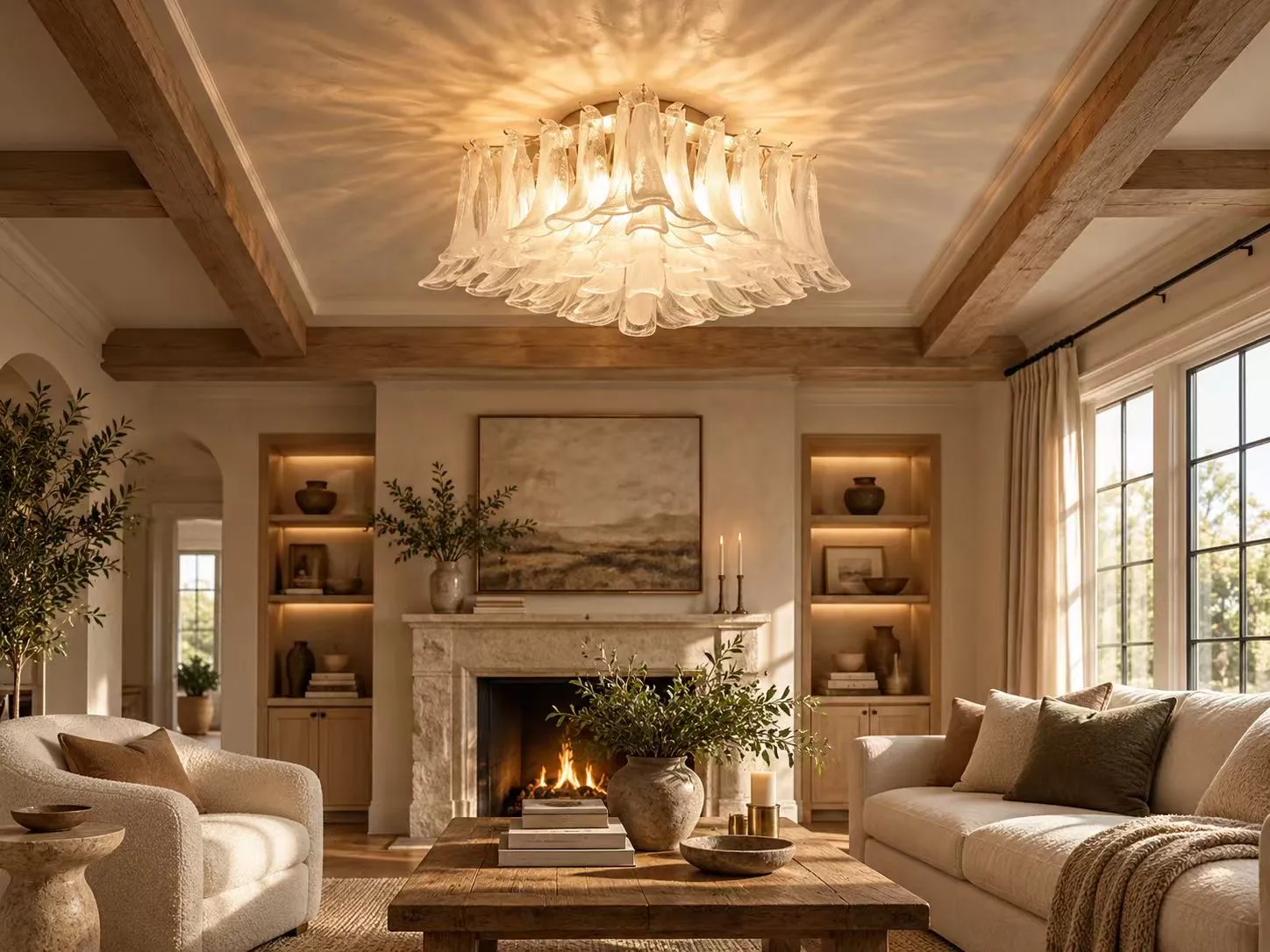

How Sculptural Glass Ceiling Lighting Adds Softness, Brightness, and Quiet Luxury to Contemporary Interiors
Why Artistic Ceiling Lighting Deserves More Attention
A ceiling light is often the largest luminous object in a room, which means it influences not only visibility but also how a space feels emotionally and visually. In well-designed interiors, a ceiling fixture can define the character of the room by shaping brightness, guiding attention, and adding decorative presence even when it is switched off. The Crystal Wave Glass Ceiling Light from Xunlu Lighting demonstrates this idea especially well. Its layered, wave-like glass composition creates a sculptural centerpiece while also producing a soft, luxurious glow that suits living rooms, lounges, dining areas, and refined hospitality settings.
What makes this type of fixture appealing is the combination of artistry and visual comfort. Rather than relying on a small, harshly exposed point of light, the design spreads light across many glass elements. That larger luminous area can make the light feel softer and more elegant, particularly in neutral interiors that depend on texture, reflection, and subtle material contrast.
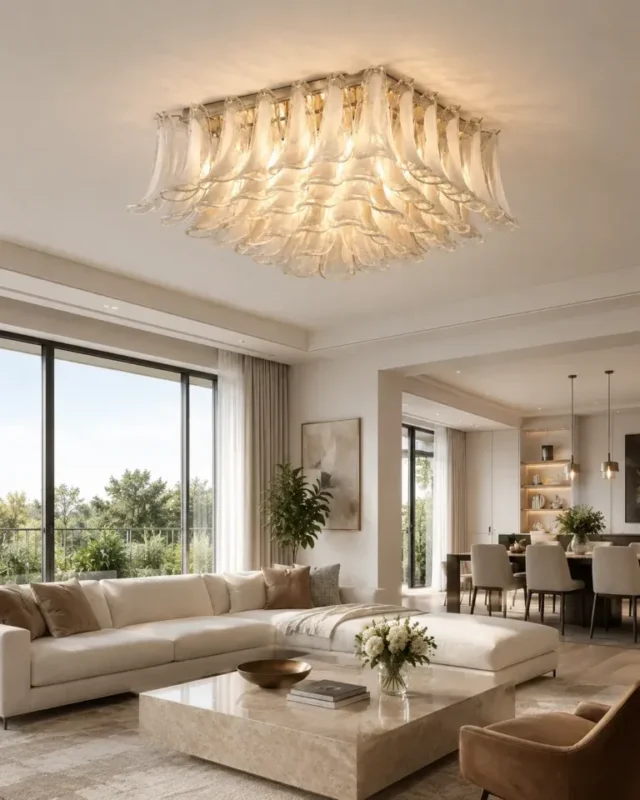
| Design style | Luxury artistic ceiling lamp with sculptural wave-glass profile |
| Visual character | Decorative statement lighting with a soft, luminous presence |
| Material focus | Layered glass elements with refined metal structure |
| Lighting role | Ambient and decorative ceiling lighting |
| Best atmosphere | Warm, sophisticated, hospitality-inspired interiors |
| Ideal applications | Living rooms, seating areas, dining spaces, bedrooms, lobbies, upscale apartments |
1. The Science of Softer Light: Why Larger Luminous Surfaces Feel More Comfortable
Visual comfort depends on more than brightness alone. According to glare research summarized by the CIE, discomfort is influenced by source luminance, apparent size, contrast with the background, and position in the field of view. A very small, intense light source can feel harsh because the eye adapts to a bright point surrounded by darker surfaces. One practical design response is to increase the apparent luminous area or to diffuse the source so the brightness is distributed across a larger surface.
That principle helps explain why sculptural glass ceiling fixtures are often perceived as softer than exposed point sources. In this ceiling lamp, the wave-like glass elements visually enlarge and diffuse the light. Instead of presenting a single bright spot, the fixture turns multiple curved surfaces into part of the luminous composition. This can reduce the feeling of visual harshness while creating a more refined and decorative glow.
2. Reflections, Texture, and the Luxury Effect of Glass
Glass is especially powerful in decorative lighting because it interacts with light in several ways at once: it transmits, reflects, refracts, and sparkles. Curved or textured glass can break up brightness, create depth, and produce small highlights that add visual richness without requiring loud color or heavy ornament. In luxury interiors, that layered optical effect often reads as “quiet elegance” rather than visual clutter.
The wave-inspired form of this ceiling light uses repetition and translucency to create movement overhead. Even in daylight, the fixture remains sculptural; at night, the glass becomes luminous and the ceiling receives a soft reflected glow. This dual daytime-and-evening performance is one reason statement ceiling lamps are so valuable in living rooms and formal seating spaces.
3. Why Warm White Light Works Best for This Style of Fixture
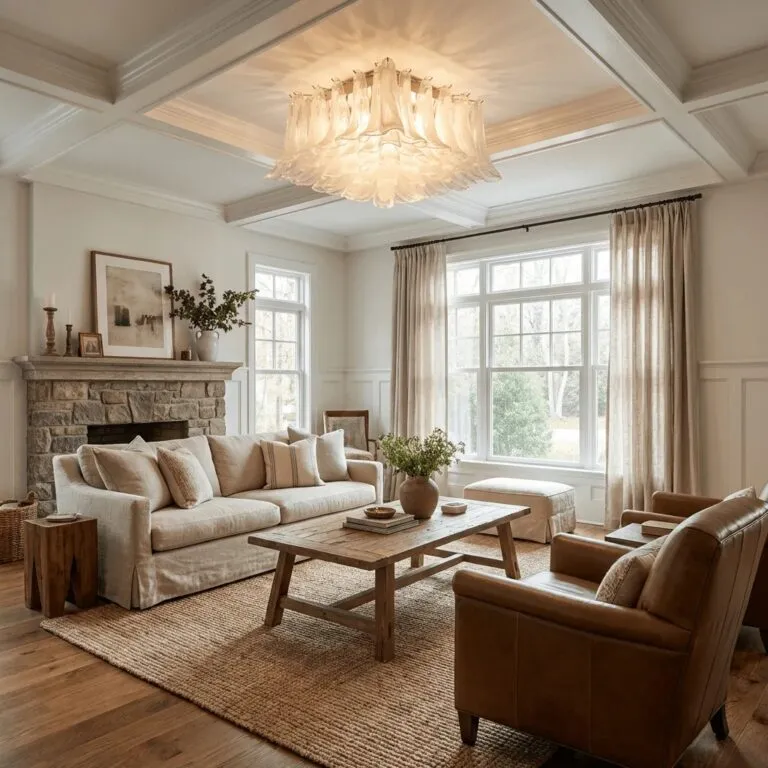
Color temperature strongly influences mood. Warm-white light is generally preferred in residential living spaces because it creates a calmer, more intimate atmosphere than cooler, bluer light. Warm CCTs also complement wood, stone, cream upholstery, plaster, and brass or champagne-toned metal finishes—materials that frequently appear alongside luxury glass lighting.
From a human-factors perspective, warm evening lighting can also be a sensible strategy for spaces used to relax and unwind. Light at night interacts with circadian biology, and the effect depends on spectrum, intensity, timing, duration, and personal sensitivity. A ceiling light like this therefore works best when paired with controllability: the ability to dim or to combine it with other lower-output light sources makes the room more adaptable from social gathering to quiet evening use.
4. Layered Lighting: A Statement Ceiling Lamp Should Not Carry the Whole Room Alone
A beautiful ceiling fixture can be the star of a room, but good lighting design rarely depends on a single luminaire. Most comfortable interiors combine ambient, task, and accent lighting. The Crystal Wave Glass Ceiling Light is strongest as a high-quality ambient and decorative layer. It can establish the room’s luminous identity, while table lamps, floor lamps, wall sconces, or concealed lighting provide task support and perimeter balance.
In an open-plan living room, for example, the ceiling light can provide overall atmosphere while a floor lamp near a reading chair handles focused visibility. In a dining setting, it can be the central visual feature while additional cove lighting or sideboard lamps soften the edges of the room. This layered approach improves comfort because it reduces strong contrast and lets the user adapt the room to different activities.
5. Vertical Illumination and Perceived Brightness
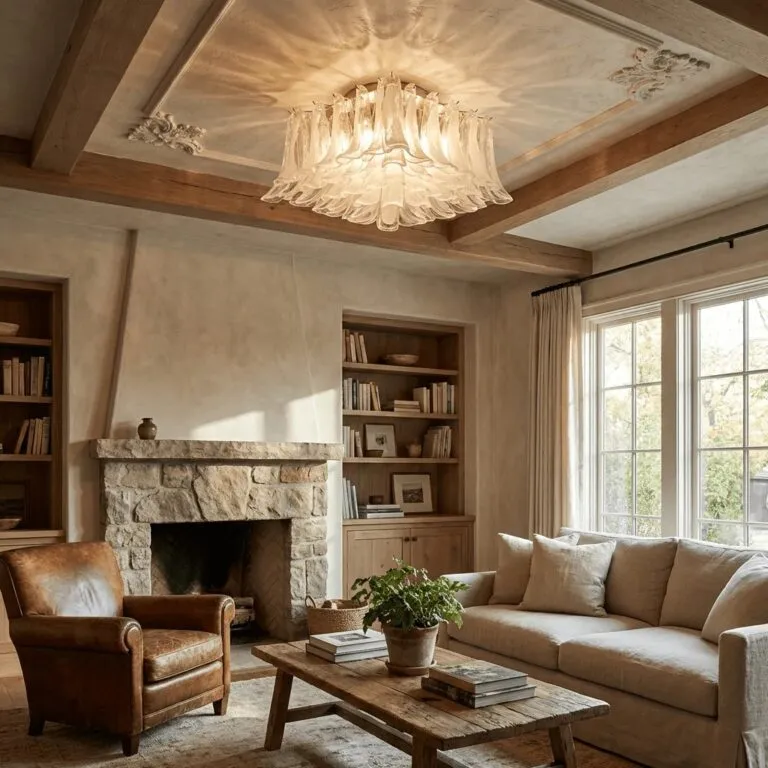
People do not judge brightness only by the amount of light on the floor or coffee table. Bright walls, ceilings, and other vertical surfaces play a major role in how bright a room feels. A luminous ceiling fixture can therefore increase perceived spaciousness even when its measured illuminance is moderate. Because this lamp sends light through and around its sculptural glass layers, it contributes to both direct room illumination and reflected light on the surrounding ceiling plane.
That reflected glow is especially helpful in rooms with high ceilings, coffered ceilings, or large pale surfaces. Instead of leaving the ceiling visually dark, the fixture turns it into part of the atmosphere, which can make the architecture feel more complete and intentional.
6. Color Rendering: Why Quality Light Makes Interior Materials Look Better
Light source quality matters just as much as fixture design. Color rendering describes how accurately a light source reveals the colors of objects compared with a reference illuminant. In homes, good color rendering helps cream upholstery, timber, stone, greenery, artwork, and skin tones appear more natural and pleasing. For decorative ceiling fixtures in premium interiors, CRI 80 is a practical baseline, while CRI 90+ is preferable where material richness and hospitality-style atmosphere are important.
This becomes especially relevant with glass fixtures, because the fixture itself can visually magnify the quality of the light source. A poor-quality lamp may make the room feel flat or uneven, while a high-quality warm LED can help the glass appear refined, luminous, and luxurious.
7. Where This Ceiling Light Works Best
Living rooms: Use it as a focal point above the main seating zone or central coffee table. It works especially well in interiors built around neutral upholstery, warm wood, stone fireplaces, and soft natural daylight.
Dining spaces: Install it where the fixture can define the center of the room and visually anchor the dining table. Its sculptural form helps the dining area feel intentional and elevated.
Bedrooms and suites: In larger bedrooms or hotel-style suites, an artistic glass ceiling lamp can add softness and luxury overhead, especially when supported by dimmable bedside lighting.
Boutique hospitality: Lobbies, lounges, serviced apartments, and boutique hotels benefit from fixtures that create memory and atmosphere. The wave-glass silhouette gives this lamp strong decorative identity without needing loud color.
Open-plan homes: Use the fixture to distinguish one zone within a larger space, such as the living area within a combined living-dining room. The light becomes a spatial organizer as well as a decorative object.
8. Installation and Styling Tips
• Allow visual breathing room around the fixture so the sculptural profile can be appreciated from multiple angles.
• Pair it with warm neutral palettes, natural wood, plaster, soft linen, boucle, stone, or leather for the strongest luxury-organic effect.
• Use dimming when possible so the room can transition from bright social use to softer evening ambiance.
• Avoid relying on the ceiling lamp as the only source for reading, work, or detailed tasks; support it with table lamps, floor lamps, or concealed task lighting.
• Choose a high-quality warm LED light source with good color rendering to preserve the elegance of the glass and surrounding materials.
• Confirm ceiling structure, mounting compatibility, and electrical safety with a qualified installer before installation.
Conclusion: A Decorative Ceiling Lamp That Shapes the Whole Room
The Crystal Wave Glass Ceiling Light | Luxury Artistic Ceiling Lamp shows how decorative lighting can improve both atmosphere and visual comfort when it is designed thoughtfully. Its layered glass construction enlarges the luminous surface, softens the apparent brightness, and adds a sculptural focal point that works beautifully in refined residential and hospitality interiors.
Used within a layered lighting plan, it can make living rooms, dining spaces, lounges, suites, and open-plan homes feel brighter, softer, and more architecturally resolved. For designers and homeowners looking for a ceiling fixture that combines elegance, presence, and science-informed lighting benefits, it is a compelling choice.
Crystal Wavy Glass Chandelier—Click to View Product