


How Warm Amber Glass Wall Lighting Adds Comfort, Depth, and Decorative Atmosphere to Modern Interiors
Why Decorative Wall Lighting Still Matters in Modern Homes
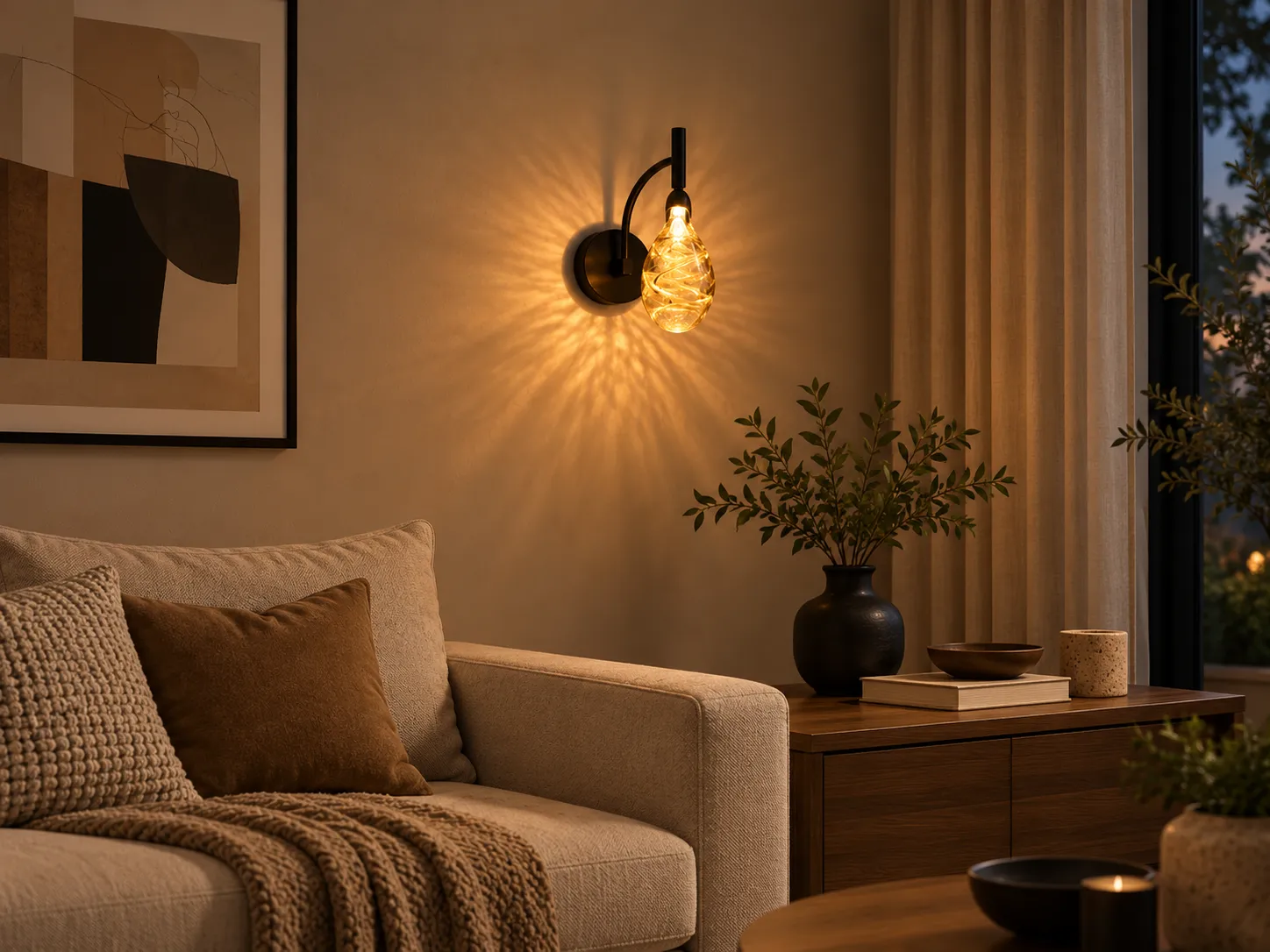
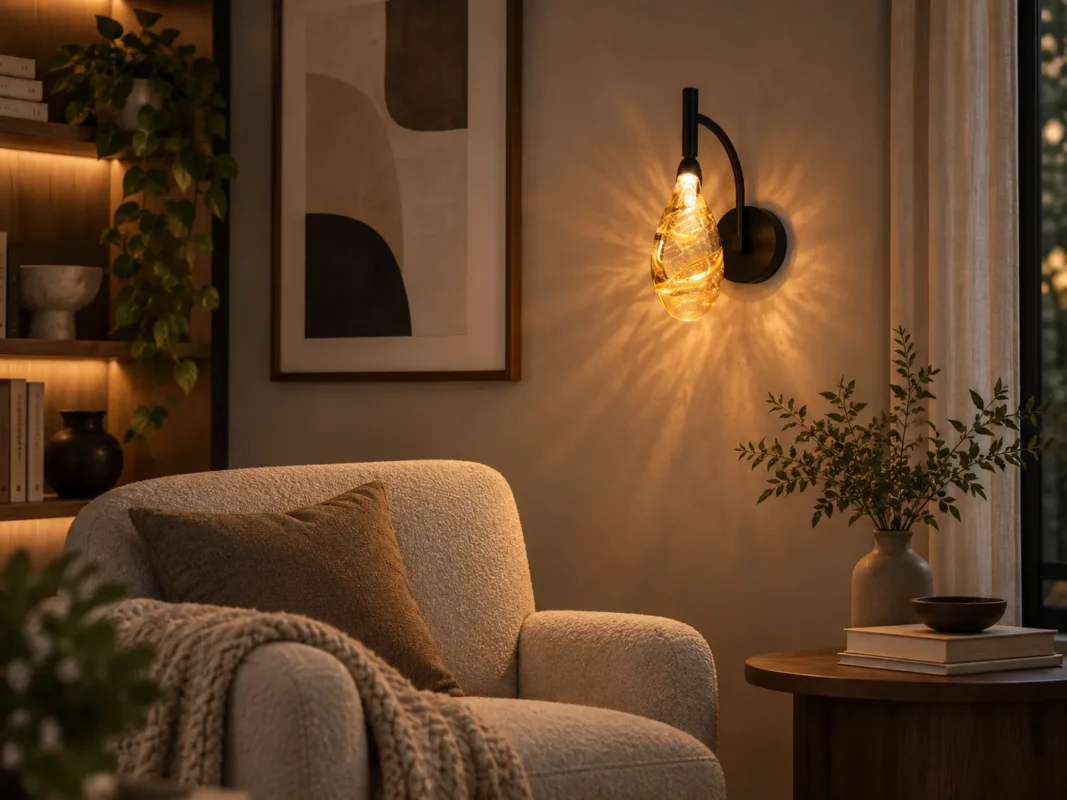
In many contemporary interiors, lighting is expected to do more than provide visibility. It shapes the emotional character of a room, adds depth to flat surfaces, and helps define how comfortable a space feels after sunset. The Amber Glow Wall Light from Xunlu Lighting is a good example of this layered role. Its amber glass shade, dark metal body, and sculptural droplet silhouette allow the fixture to function as ambient lighting, decorative accent, and visual focal point at the same time.
Unlike purely utilitarian wall lights, this style is designed to create atmosphere. The warm amber glow and the glass texture produce a radiant pattern on the wall, turning a simple vertical surface into part of the lighting composition. That makes it especially well suited to bedrooms, reading corners, living rooms, and hospitality settings where mood and visual comfort matter as much as raw brightness.
| Design language | Nordic-minimal wall sconce with sculptural amber-glass shade |
| Main materials | Metal wall arm and decorative amber glass diffuser |
| Lighting effect | Warm decorative glow with patterned wall reflections |
| Recommended application | Accent and ambient lighting rather than primary task lighting |
| Best visual mood | Warm, intimate, hospitality-inspired interiors |
| Suggested spaces | Bedrooms, living rooms, studies, hallways, boutique hotels, reading corners |
1. The Science of Visual Comfort: Why Warm, Shielded Light Feels Gentler
A comfortable interior is not determined by light level alone. Visual comfort is affected by source brightness, contrast, viewing angle, and how the eye adapts to surrounding surfaces. Research summarized by the CIE shows that discomfort glare becomes more likely when the eye sees a small, intense source against a darker background. One practical strategy is to use fixtures that soften or partially diffuse the light source rather than exposing a stark point of brightness.
This wall light supports that strategy in two ways. First, the amber glass visually filters and enlarges the luminous area. Second, the fixture sends part of the light outward into the room and onto the wall, where reflections create a broader luminous impression. The result is a warmer and more atmospheric effect than a bare bulb of similar output, especially in evening residential settings.
2. Why Warm Color Temperature Works So Well With Amber Glass
Color temperature affects how a room feels emotionally. Lower correlated color temperatures, such as warm white, are often associated with relaxation and intimacy, while cooler light tends to feel more alerting and clinical. Amber glass intensifies this effect by visually enriching the warm end of the spectrum, making the emitted light feel especially soft and inviting.
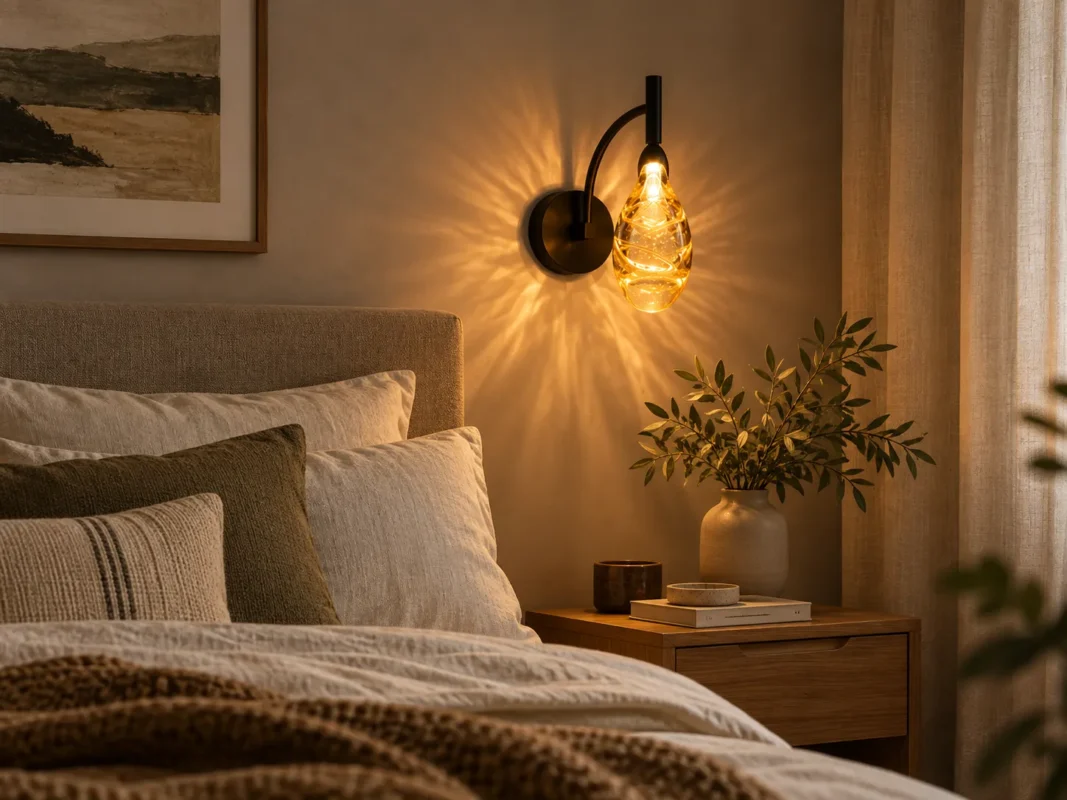
In practice, this means the fixture is highly effective in bedrooms, lounges, and hospitality-inspired living spaces. Because evening light exposure can influence circadian signaling, many designers prefer warm, lower-intensity, dimmable lighting after dark. No single lamp can determine sleep quality by itself, but a warmer, controllable lighting strategy is generally better aligned with restful nighttime environments than harsh, high-intensity cool-white lighting.
3. Decorative Shadow Patterns: More Than a Visual Effect
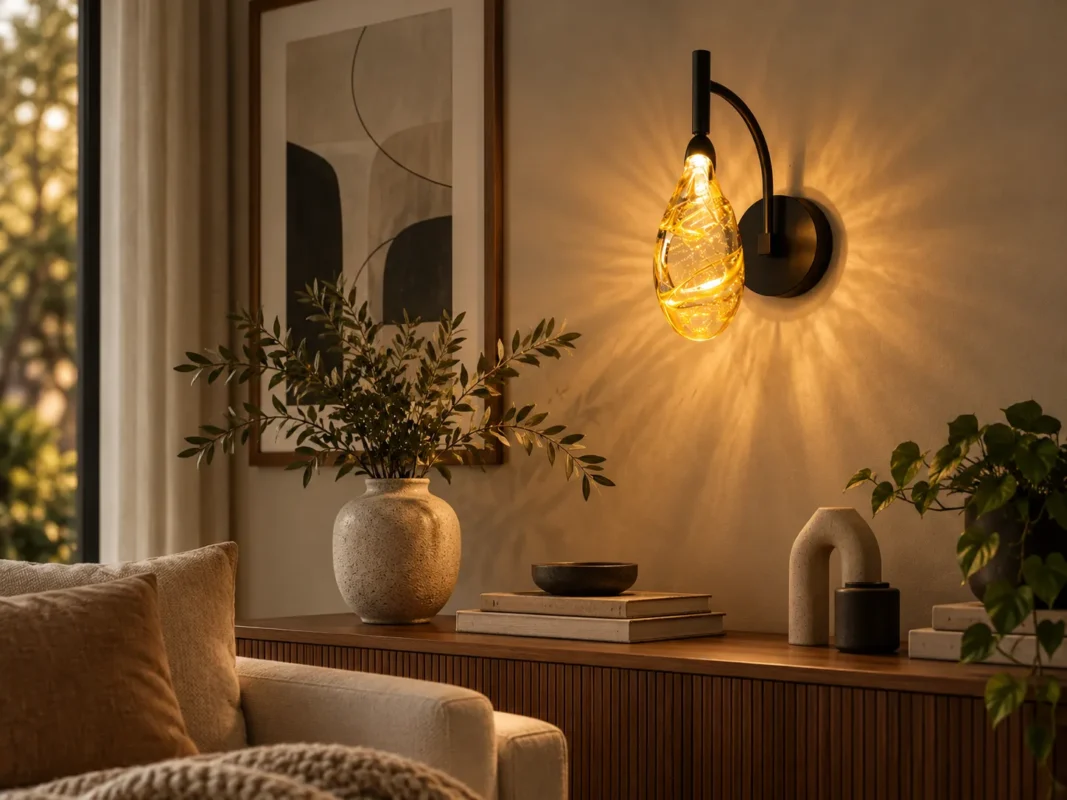
The most striking characteristic of this sconce is the radiant pattern it projects onto the wall. These light patterns are not just decorative—they change how the eye reads the surface. Instead of a flat wall with a single bright point, the room gains texture, depth, and a layered sense of brightness. This is one reason patterned sconces are popular in boutique hotels and curated residential spaces: they make modestly sized rooms feel richer and more intentional.
Psychologically, this kind of layered brightness can make an interior feel more atmospheric without the need for very high light output. It adds character while keeping the overall ambiance subdued, which is valuable in spaces designed for conversation, reading, unwinding, or quiet evening routines.
4. Layered Lighting: Why Accent Lighting Should Work With Other Sources
A well-designed room rarely depends on a single luminaire. Lighting designers often divide residential lighting into ambient, task, and accent layers. This amber wall light performs best as an ambient-accent layer: it contributes mood, vertical illumination, and spatial identity, but it should not be expected to replace focused reading or kitchen work lighting.
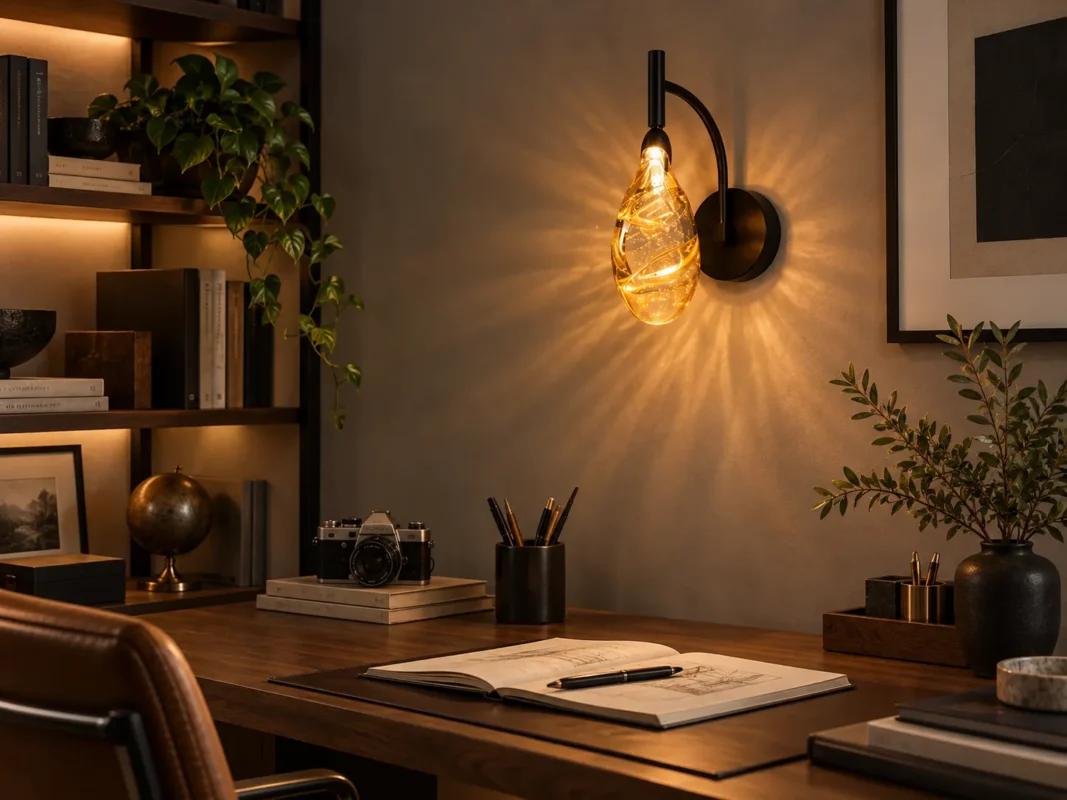
For example, in a bedroom it can be paired with a dimmable overhead light and a lower-output bedside lamp. In a living room, it can complement a table lamp or floor lamp near seating. In a study, it can add warmth to shelving or a desk wall while a task lamp or good overhead illumination provides the precision needed for reading and writing.
5. Vertical Illumination and Perceived Brightness
People judge brightness not only by the amount of light on horizontal surfaces, but also by how bright walls and vertical surfaces appear. Illuminated walls can make a room feel more spacious and welcoming even when overall energy use remains modest. That is why wall lighting is often so effective in hallways, lounges, and intimate seating areas.
Because this fixture creates a luminous halo around itself, it contributes significantly to perceived brightness near the wall. This can make small rooms feel more complete and visually balanced, particularly when combined with neutral plaster, textured paint, wood, or linen-rich interiors that respond well to warm side-lighting.
6. Color Rendering and Material Warmth
When selecting LED sources for decorative fixtures, color rendering still matters. Stronger color rendering helps wood, stone, textiles, plants, and skin tones look more natural. In a fixture like this, where the warm glow interacts strongly with furniture and décor, a high-quality LED source with CRI 80 at minimum—and ideally CRI 90+ in design-sensitive spaces—can noticeably improve the final visual result.
This is especially important in interiors built around tactile materials such as walnut, oak, plaster, boucle, linen, and ceramics. Warm light with good color quality supports these materials instead of flattening them or making them appear dull.
7. Best Places to Use the Amber Glow Wall Light
Bedrooms: Install beside or above a bedside zone where the source does not shine directly into the eyes from the pillow position. The warm glow helps create a softer pre-sleep atmosphere.
Living rooms and lounges: Use near a sofa, console, reading chair, or feature wall. The decorative light pattern adds depth and makes the room feel more curated and intimate.
Studies and home offices: Use as secondary ambient lighting rather than the only source for desk work. It adds warmth and sophistication, especially alongside dark wood and shelving.
Hallways and transitions: A repeated series of similar sconces can create rhythm and a boutique-hotel feeling while improving the visual brightness of otherwise plain walls.
Hospitality interiors: Boutique hotels, restaurants, and serviced apartments can use the fixture to establish atmosphere and memorable wall texture with relatively modest installation complexity.
8. Installation and Styling Tips
• Place the fixture where its decorative wall pattern can be appreciated, rather than hidden behind tall furniture or curtains.
• Consider dimming if compatible with the chosen LED source, so the ambiance can shift from practical evening use to softer late-night mood lighting.
• Avoid relying on it as the only reading or work light in spaces that need focused visibility.
• Use it with warm neutral finishes, wood, linen, boucle, matte ceramics, or textured plaster for the most cohesive organic-modern look.
• Check the real eye-level view when seated or lying down so the glowing glass remains comfortable and not visually intrusive.
• Use a qualified electrician and confirm lamp compatibility, light output, and local electrical requirements before installation.
Conclusion: A Small Fixture That Changes the Mood of a Room
The Amber Glow Wall Light | Luxury Nordic Minimalist Amber Glass LED Sconce Series demonstrates how a compact wall fixture can influence the entire atmosphere of an interior. By combining warm amber glass, decorative shadow play, and a restrained sculptural form, it provides more than illumination—it adds emotional warmth and visual identity.
Used thoughtfully within a layered lighting plan, it can make bedrooms, living rooms, reading nooks, studies, hallways, and hospitality spaces feel calmer, richer, and more welcoming. For homeowners and designers who want lighting that is both functional and atmospheric, it is an especially compelling choice.
Modern Geometric-Style LED Wall Sconces—Click to View Product