


A design-led guide to frosted glass, glare control, warm color temperature, placement, and architectural layering
Why Wall Sconces Matter More Than Their Size Suggests
A wall sconce occupies very little physical space, yet it can have a major effect on how a room feels. Unlike a ceiling fixture that spreads light from above, a wall light adds brightness closer to eye level, giving walls more depth, softening shadows, and helping the interior feel layered rather than flat.
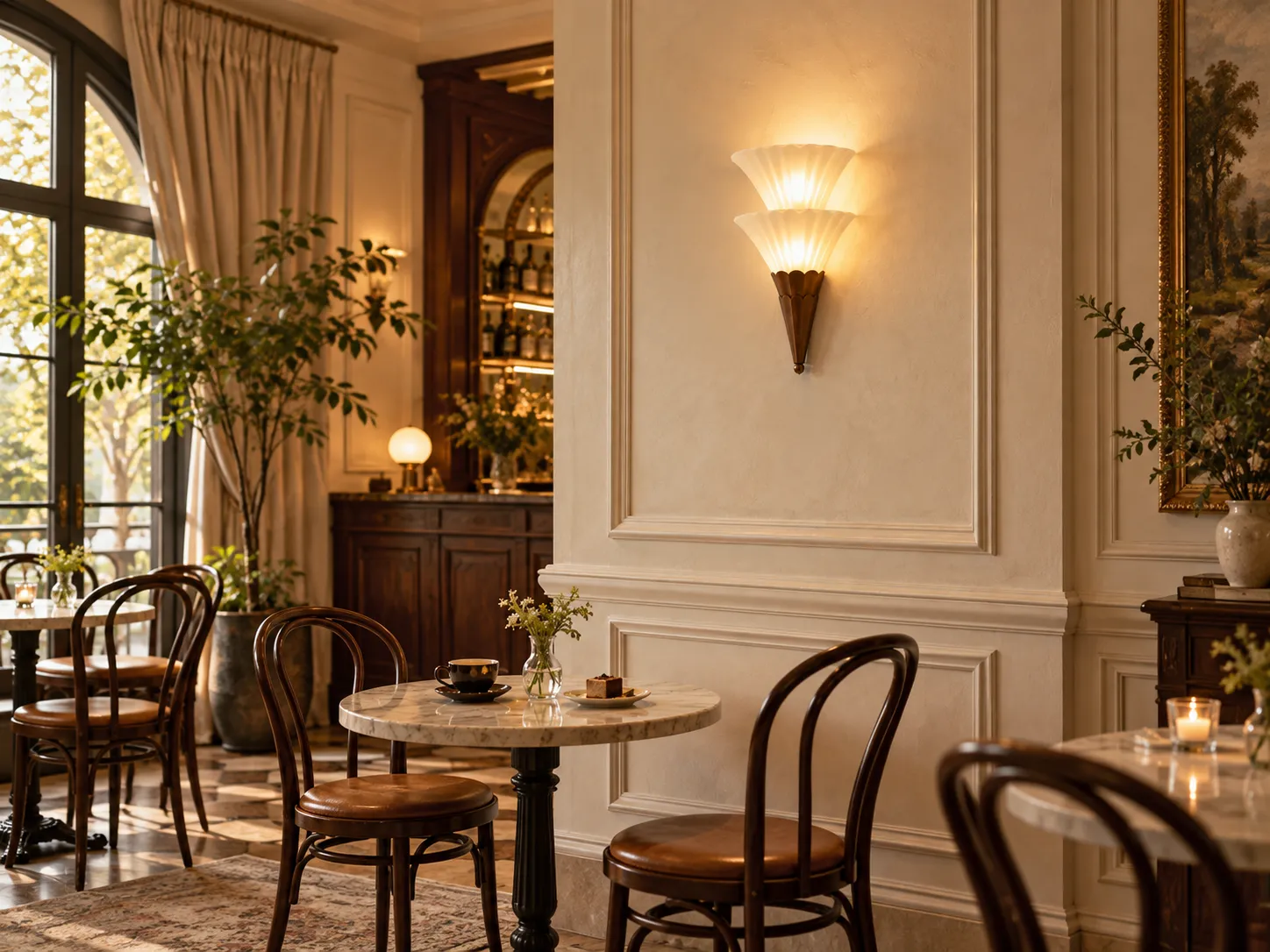
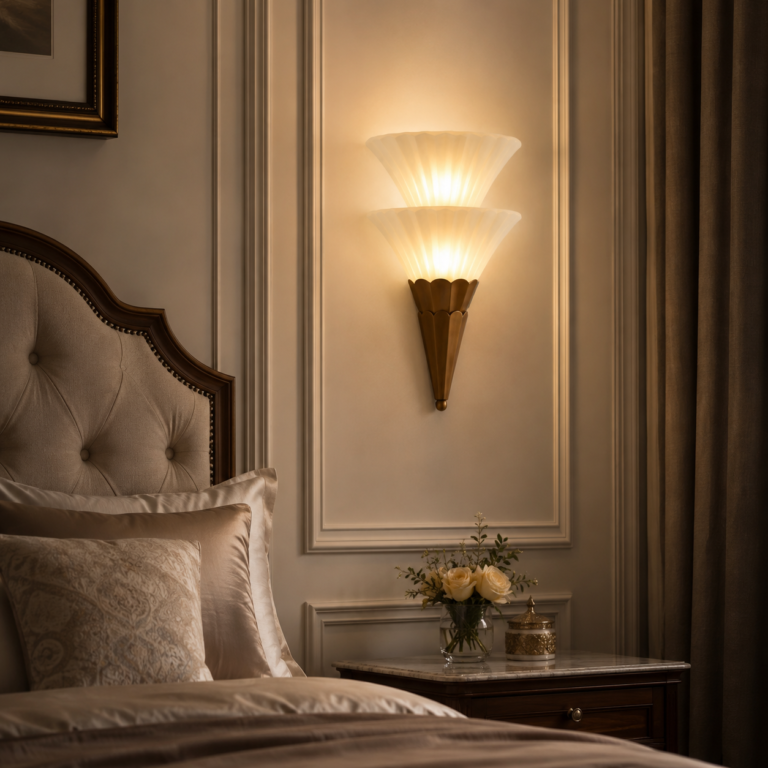
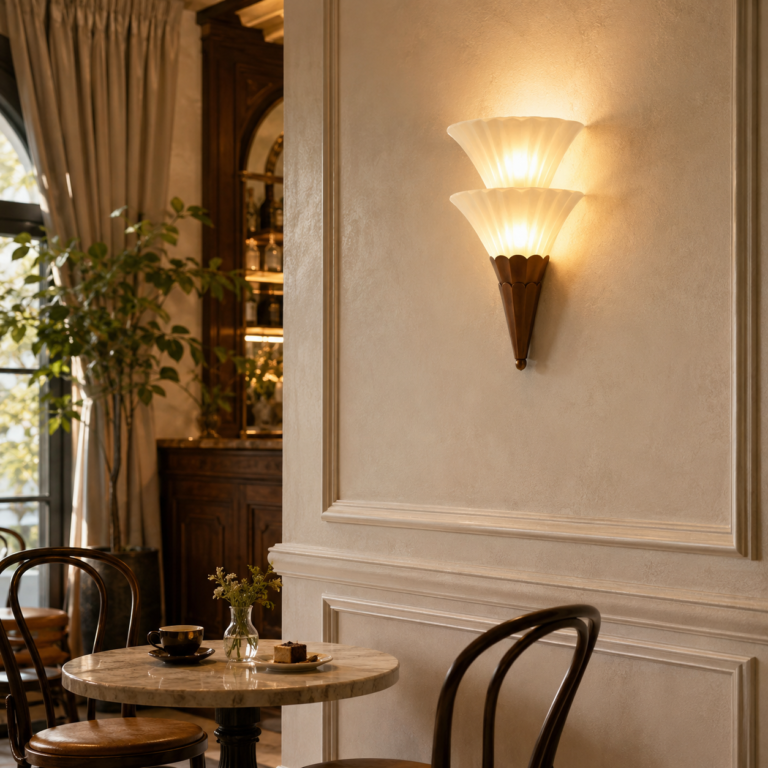
This Art Deco Glass Wall Sconce combines a fan-shaped frosted fluted glass diffuser with a layered antique-brass structure. The result is a fixture that behaves as both lighting and wall decoration. It is especially suited to bedrooms, dining areas, hallways, living rooms, boutique hotels, and classic-modern interiors where atmosphere matters as much as raw brightness.
1. Frosted Glass Softens the Brightness You See
The glass shade is more than a decorative shell. Frosted glass scatters light as it passes through the surface, increasing the apparent luminous area and reducing the visual intensity of a small point source. In practical terms, this means the bulb can feel less harsh because the eye sees a broader glowing surface rather than one concentrated bright filament or LED point.
This is particularly important for wall lighting because sconces are often mounted near normal sight lines. Lighting comfort depends strongly on source luminance, apparent source size, viewing angle, and the brightness of the surrounding environment. A diffusing shade can help reduce direct glare, especially when combined with sensible bulb output and correct mounting height.
2. Wall Lighting Adds Vertical Brightness and Makes Rooms Feel Deeper
People do not experience a room by looking only at the floor or tabletop. Vertical surfaces strongly influence perceived brightness. When walls receive some illumination, the room often feels brighter and more spacious even if the total electrical power is modest.
A decorative sconce is therefore useful as part of a layered lighting plan. It can create vertical highlights between darker areas, draw attention to wall panels or mouldings, and establish visual rhythm down a hallway. In a bedroom, it can soften the transition between bright ceiling lighting and low evening light. In a restaurant or hotel corridor, repeated sconces can guide movement while reinforcing the interior identity.
3. Why 3000 K Warm White Works So Well with Brass
The product recommends 3000 K warm white, with optional 2700 K and 4000 K sources. The visual reason is straightforward: warm-white light enhances the amber and bronze tones of antique brass, timber, beige textiles, stone, and cream walls. It also supports the historical character associated with Art Deco and classic European interiors.
For late-evening residential use, warm light can also be a sensible biological choice. Research and expert guidance on evening light exposure emphasize that brightness, spectrum, timing, duration, and the amount of light reaching the eye all matter. Warm-white domestic LEDs around 2700-3000 K can make it easier to keep melanopic exposure lower than many cooler sources at a similar photopic light level, although color temperature alone does not determine biological impact.
Color Temperature by Mood
| Setting | Suggested CCT | Typical effect |
|---|---|---|
| Bedroom / evening lounge | 2700–3000 K | Warm, relaxed, flattering to brass and soft furnishings |
| Dining room / living room | 3000 K | Balanced warmth with good decorative clarity |
| Hotel corridor / neutral interior | 3000–4000 K | Cleaner, more neutral architectural appearance |
4. Art Deco Proportion: Geometry, Repetition, and Symmetry
Art Deco design often relies on stylized geometry, repetition, fan shapes, stepped forms, and metallic finishes. This sconce uses those ideas without becoming visually heavy. The fluted fan-shaped glass creates a strong upward flare, while the petal-like brass base gives the fixture a vertical taper that anchors the composition.
That geometry works especially well on panelled walls, symmetrical bedroom layouts, and dining rooms with mouldings or framed art. A pair of sconces can reinforce symmetry around a bed, mirror, console, or artwork. A single sconce can instead act as an accent on a narrow wall or between architectural panels.
5. How the Sconce Changes Different Rooms
Bedroom: Mounted beside the bed or above a nightstand, it adds soft vertical light and a classic decorative accent without occupying tabletop space.
Dining area: The warm glow supports an intimate atmosphere and adds visual interest between framed wall panels or artwork.
Hallway: Repeated at intervals, the sconces create rhythm and prevent a corridor from feeling visually flat.
Living room: Used beside artwork, a fireplace, or a feature wall, the fixture adds a second lighting layer below the ceiling.
Hotel room: The brass-and-glass combination creates a premium visual identity while maintaining a comfortable ambient glow.
Restaurant or lounge: Low-level decorative wall light helps shape atmosphere without relying entirely on overhead fixtures.
6. Choosing the Right Mounting Height
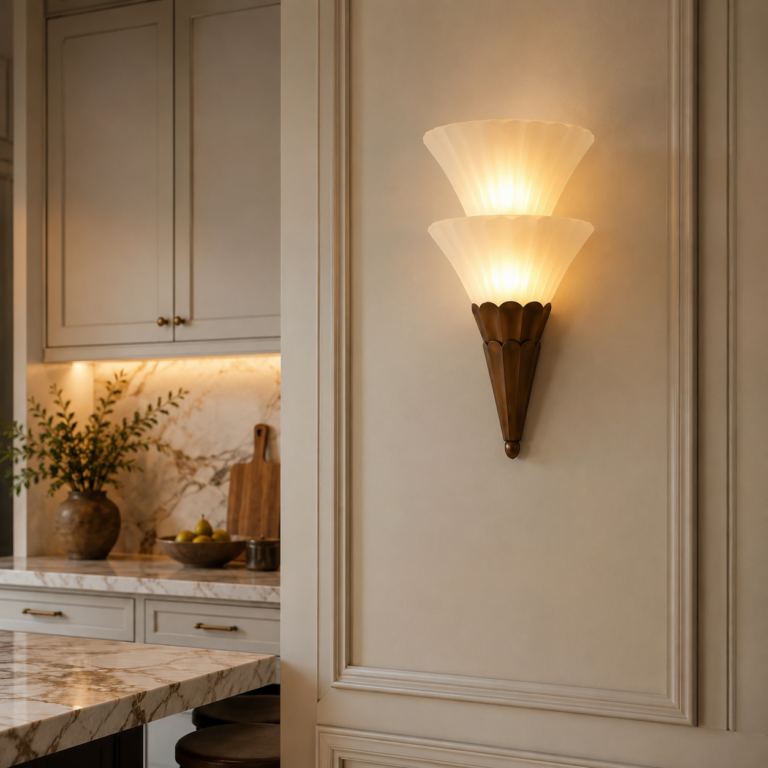
The product page recommends a mounting height of approximately 150-180 cm (59-71 in) from the floor in residential spaces and 160-200 cm (63-79 in) in hotels or commercial interiors. These ranges are useful starting points, but the final height should respond to the room and the viewer.
For a bedside installation, check the lamp from both a seated and standing position. The diffuser should not feel glaring when the user is in bed. In a hallway, the fixture should sit high enough to avoid impact while still remaining visually connected to the human scale of the room. In dining or hospitality settings, consistent spacing and alignment matter as much as the individual mounting height.
7. Distance from the Wall and Architectural Fit
This sconce projects approximately 12-18 cm (4.72-7.09 in) from the wall. That shallow-to-moderate projection helps it remain practical in corridors and beside furniture while still giving the layered glass enough depth to feel sculptural.
Before installation, check nearby door swings, curtains, artwork, cabinets, and furniture. A wall light should feel integrated with the architecture rather than squeezed into leftover space. The hidden mounting plate also supports a cleaner final appearance because the decorative brass and glass remain the visual focus.
8. Layered Lighting: Do Not Ask One Fixture to Do Everything
A decorative wall sconce is strongest when it supports other light layers. Use ceiling lighting or recessed fixtures for general illumination, the wall sconce for ambient and decorative light, and task lighting where reading, cooking, or detailed work occurs.
This layered approach improves flexibility. During daytime or cleaning, brighter general lighting can be used. In the evening, overhead lighting can be reduced and the wall sconces can maintain a softer background glow. The room then changes character without requiring a single fixture to operate at an uncomfortable brightness.
9. LED Bulb Choice and Visual Quality
The fixture is compatible with G4 LED light sources. When choosing a bulb, brightness is only one consideration. Color rendering also matters because brass, wood, fabric, skin tones, artwork, and food all depend on accurate color appearance.
A high-quality warm-white LED with good color rendering can make the room feel richer and more natural. If the sconce is used mainly as decorative ambient lighting, a lower-output bulb is usually preferable. If it contributes meaningfully to room illumination, choose more output but retain the diffuser as the brightest visible surface rather than allowing the lamp to become visually harsh.
Product Specification Snapshot
| Product type | Art Deco glass wall sconce / decorative wall light |
| Style | Art Deco luxury, vintage European, modern classic |
| Main materials | Stainless steel, brass-finish metal, premium glass |
| Shade | Frosted fluted glass diffuser |
| Finish | Antique brass with warm white glass |
| Light source | LED compatible / G4 LED bulb |
| Voltage | 110–120 V (US) / 220–240 V (EU) |
| Recommended CCT | 3000 K warm white |
| Optional CCT | 2700 K / 3000 K / 4000 K |
| Installation | Wall-mounted with hidden mounting plate |
| Mounting plate | 10 × 10 cm / 3.94 × 3.94 in |
| Wall projection | Approx. 12–18 cm / 4.72–7.09 in |
| Residential mounting height | Approx. 150–180 cm / 59–71 in from floor |
| Hotel / commercial mounting height | Approx. 160–200 cm / 63–79 in from floor |
10. Creating a Cohesive Interior Around the Sconce
The easiest way to style this fixture is to repeat only one or two of its visual cues elsewhere in the room. Brass cabinet pulls, a warm-framed mirror, subtle green or cream textiles, or a walnut bedside table can connect the lamp to the rest of the interior without making the room feel overly themed.
The frosted glass also benefits from calm backgrounds. Warm ivory, taupe, stone, soft grey, and muted beige walls allow the luminous fan shape to remain visible without competing with highly saturated surfaces.
Design Takeaway
The Art Deco Glass Wall Sconce works because it combines three useful qualities in one small fixture: a sculptural silhouette, a diffusing glass shade, and a warm metallic finish. The design creates vertical brightness, reduces the visual harshness of the light source, and adds decorative structure to the wall.
For bedrooms, living rooms, dining areas, hallways, and hospitality interiors, the best result comes from using the sconce as one layer in a broader lighting plan. Keep the output comfortable, choose a warm or neutral LED that suits the room, and mount the fixture where its glow can be appreciated without sitting directly in the viewer’s line of sight.
Art Deco Glass Wall Sconce—Click to view the product:View the product page
