

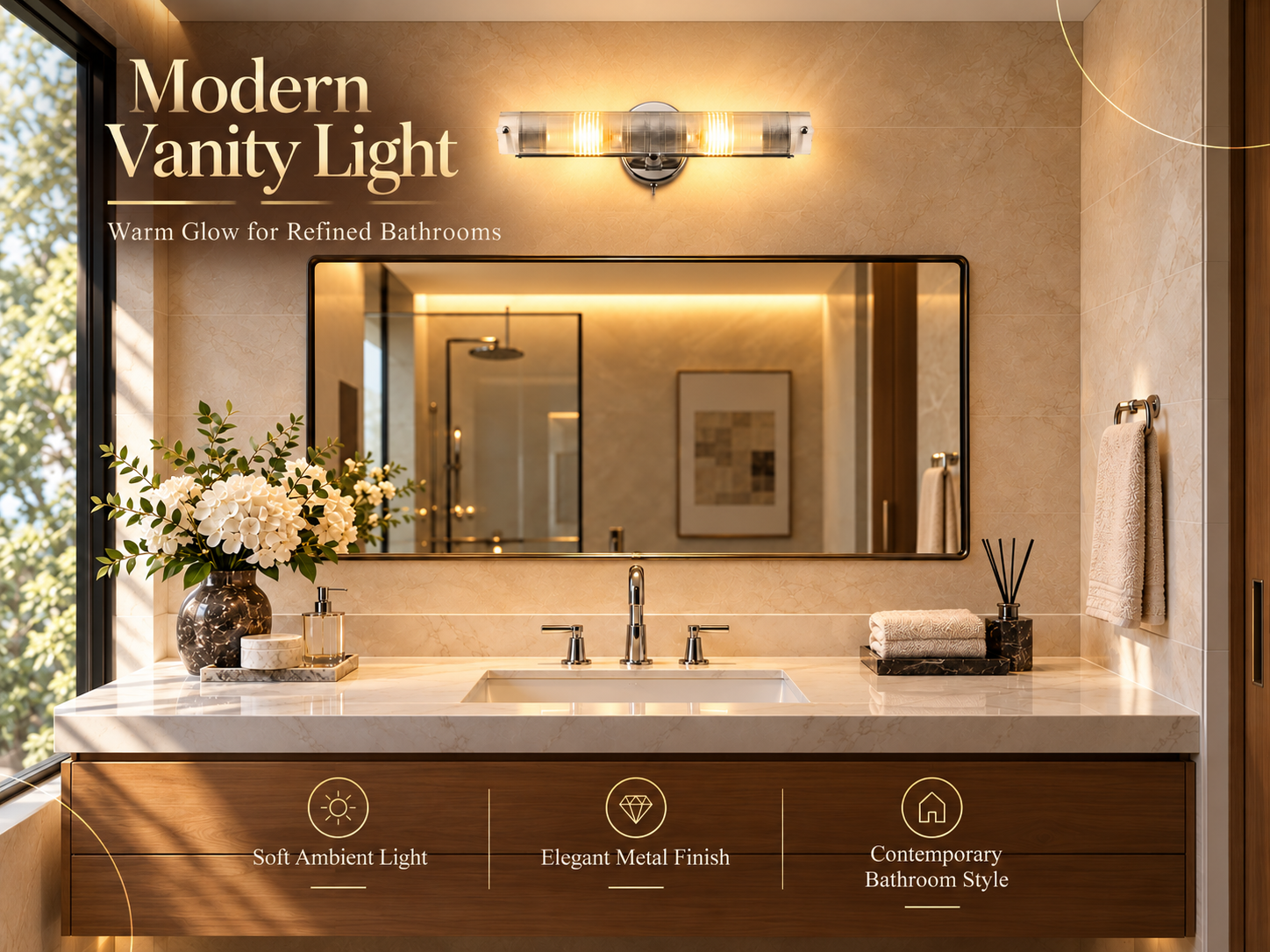

Modern Clear Glass Vanity Wall Light: Layered Warm Illumination for Contemporary Bathrooms and Bedrooms
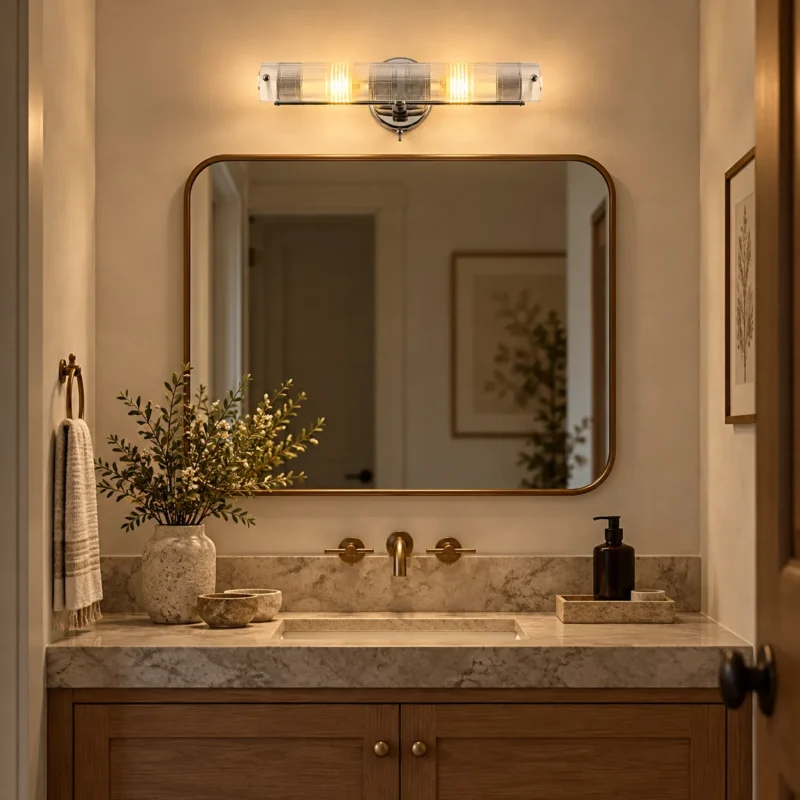
Figure 1 A horizontal wall light paired with a wooden vanity creates a clear focal point above the mirror.
Introduction: When a Wall Light Becomes Part of the Interior Architecture
A vanity wall light is a small fixture with an unusually large visual responsibility. It sits close to the mirror, usually near eye level, and is viewed every day at short range. Because of that, the best designs must do more than simply produce light: they need to control glare, complement the mirror, coordinate with metal finishes and create a comfortable transition between task lighting and ambient lighting.
This clear glass wall light uses a horizontally layered transparent body with warm internal light and a polished metal center mount. The transparent construction gives the fixture a lighter visual mass than an opaque bar, while the internal luminous segments create depth and decorative sparkle. In bathrooms it can serve as a refined mirror light; in bedrooms or dressing spaces it can operate as a soft architectural wall light.
Design Characteristics at a Glance
| Fixture Type | Horizontal vanity / decorative wall light |
| Visual Style | Modern transitional with clear layered glass or acrylic detailing |
| Light Character | Warm, diffused and decorative rather than aggressively bright |
| Primary Use | Bathroom mirror, vanity, dressing zone, hotel washroom, bedside wall |
| Best Interior Pairings | Warm wood, travertine, marble, bronze, chrome, brushed brass and neutral plaster walls |
| Recommended Lighting Role | Task-supporting accent light used together with ambient room lighting |
Why the Transparent Body Works Visually
Transparent materials are useful in compact lighting because they reduce the perceived bulk of the fixture. Instead of presenting a solid block above the mirror, the clear outer body lets the wall and light remain visually connected. The luminous center sections then become the focus, which gives the lamp a layered appearance without making the mirror wall feel crowded.
This balance is particularly effective in warm-modern interiors. On a beige or cream wall, the fixture appears soft and refined. Against dark stone or wood, the glowing transparent body develops stronger contrast and becomes more sculptural. Polished metal details also pick up reflections from taps, mirror frames and other hardware, helping the room feel coordinated rather than assembled from unrelated parts.
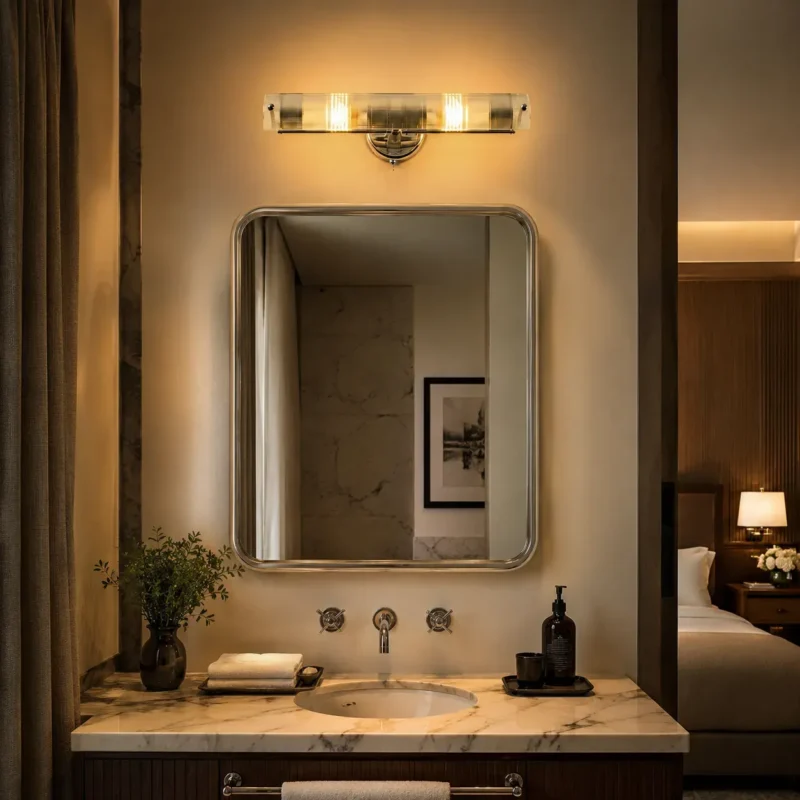
Figure 2 Separate lighting controls can accommodate different activities where a vanity is close to a bedroom.
The Science of Diffusion and Glare Control
A bare LED source can have very high luminance even when its total lumen output is modest. That is why a small exposed LED point can feel uncomfortably bright. Diffusers and transparent optical elements spread, redirect or partially scatter the light so that the apparent luminous area becomes larger. In practice, this reduces the visual severity of the source and can improve comfort around mirrors and polished surfaces.
The principle is important in bathrooms because mirrors multiply visual contrast. A bright point can appear both directly and as a reflection. A layered clear housing helps soften that experience, but optical comfort still depends on mounting height, viewing angle and surrounding room light. A decorative vanity light should therefore be treated as part of a complete lighting system rather than as an isolated object.
Warm Light and Human Perception
The scenes shown here use a warm-white appearance. Correlated color temperature, or CCT, describes whether white light appears warmer or cooler. Lower CCT values are visually warmer and often reinforce wood, bronze, cream stone and beige finishes. Higher values appear cooler and can make a bathroom feel more clinical or energetic. The U.S. Department of Energy notes that CCT describes the appearance of white light, while color rendering describes how faithfully object colors appear. These are related design choices, but they are not the same measurement.
Why Color Rendering Matters at the Mirror
Vanity lighting is one of the places where color quality matters most. Skin tone, cosmetics, clothing and hair are evaluated at close range, so a light source with poor spectral quality can make colors appear flat or distorted. CRI is still commonly used as a simple indicator of color fidelity, while IES TM-30 offers a more detailed method that describes both color fidelity and gamut behavior.
For general residential interiors, CRI 80 is often treated as an acceptable baseline, while CRI 90 or higher is preferred when accurate color appearance is more important. For a bathroom mirror used for makeup or grooming, requesting the actual LED color-rendering specification is more meaningful than relying on color temperature alone.
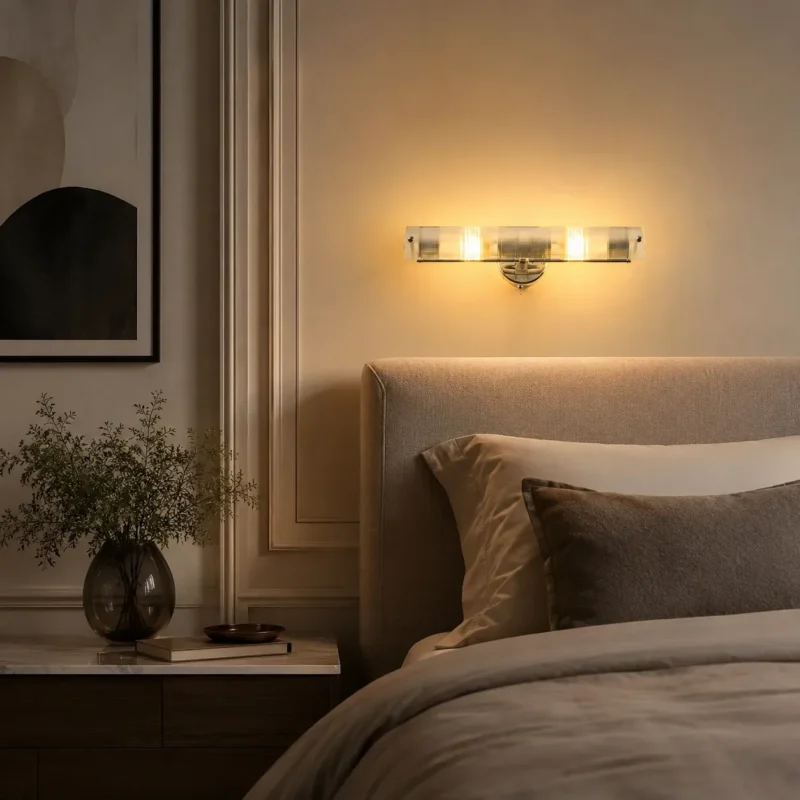
Figure 3 Before fixing a bedside wall light, check the view from the pillow and the light reaching a book.
Mirror Lighting: Why Placement Is as Important as Brightness
A fixture above the mirror primarily sends light downward and outward. This can brighten the forehead, countertop and upper mirror area effectively, but if it is mounted too high or too close to the wall it may leave deeper shadows under the eyes, nose and chin. That is why professional vanity lighting often combines overhead mirror light with broader ambient light or, in high-performance applications, supplementary light from the sides.
The fixture should be centered on the mirror or basin zone and positioned so that the bright internal elements are not directly in the normal line of sight. A wider mirror usually benefits from a longer horizontal fixture or multiple light sources, while a compact powder-room mirror can use a shorter fixture without losing visual balance.
Layered Lighting Creates a More Comfortable Bathroom
A well-designed bathroom normally uses at least three lighting functions: ambient light for general visibility, task light for mirrors and grooming, and accent light for materials or architecture. A decorative transparent vanity light is strongest when it contributes to the second and third roles. It can illuminate the mirror zone while also adding warmth and depth to the wall surface.
This is especially useful in the evening. Instead of relying on a single bright ceiling fixture, the user can keep the vanity light and selected accent lighting on, producing a softer and more relaxing visual environment. During morning routines, broader ceiling illumination can be added to improve overall brightness and reduce contrast across the room.
Material Pairing and Interior Style
The fixture works especially well in warm-modern and transitional spaces because its transparent body visually bridges classic metal details and contemporary geometry. In a marble bathroom, it can reflect polished surfaces without becoming heavy. In a room with wood cabinetry, the warm light strengthens the natural color of the timber. In hotel-inspired interiors, the combination of glass, metal and warm light creates a polished and familiar sense of comfort.
The same light can also work beyond the bathroom. One of the supplied scenes shows it used as a bedside wall fixture. This demonstrates an important design advantage: when the output is soft and the proportions are compact, a vanity-style light can become a general decorative wall light for bedrooms, dressing rooms, hotel corridors or small alcoves.
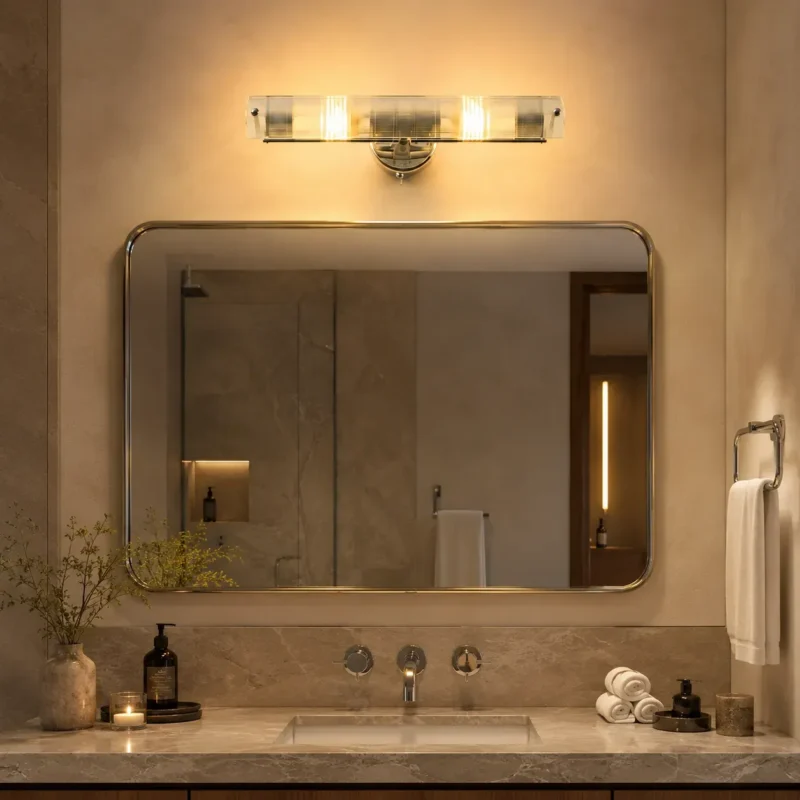
Figure 4 Above-mirror placement requires checks for facial shadows and reflected glare. Bathroom suitability must be verified separately.
Installation and Bathroom Safety
Bathrooms are moisture-prone environments, so electrical safety must be treated as a technical requirement rather than a decorative afterthought. The fixture should only be installed where its wet-location or damp-location rating is appropriate for the local code and the distance from showers, bathtubs and other water sources. Voltage compatibility alone does not determine bathroom suitability.
Installation should also consider heat dissipation, access to the driver or lamp components, wall-box stability and maintenance. Even efficient LEDs and compact lamps produce heat. Excess temperature can shorten LED lumen maintenance and driver life, so the mounting system should not trap heat unnecessarily.
What to Check Before Specifying This Type of Light
- Confirm actual light output in lumens rather than judging brightness from wattage alone.
- Ask for CRI or TM-30 information when color quality is important.
- Check color temperature and keep it consistent with nearby ceiling or accent lights.
- Confirm damp- or wet-location suitability for the intended bathroom position.
- Match fixture width to the mirror and basin zone rather than selecting by wall width alone.
- Decide whether the fixture is decorative accent light, true task light, or both; this determines whether additional ambient lighting is needed.
Final Thoughts
This clear layered vanity wall light succeeds because it combines several useful qualities in one compact object: transparency, warm luminous depth, reflective metal detailing and a horizontal form that naturally relates to mirrors. Its strongest application is not in creating the maximum possible brightness, but in producing a comfortable and decorative layer of light within a broader lighting plan.
For modern bathrooms, hotel-inspired washrooms and bedrooms, this type of fixture can add visual refinement without making the wall feel heavy. The most successful result comes from balancing optical comfort, color quality, placement and room-wide lighting rather than focusing on appearance alone.
Bauhaus Ribbed Glass Vanity Wall Light with E14 LED | Click to View Product