
From Function to Aesthetics: The Development Trends in Modern Lighting Design

Abstract: Tracing the evolution of home lighting, the core value of luminaires has consistently undergone continuous refinement. Evolving from early functional products serving basic "space illumination" needs to contemporary aesthetic art pieces that "create ambiance, enhance spatial experience, promote health, and adapt to daily life," modern luminaire design has achieved a complete transformation—from utilitarian tools to aesthetic entities with multifaceted values. Driven by advancements in residential aesthetics, optical technologies, smart home adoption, and new material innovations, the modern lighting industry entered a new phase characterized by "refined functionality, context-driven aesthetics, human-centric technology, and minimalist design" by 2026. Drawing on cutting-edge industry data, innovative design concepts, and real-world product examples, this paper thoroughly examines the evolutionary trajectory of modern luminaires from essential functionality to aesthetic premiumity, while analyzing six key design trends. The findings provide actionable insights for lighting brand development, cross-border product selection, home design practices, and industry professionals.
1. Functional Evolution: From Basic Lighting to Advanced Health-Oriented Optics – Comprehensive Upgrade of Core Performance
Function is the cornerstone of lighting fixtures. The evolution of modern lighting functions has moved beyond the simplistic notion that "the brighter, the better," advancing toward refined improvements focused on health benefits, precision, user-centric design, and professionalism. While traditional fixtures were limited to basic illumination, modern models leverage full-spectrum optical technology, anti-glare engineering, and intelligent dimming algorithms to achieve comprehensive upgrades in lighting performance, elevating lighting from merely meeting basic needs to serving as a means for enhancing living environments.
1.1 With the widespread adoption of full-spectrum lighting, healthy illumination has become a standard requirement in the industry.
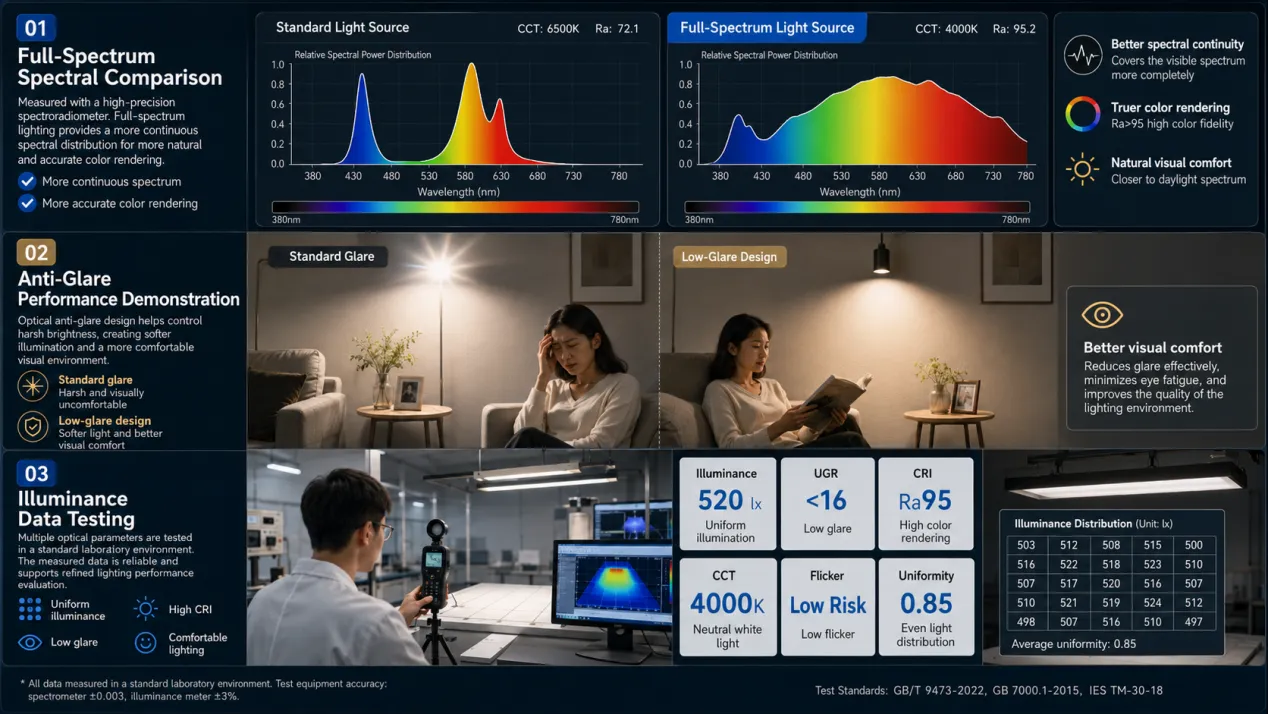
Historically, the functional limitations of lighting fixtures primarily stemmed from defects in light sources: conventional LED lamps exhibited excessive blue light emission, spectral deficiencies, and color rendering distortion, which could lead to visual fatigue and color perception deviations with prolonged use. With growing awareness of human health, full-spectrum healthy illumination has become the core foundational trend in fixture design by 2026, fundamentally redefining the optical functionality of lighting systems.
Full-spectrum lighting fixtures replicate the natural light spectrum, addressing the deficiencies of traditional LEDs in the blue and red light bands to achieve near-solar-like complete spectral coverage. Industry standards specify that high-end modern luminaires must meet four core requirements: RG0 exemption-grade blue light emission, a high color rendering index (Ra ≥ 95), absence of flicker hazards, and low glare (UGR ≤ 13). Compared to conventional Ra80 fixtures, full-spectrum luminaires accurately reproduce the true colors of interior materials at a 1:1 ratio, preventing wall yellowing and color distortion in soft furnishings; their low-blue-light design caters to the visual needs of seniors, children, and office workers, extending the lighting function into eye-care benefits.
Industry data shows that by 2026, the full-spectrum adoption rate of mid-to-high-end domestic home lighting products will exceed 65%, while the full-spectrum compatibility rate for cross-border exported lamps will surpass 70%. Health-focused optical functionality has evolved from a premium selling point for high-end products to a fundamental requirement for modern lighting fixtures, marking a formal shift in lighting functions from mere illumination to comprehensive light therapy.
1.2 Precision lighting design eliminates unnecessary excessive brightness
Traditional lighting design suffers from fundamental functional misconceptions: an excessive focus on power and brightness at the expense of appropriate spatial illumination, resulting in excessive light diffusion throughout the room, flat light-shade distribution, and visual glare. Modern lighting design rejects the "high-brightness-first" approach, instead centering on spatial context and human visual habits, employing secondary optical lenses for precise light distribution to achieve accurate illumination control and scientifically optimized beam angles.
Modern mainstream lighting fixtures employ sophisticated light distribution designs to create distinct beam angles: living room wall lights utilize a 30-degree elliptical light pattern to prevent uneven wall reflections; basic illumination employs a 120-degree wide-angle diffused light for uniform coverage without blind spots; accent lighting uses a 15-degree narrow-angle spotlight to precisely highlight focal areas. These designs strictly adhere to human occupancy illumination standards—100–150 lx in public spaces, 200–300 lx in work areas, and 50–80 lx in rest areas—allowing precise brightness adjustment to address the shortcomings of traditional lighting that often provides excessive yet uncomfortable or superficial illumination, thereby aligning lighting functionality more closely with human physiological needs.
1.3 Structural and Functional Optimization for Diverse Living Scenarios
In terms of hardware structure and functionality, modern lighting fixtures have undergone comprehensive optimization and upgrading. The heat dissipation design employs honeycomb-thinned aerospace-grade aluminum with a vertical airflow guidance system, extending the fixture's service life to over 50,000 hours and addressing common drawbacks of traditional lamps such as rapid light degradation, overheating, and high failure rates. The drive system has been upgraded to an isolated constant-current driver, enabling flicker-free operation with low energy consumption suitable for prolonged use. Enhanced waterproof, dustproof, and oil-resistant construction allows these fixtures to perform effectively in diverse environments including kitchens, bathrooms, balconies, and outdoor spaces, significantly improving their functionality, stability, and durability.
2. Aesthetic Evolution: From Monolithic Forms to Contextualized Lighting – Design Returns to the Essence of Space
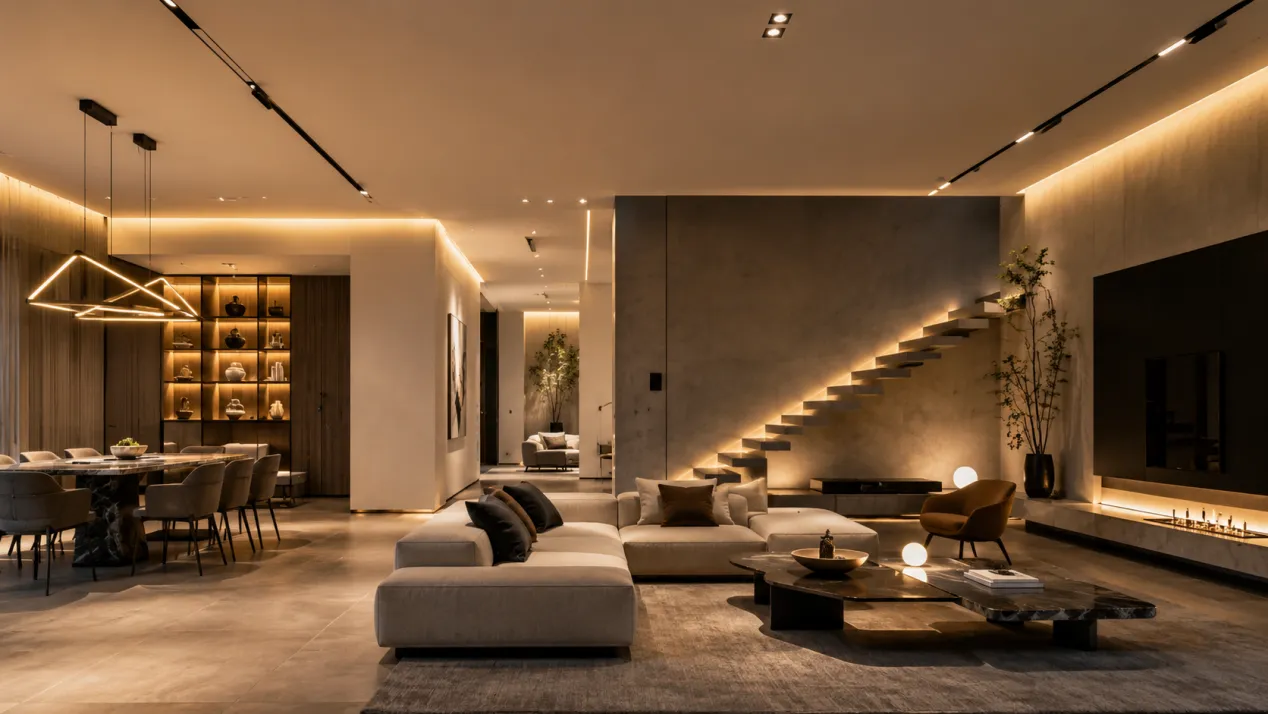
If functional upgrades represent the fundamental evolution of modern lighting fixtures, then aesthetic innovation constitutes the key to their premium value. Traditional lighting aesthetics were confined to "attractive visual design," emphasizing intricate carvings and luxurious materials to captivate attention through their form; in contrast, contemporary lighting aesthetics have completely revolutionized traditional design principles, advancing toward a new phase characterized by minimalist concealment, emphasis on light and shadow, spatial synergy, and stylistic coherence, achieving an evolution from merely "beautiful lighting fixtures" to creating truly aesthetically pleasing spaces.
2.1 With minimal lighting and no visible fixtures, minimalist invisibility has become the dominant design language.
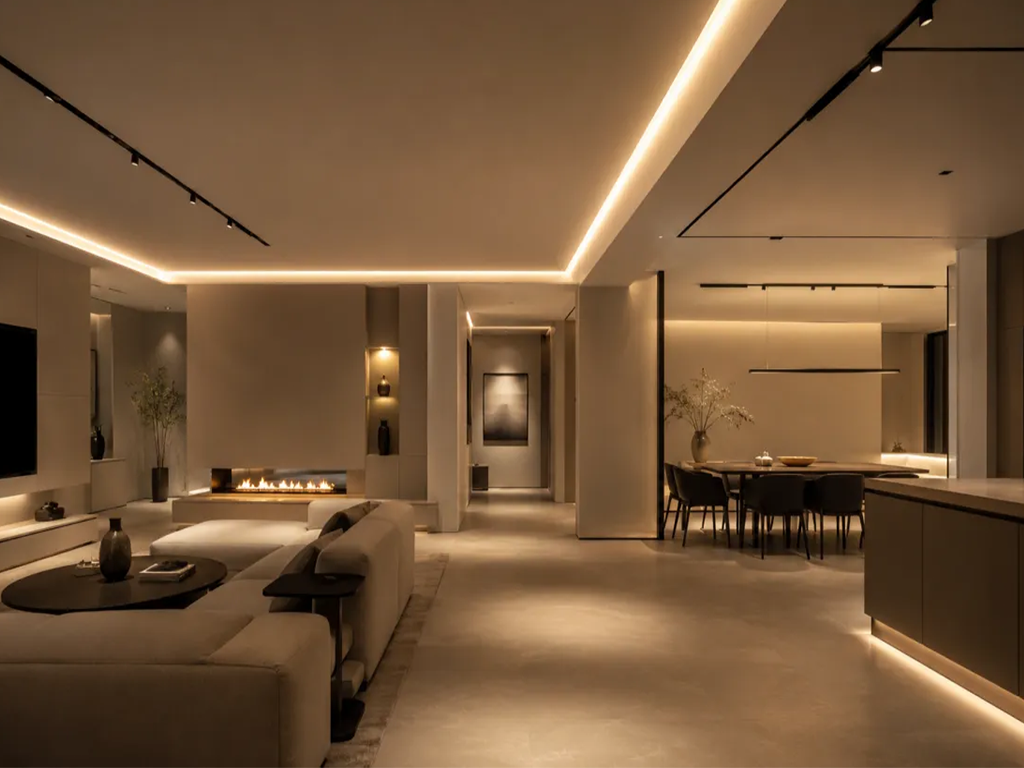
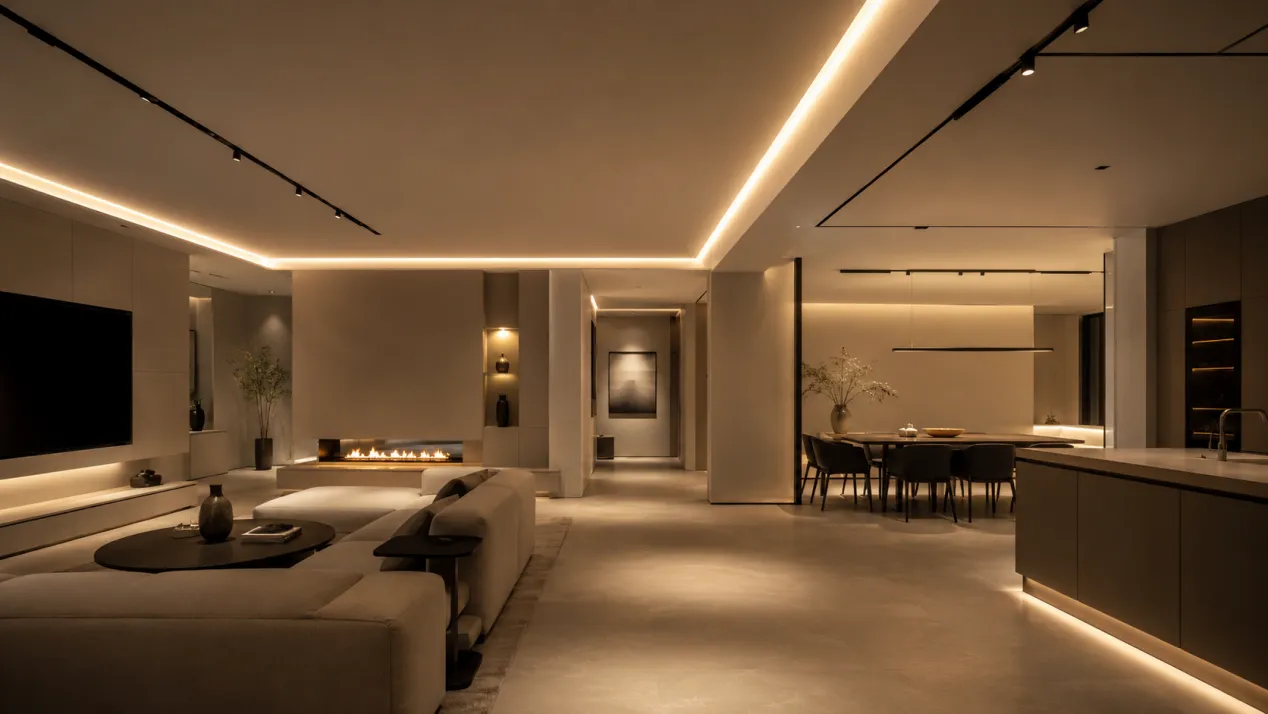
Modern home aesthetics prioritize simplicity, transparency, and sophistication; elaborate or incongruous lamp designs can disrupt the overall spatial harmony. Consequently, "illuminating without being visible" has become the core trend in lighting aesthetics for 2026 and represents the ultimate standard for high-end lighting design. Modern luminaires abandon traditional bulky fixtures, complex decorations, and exaggerated shapes, employing ultra-thin, embedded, concealed, or suspended designs to integrate them seamlessly into ceilings, walls, cabinets, and architectural lines.
Emerging lighting categories such as magnetic track lights, linear light strips, ultra-thin flat-panel lamps, embedded spotlights, and suspended pendant lights are rapidly replacing traditional main fixtures. These luminaires feature no unnecessary decoration, with minimalist geometric lines and a solid matte finish that complement all mainstream home design styles—including cream-toned aesthetics, minimalism, wabi-sabi, light luxury, and new Chinese style. The core design focus has shifted from showcasing the lamp itself to serving the space, positioning light as the central element of spatial aesthetics while reducing the lamp's role to merely a light-diffusing medium, thereby achieving clean, transparent interiors with unified visual texture.
2.2 Contextualized Light and Shadow Aesthetics: Layered Lighting Replacing Single-Layered Illumination
The aesthetic shortcomings of traditional lighting fixtures lie in their monotonous, uniform light that lacks depth and atmosphere; the flat, uniform illumination creates a cold, two-dimensional feel in living spaces. The core of modern lighting aesthetics lies in layered light design, utilizing a combination of various fixture types to establish a three-tiered lighting system comprising base illumination, accent illumination, and ambient illumination, thereby endowing light with rhythmic variations, spatial dimensionality, and emotional warmth.
Modern lighting design has evolved beyond merely enhancing the visual appeal of individual fixtures; it emphasizes unified design language and optimal light-shade coordination throughout the entire home. The living room employs a combination of downlights, light strips, and wall-mounted spotlights to create a spacious, inviting social ambiance. The dining area utilizes focused chandeliers to foster a warm, therapeutic dining atmosphere. The bedroom features soft, recessed lighting fixtures that establish a tranquil, restful sleeping environment. Light zoning across the entire space is tailored to specific functional scenarios, transforming lighting aesthetics from static elements into dynamic spatial atmospheres that truly shape the overall spatial character through illumination.
2.3 Enhanced Material Aesthetics: Textural Quality Enhances a Sense of Premiumity in Space
The aesthetic quality of lighting fixtures fundamentally stems from advancements in materials and craftsmanship. Traditional fixtures often employed thin metal sheets, ordinary plastics, or inexpensive acrylics, resulting in a coarse texture prone to oxidation and yellowing. Modern designs have significantly upgraded material systems, emphasizing the inherent textural aesthetics of each material: aerospace-grade matte aluminum, forged brass, frosted glass, natural wood, resin, cement textures, and nano-coated materials have become mainstream choices.
The design eschews complex carvings and glossy, ostentatious finishes, instead employing refined techniques such as nano-fingerprint resistance, curved thermal bending, matte finishing, and natural texture casting to preserve the material's inherent character. The precise combination of distinct materials—metal's crisp elegance, wood's warm authenticity, glass's transparency and softness, and concrete's minimalist sophistication—endows the minimalist lamp with exceptional quality. Without any superfluous decoration, it elevates the overall home's aesthetic appeal and perfectly aligns with contemporary minimalist trends.
3. Technological Evolution: From Fixed Lighting to Smart Interaction – Adapting to Future Living Environments
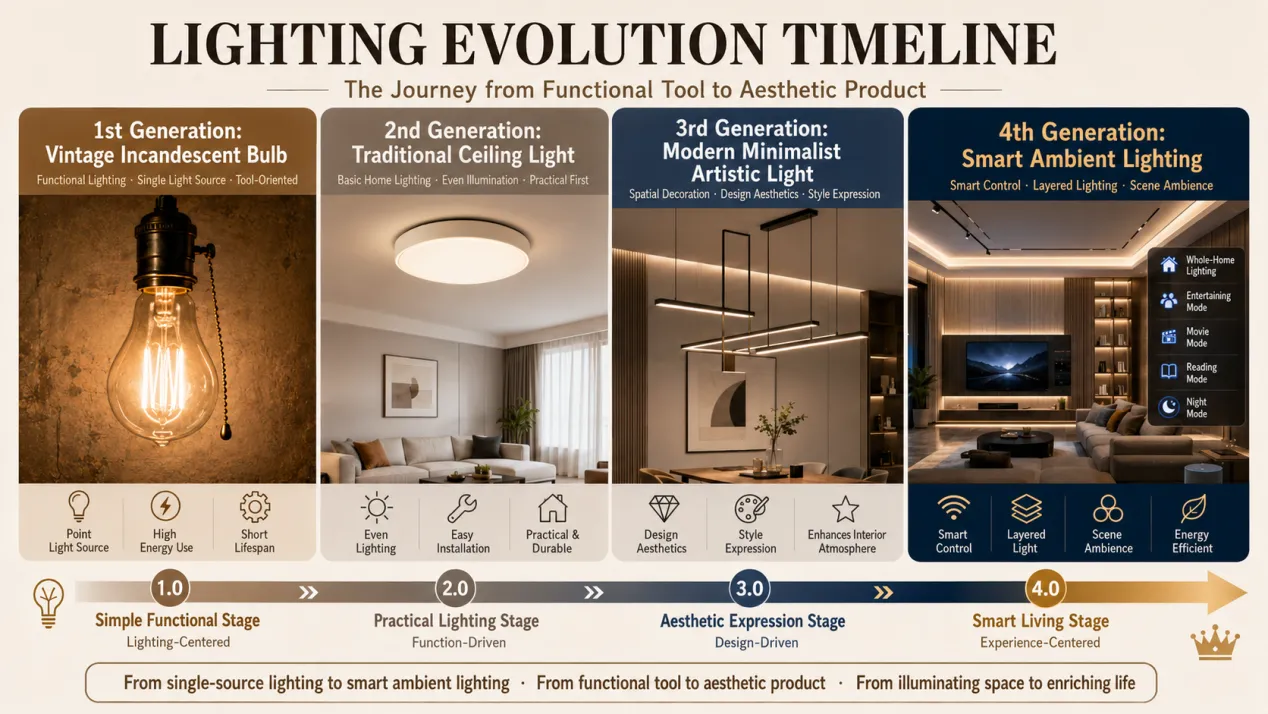
The widespread adoption of artificial intelligence and smart home technologies has driven modern lighting fixtures through their third major evolution, transforming them from "passive lighting tools" into "active intelligent scene terminals." Traditional luminaires only support basic functions like switching and dimming, featuring fixed operating modes and poor adaptability; in contrast, modern lighting solutions leverage IoT, AI algorithms, and smart chips to achieve intelligent scene control, user-friendly interaction, and autonomous compatibility, enabling a dual enhancement of both functionality and aesthetic value through technological advancement.
3.1 Global Intelligent Coordination with Frequent Scenario Switching
By 2026, the penetration rate of smart lighting fixtures will exceed 80%, with intelligent connectivity no longer a premium feature but becoming a core standard in modern lighting systems. These systems are fully compatible with major domestic and international smart ecosystems—including Mi Home, HarmonyOS, Tmall Genie, TUYA, and HomeKit—enabling unified whole-home lighting control and zoned regulation.
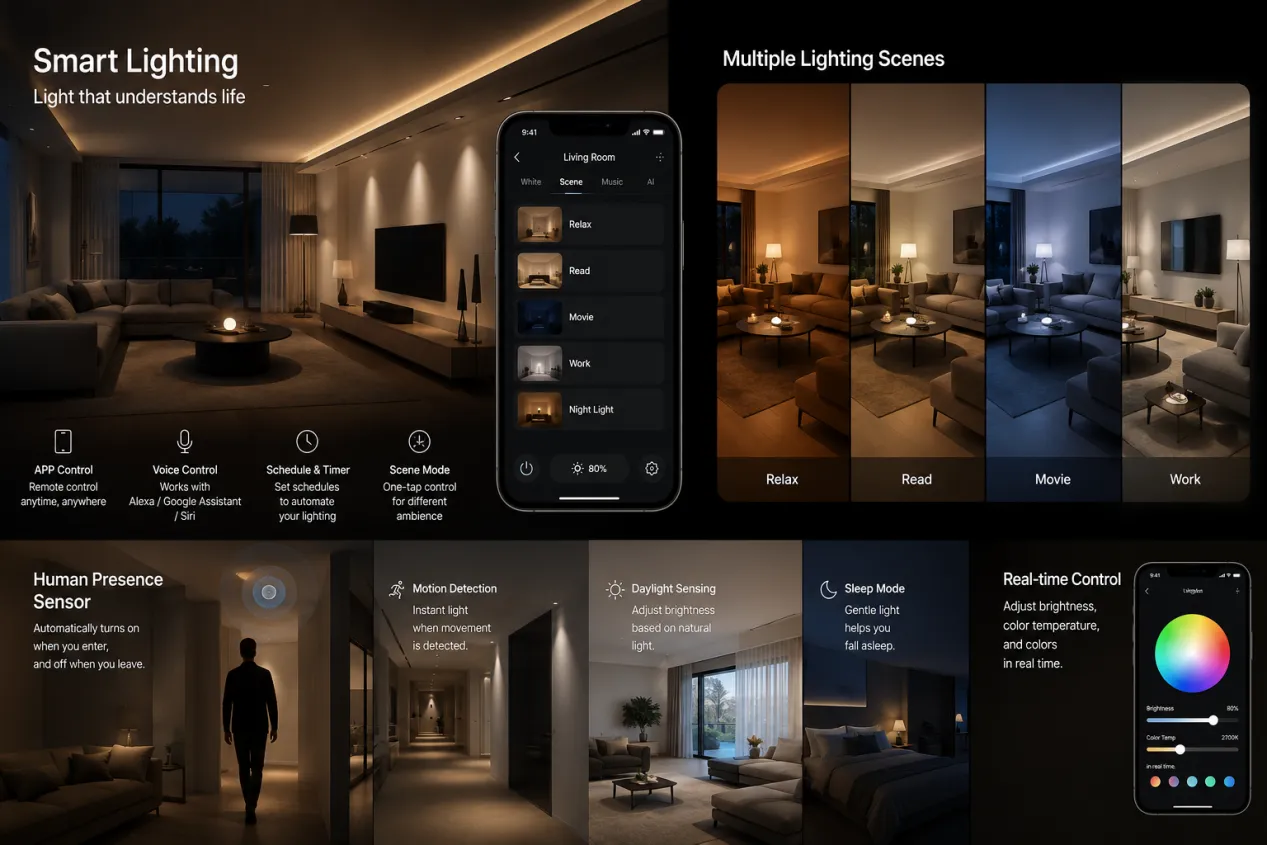
Unlike traditional lighting fixtures that offer only simple on/off dimming, modern smart lamps support continuous color temperature adjustment, precise brightness control, flexible color ambiance switching, and customizable scene modes, enabling one-touch switching between dedicated lighting scenarios such as daily use, relaxation, viewing, sleep, morning wake-up, and away-from-home situations. Daily mode provides clear ambient light; relaxation mode switches to soft warm illumination; viewing mode turns off the main lamp while maintaining ambient lighting; sleep mode activates a low-intensity motion-sensing night light—all with automatic adaptation to specific environments, eliminating the hassle of manual adjustments and ensuring lighting precisely matches users' emotional states and daily routines.
3.2 Human Body Intelligence Sensing for Seamless, User-Friendly Lighting
Modern lighting design emphasizes "intelligent, seamless operation," leveraging human motion detection, light sensing, and circadian rhythm algorithms to achieve automatic activation/deactivation and intelligent adaptation. Lights in areas such as entryways, corridors, under beds, and wardrobes detect human movement: they automatically turn off when unoccupied and turn on when occupied, eliminating the need to manually switch them on at night while offering both convenience and energy efficiency; whole-home lighting systems automatically adjust indoor illumination levels and color temperature based on outdoor natural light intensity, providing brighter illumination during daytime and softer lighting at night, aligning with natural light patterns and human circadian rhythms.
Meanwhile, these cross-border dedicated lighting fixtures are fully compatible with global smart ecosystems, supporting Zigbee 3.0, precise voice control, and remote app management—fully meeting the smart living needs of users worldwide. Advanced technology delivers an exceptional user experience for lighting solutions.
3.3 Rhythmic Lighting Algorithm: Technology Safeguarding Human Health
High-end modern lighting fixtures integrate a circadian rhythm-based illumination system that employs specialized optical algorithms to automatically adjust spectrum, color temperature, and brightness according to different time periods of the day: 4000K natural light in the morning to awaken vitality; bright, transparent illumination at noon; warm 2700K light in the evening to soothe emotions; and soft, low-intensity light at night to promote sleep. By leveraging technological means to replicate natural light rhythms and compensate for the limitations of artificial lighting, these fixtures achieve precise implementation of healthy illumination through smart technology—an core advantage entirely unattainable with traditional functional lighting solutions.
4. Design Evolution: From Standardized Mass Production to Personalized Customization – Rejecting Homogeneous Competition
The lighting industry once suffered from severe homogenization and cutthroat competition, with standardized mass-produced lamps featuring identical designs devoid of distinctiveness, relying solely on low-price competition. As consumer aesthetics have become increasingly personalized and spatial styles more diverse, modern lighting design has moved beyond the era of uniformity toward a trend characterized by modularity, stylistic differentiation, customization, and lightweight construction, precisely catering to the unique needs of various spaces, styles, and user groups.
4.1 Modular Design: Multi-functional Lighting with Flexible Adaptability
Modular structural design has become the dominant innovation direction for modern lighting fixtures, overcoming the limitations of traditional fixtures with fixed shapes and functions. These fixtures feature a modular structure that is detachable, combinable, and replaceable, allowing the lamp body, light source, accessories, and styling modules to be freely combined or replaced. Users can independently customize the fixture's form and functionality according to space constraints, aesthetic preferences, and functional requirements.
This design not only enhances the lamp's compatibility but also extends its service life—upgrades can be achieved simply by replacing modules rather than the entire unit, balancing environmental sustainability with practicality. It is perfectly suited for various housing types, including modern compact apartments, large studios, duplexes, and villas.
4.2 Precise Style Matching: Integrated Lighting and Space Design
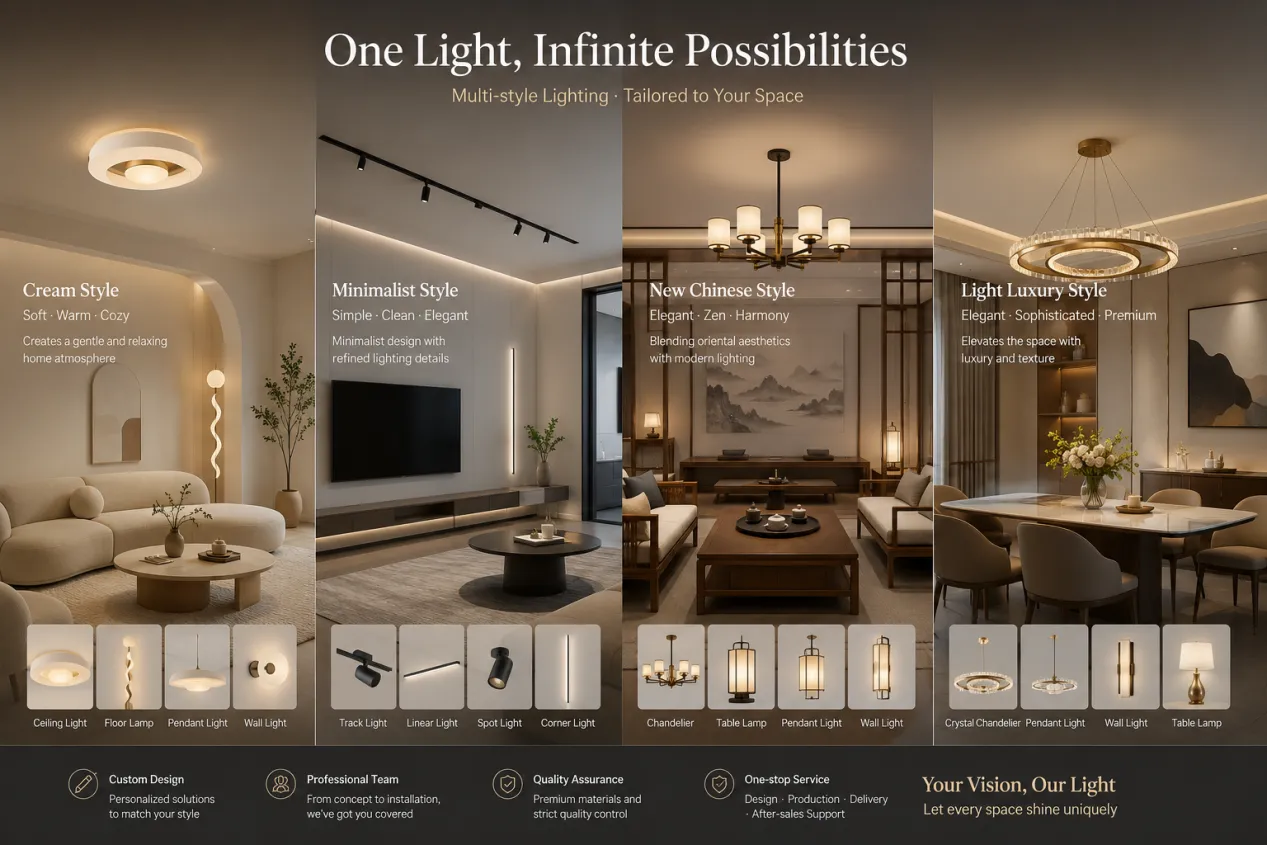
Modern lighting design is no longer a standalone product but a core component of overall spatial design. Designers develop tailored lighting systems based on prevailing home decoration trends: the Cream Style features rounded lines, soft milky white light, and minimalist forms; the Wabi-Sabi Style emphasizes natural textures, raw wood and cement materials, and low-saturation lighting effects; the New Chinese Style integrates traditional mortise-and-tenon joints and bracket sets with modern optical techniques; the Light Luxury Style incorporates brass metal and transparent glass finishes; while the Mid-Care Style recreates vintage lines and warm-toned lighting.
The entire home lighting system features a unified design language and consistent stylistic tone, effectively addressing the disconnect and mismatch between traditional fixtures and interior decor. It achieves seamless integration with spatial elements, soft furnishings, and hard finishes, creating a perfect synergy where lighting harmonizes with furniture and enhances daily aesthetics.
4.3 Niche Artistic Design: Empowering Unique Spatial Character
An increasing number of modern lighting fixtures integrate artistic design and cultural elements, moving beyond the impersonal nature of industrial products. Some high-end models incorporate traditional architectural motifs, natural textures, and sculptural forms into their designs, transforming them from mere lighting tools into functional home art pieces and central components of spatial decoration. These artistically crafted, niche-oriented, and distinctive designs effectively escape the trap of homogenized competition, endowing brands with unique aesthetic value and infusing living spaces with distinctive cultural warmth.
5. Industrial Evolution: From Contract Manufacturing and Trend Following to Original R&D – Achieving Dual Breakthroughs in Quality and Aesthetics
From an industrial perspective, the evolution of modern lighting design serves as a microcosm of the entire lighting industry's transformation. Historically, China's lighting sector relied primarily on OEM branding, mass production following trends using standard molds, and low-cost manufacturing, prioritizing quantity over design and price over quality. Today, the industry has entered a new phase characterized by original design, independent technological development, refined quality standards, and brand differentiation—shifting from functional replication to aesthetic innovation, and from low-end contract manufacturing to high-end intelligent production.
As a global hub for lighting products, Zhongshan Ancient Town has seen leading brands and manufacturers establish dedicated design teams and optical laboratories to delve into full-spectrum optical technology, intelligent algorithms, and original aesthetic designs, moving beyond mere imitation of overseas designs. Through ODM co-creation and OEM deep customization models, they develop differentiated lighting products with proprietary patents, distinctive aesthetics, and core technologies that not only meet domestic high-end residential aesthetic demands but also align with the diverse standards of global cross-border markets, achieving an upgrade for China's lighting industry from "manufacturing" to "smart manufacturing" and from "functional products" to "aesthetic brands".
II. Summary of Future Trends: Lighting fixtures will ultimately become the vessel for space's emotional and spiritual essence.
Throughout the evolution of modern lighting fixtures—from basic illumination tools to advanced health-focused optical solutions, from simple aesthetic designs to core elements of spatial aesthetics, and from mechanical switches to intelligent, seamless integration—the underlying evolutionary principle remains clear: reducing their instrumental nature while enhancing their value for human living environments.
Future lighting design will continue to evolve along six core trends: Functionally, full-spectrum health optics will become ubiquitous, with precision light distribution and user-centric experiences establishing fundamental standards; aesthetically, minimalist invisibility, scenario-specific configurations, material textures, and spatial synergy will dominate the mainstream; technologically, AI-powered rhythm control, seamless interaction, and whole-home connectivity will undergo continuous advancement; design-wise, personalization, modularity, artistic expression, and stylistic differentiation will completely replace mass-produced homogenization; industrially, original R&D capabilities, refined quality control, and brand differentiation will become key competitive advantages.
Lighting fixtures are no longer mere accessories in living spaces; they have become central elements that define spatial ambiance, convey emotional experiences, and reflect lifestyle sophistication. The evolution of modern lighting reflects a fundamental shift in living standards: people now seek not merely access to illumination but genuine enjoyment of light, experiencing the quality and warmth of home life through precise, healthy, gentle, and sophisticated lighting effects.
From functionality to aesthetics, from tools to art, and from cold industrial products to warm living spaces, the evolution of modern lighting has never ceased. In the future, lighting design will continue to be driven by technology, rooted in aesthetics, and centered on human experience, constantly reshaping the symbiotic relationships between light, space, daily life, and health, thereby enhancing the therapeutic appeal and sophistication of contemporary homes.