


A Complete Home Lighting Blog for Rustic, Industrial and Modern Living Spaces
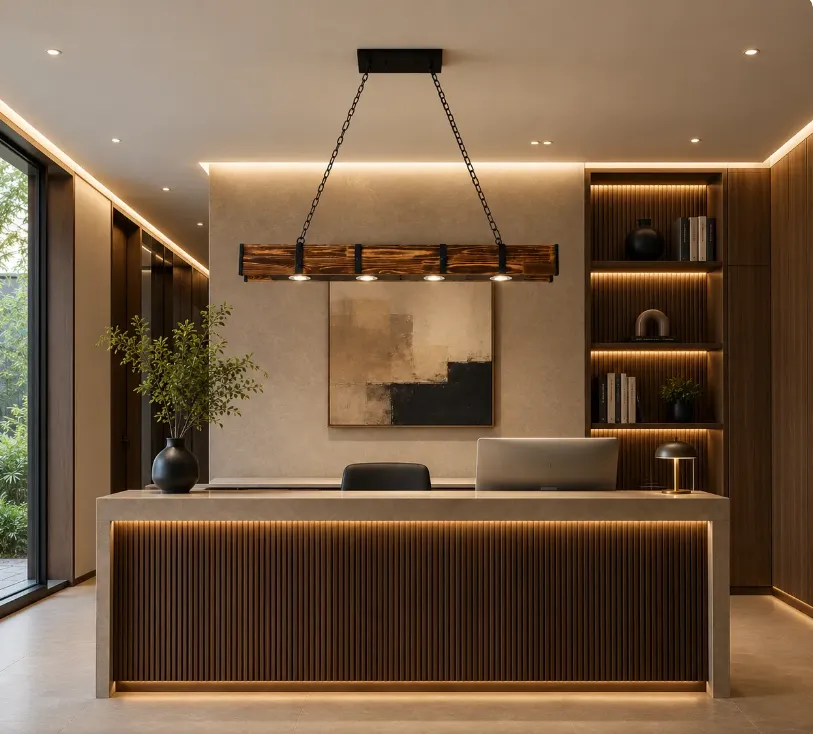
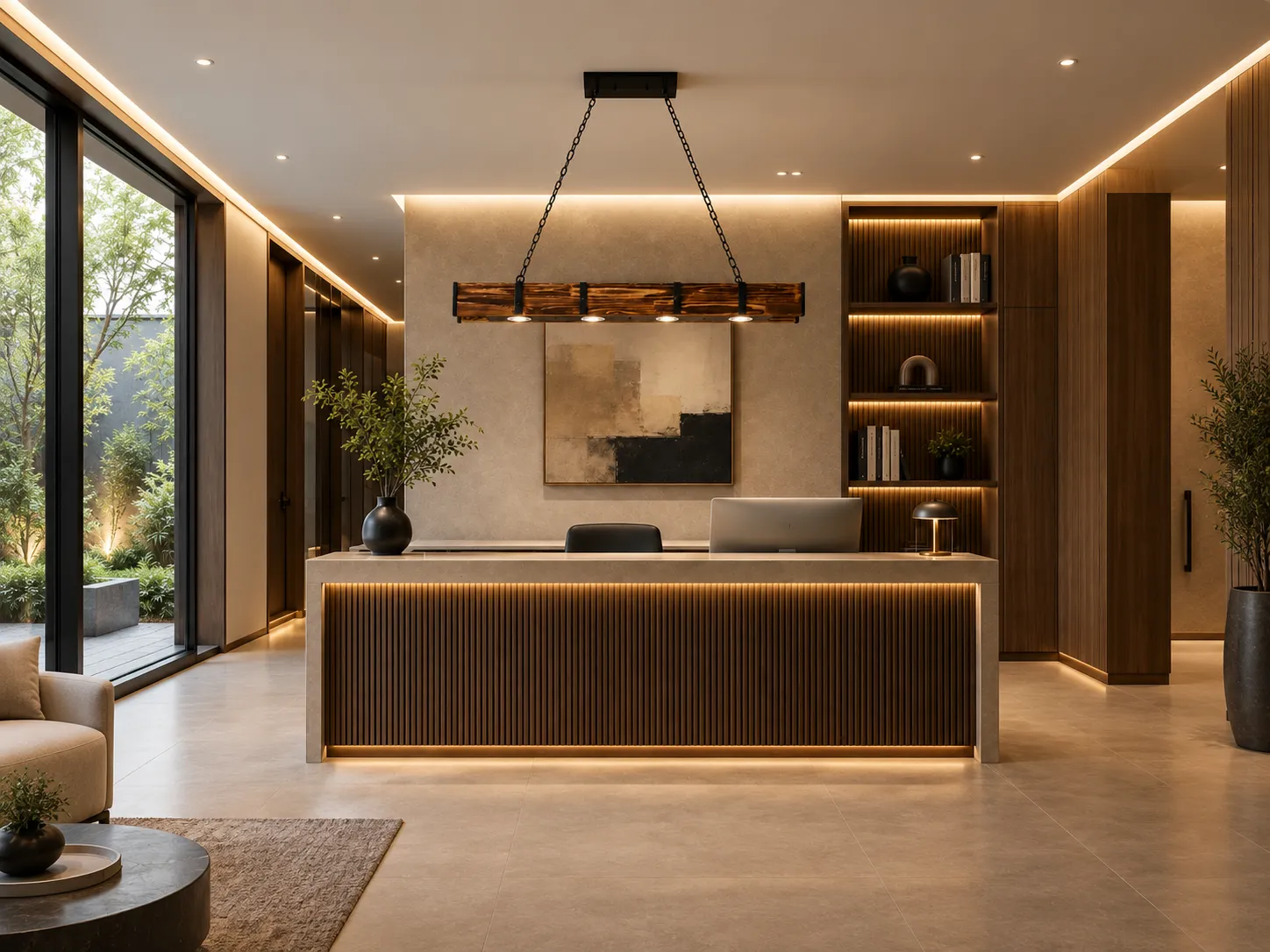
Hero image: Rustic Wood Beam LED Linear Pendant Light used above a reception desk in a warm, hospitality-inspired interior.
1. Introduction
Lighting is one of the fastest ways to define the mood of a room, but the best fixtures do more than illuminate—they establish character. The Rustic Wood Beam LED Linear Pendant Light stands out because it combines warm natural wood grain, dark metal hardware and focused LED downlighting in one clean horizontal form. It captures the familiarity of rustic materials while still feeling refined enough for modern homes, hospitality-inspired interiors and reception spaces.
This article explores why this product works so well in contemporary interiors. Using the supplied product and lifestyle images, we will look at its design language, functional lighting performance, ideal applications, mounting guidance, energy efficiency and maintenance considerations. Where exact electrical values may vary by final configuration, the technical advice below follows commonly accepted residential lighting principles.
2. Quick Product Overview
| Feature | Description |
|---|---|
| Product family | Rustic Wood Beam LED Linear Pendant Light |
| Visual style | Rustic industrial / modern farmhouse / warm contemporary |
| Main materials | Wood-look or natural wood beam body with black metal accents and chain suspension |
| Light direction | Predominantly downward task-oriented lighting |
| Form factor | Long linear pendant with multiple recessed LED light points |
| Typical placements | Dining table, kitchen island, reception desk, bar area, living room statement zone |
| Visual mood | Warm, grounded, architectural and inviting |
3. Why the Design Works
The success of this fixture comes from proportion and contrast. The body is essentially a long beam, which makes it visually stable and naturally compatible with rectangular surfaces such as dining tables, counters and desks. The black chains add an industrial note and emphasize vertical suspension, while the wood surface softens the composition and prevents the piece from feeling cold or overly technical.
Unlike ornate chandeliers, this pendant speaks through material authenticity. The wood grain gives it texture and warmth; the slim metal framework gives it structure. That combination makes it especially effective in interiors that mix stone, wood, leather, matte black details and warm neutral colors.
• The linear beam matches long furniture shapes, so it feels naturally integrated rather than arbitrary.
• The wood grain introduces warmth and visual texture, which is helpful in minimalist interiors.
• Black chains and brackets add contrast and reinforce the industrial-rustic identity.
• Recessed LED light points keep the fixture visually clean while directing light where it is most useful.
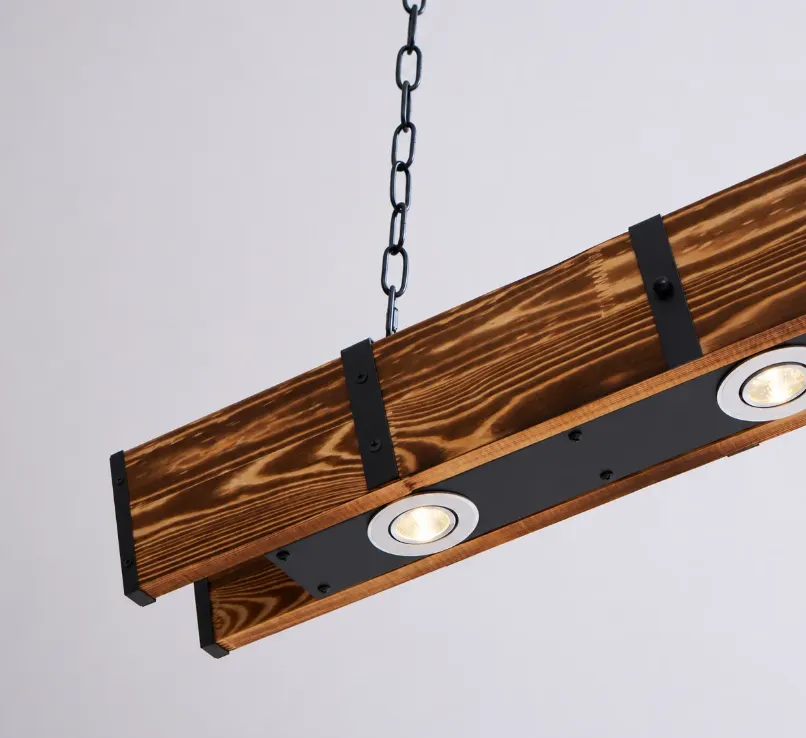
In-text image: close-up detail showing the wood-grain beam body, black hardware and recessed LED downlights.
4. Material Logic: Wood, Metal and Light
Material choice is central to the fixture’s appeal. Wood—or wood-finished surfaces with visible grain—has a psychological warmth that people consistently associate with comfort, craftsmanship and familiarity. In residential design, wood also helps soften stone, plaster and glass, making a room feel more approachable.
Metal, by contrast, introduces precision and durability. In this fixture, the dark metal brackets and chains visually frame the beam and suggest structural honesty. Because the light sources are recessed into the bottom plane, the lamp avoids unnecessary clutter and keeps the emphasis on clean geometry.
This interplay matters because decorative lighting performs best when its materials support the intended mood. Here, warm timber tones and focused light output work together to create a welcoming atmosphere suitable for dining, reception and lounge environments.
5. Lighting Science: What This Pendant Does Functionally
From a functional standpoint, the Rustic Wood Beam LED Linear Pendant Light is best understood as a focused downward light source with decorative value. The recessed light points deliver illumination to the surface below, which is important for tasks such as dining, casual reading, serving, paperwork or reception activities.
For dining tables, a common design target is roughly 150–300 lux on the tabletop, depending on whether the table is used mainly for ambiance or also for reading, homework and multipurpose family use. Reception counters or working surfaces may benefit from somewhat stronger illumination, while living-room installations can be used more atmospherically.
Because the light is directional, this type of pendant works best as part of a layered lighting plan. General ambient lighting, accent lighting and the pendant itself should support one another rather than compete. This layered strategy increases comfort, improves depth and keeps the room flexible for both daytime and evening use.
• Ambient lighting: recessed downlights, cove lighting or concealed strip lighting establish overall room brightness.
• Task/decorative lighting: the pendant defines the activity zone and illuminates the surface below.
• Accent lighting: shelves, artwork lighting and wall sconces create depth and a more luxurious evening atmosphere.
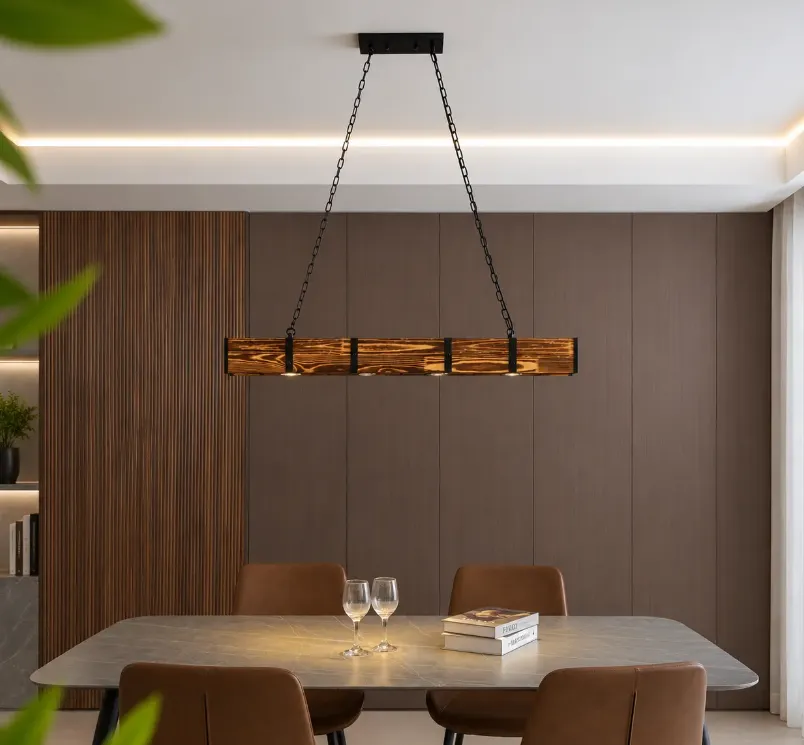
In-text image: the pendant centered above a dining table, demonstrating balanced task lighting and visual warmth.
6. Color Temperature, CRI and Visual Comfort
The emotional effect of this pendant depends strongly on the chosen light source. For most residential and hospitality-like settings, warm white light between 2700K and 3000K is the most appropriate. It enhances the wood tone, complements leather and stone finishes and supports a relaxed atmosphere. A 3000K setting is often the most versatile because it feels warm without appearing too yellow.
Color rendering is equally important. In dining areas and living spaces, people notice food, skin tone, timber grain, textiles and decorative objects. For that reason, a color rendering index (CRI) of 90 or above is generally desirable in premium residential environments. High CRI helps natural materials look richer and more believable.
Visual comfort also depends on glare control. Since the light sources are recessed and aimed downward, the fixture can reduce direct brightness compared with exposed bulbs. However, final comfort still depends on mounting height, dimming capability and coordination with other light sources in the room.
• Recommended residential CCT: 2700K–3000K
• Preferred color quality: CRI 90+ when possible
• Dimming: highly recommended for dining and evening mood control
• Glare control: improved by recessed light sources and correct hanging height
7. Best Places to Use This Fixture
The linear shape makes the fixture especially versatile. In the supplied images, it appears over a reception desk, a dining table and in a warm, rustic living room context. These settings highlight its ability to move between residential and light-commercial applications.
• Dining table: creates a grounded focal line and supports meals, conversation and everyday use.
• Kitchen island: offers practical downward light while matching wood cabinetry and stone countertops.
• Reception desk: adds a polished hospitality mood and strengthens first impressions.
• Living room or lounge statement area: works best where the fixture can visually anchor a seating zone or feature table.
• Rustic-modern open-plan spaces: ideal when exposed beams, stone, timber or matte black details are already present.
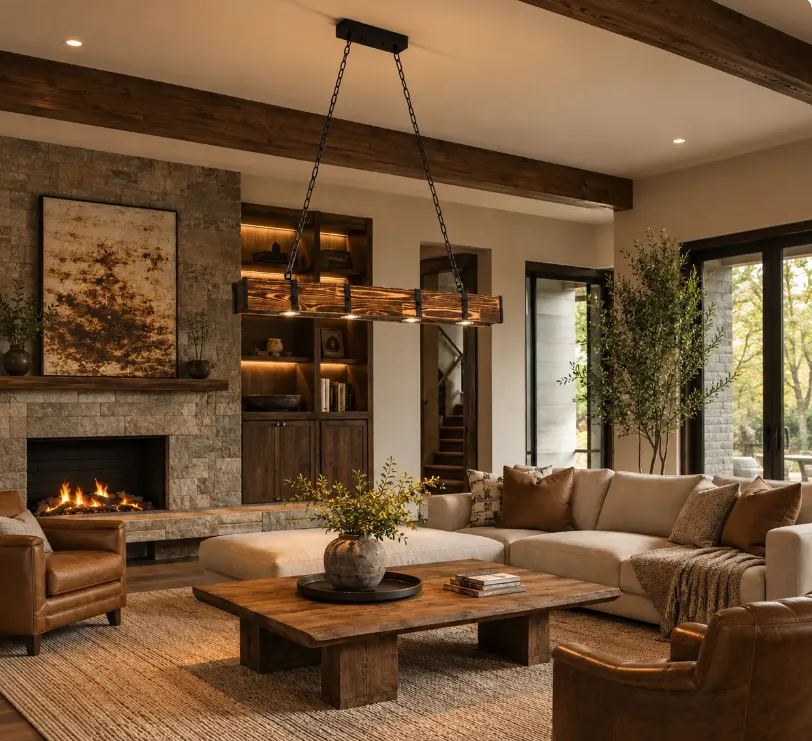
In-text image: the fixture used in a rustic-modern living room with timber beams, stone fireplace and layered warm lighting.
8. Mounting Height and Installation Guidance
Correct hanging height is essential. Over a dining table, the bottom of the fixture typically works well at about 75–90 cm (30–36 inches) above the tabletop. Over a reception counter or island, the exact height may shift slightly depending on ceiling height, sightlines and the scale of the room, but the same range is a useful starting point.
The pendant should be centered horizontally over the furniture or work surface below. Its length should visually relate to the table or counter, ideally occupying a strong but balanced portion of the width or length beneath it. Installers should also check that the chain drop remains symmetrical and that the canopy is aligned cleanly with the room geometry.
• Typical starting point above table: 75–90 cm / 30–36 in from tabletop to bottom of fixture
• Center the fixture over the main activity surface
• Confirm adequate head clearance and sightlines in open-plan spaces
• Use dimming and layered lighting for better day-to-night flexibility
9. Energy Efficiency and Everyday Use
One of the advantages of LED-based pendants is efficiency. Compared with many older light-source technologies, LED systems generally provide higher efficacy, longer operating life and lower maintenance demands. In practical terms, that means less frequent replacement, lower energy consumption and more consistent light output over time.
For households and designers alike, this matters because statement lighting should be beautiful without becoming inconvenient. A good LED linear pendant can support daily use while still acting as a signature design element.
10. Care and Maintenance
The fixture is relatively easy to maintain if cleaned regularly. Wood surfaces and metal hardware should be treated gently to preserve finish quality, and recessed light openings should be kept free of dust to maintain light output.
• Switch off power before cleaning.
• Dust the wood beam regularly with a soft dry or slightly damp microfiber cloth.
• Avoid harsh chemical cleaners that may damage the finish or protective coatings.
• Wipe metal hardware with a soft cloth to prevent buildup.
• Inspect chains, mounting points and canopy hardware periodically for safety.
11. Conclusion
The Rustic Wood Beam LED Linear Pendant Light is a strong example of how rustic materials can be interpreted in a clean, contemporary way. Its long beam form, warm wood grain, black industrial hardware and focused LED lighting make it both practical and expressive. When paired with the right color temperature, mounted at the proper height and integrated into a layered lighting plan, it can transform everyday interiors into spaces that feel warmer, more grounded and more memorable.
For homeowners looking to soften modern rooms, for designers seeking a versatile farmhouse-industrial statement, or for reception spaces that need both character and function, this pendant offers a compelling lighting solution.
12. Technical Reference Notes
The design recommendations in this article are based on widely used residential lighting principles, including layered lighting practice, visual comfort guidance and common pendant installation conventions. Useful professional reference frameworks include general lighting guidance from the Illuminating Engineering Society (IES) and common industry practice regarding color temperature, CRI selection and hanging heights over tables and counters.
• Illuminating Engineering Society (IES): general principles of residential layered lighting and visual comfort
• Common professional guidance on warm white light selection for hospitality and residential settings
• Typical best-practice installation ranges for pendants above dining tables and islands
• General LED efficiency and maintenance advantages widely recognized in architectural lighting practice
Note: exact electrical specifications, wattage, voltage, lumens and dimming compatibility may vary by model configuration or project requirement. Please confirm final specification details with the product datasheet or sales team before project use.
Rustic Wood Beam LED Linear Pendant Light | Click to view product