

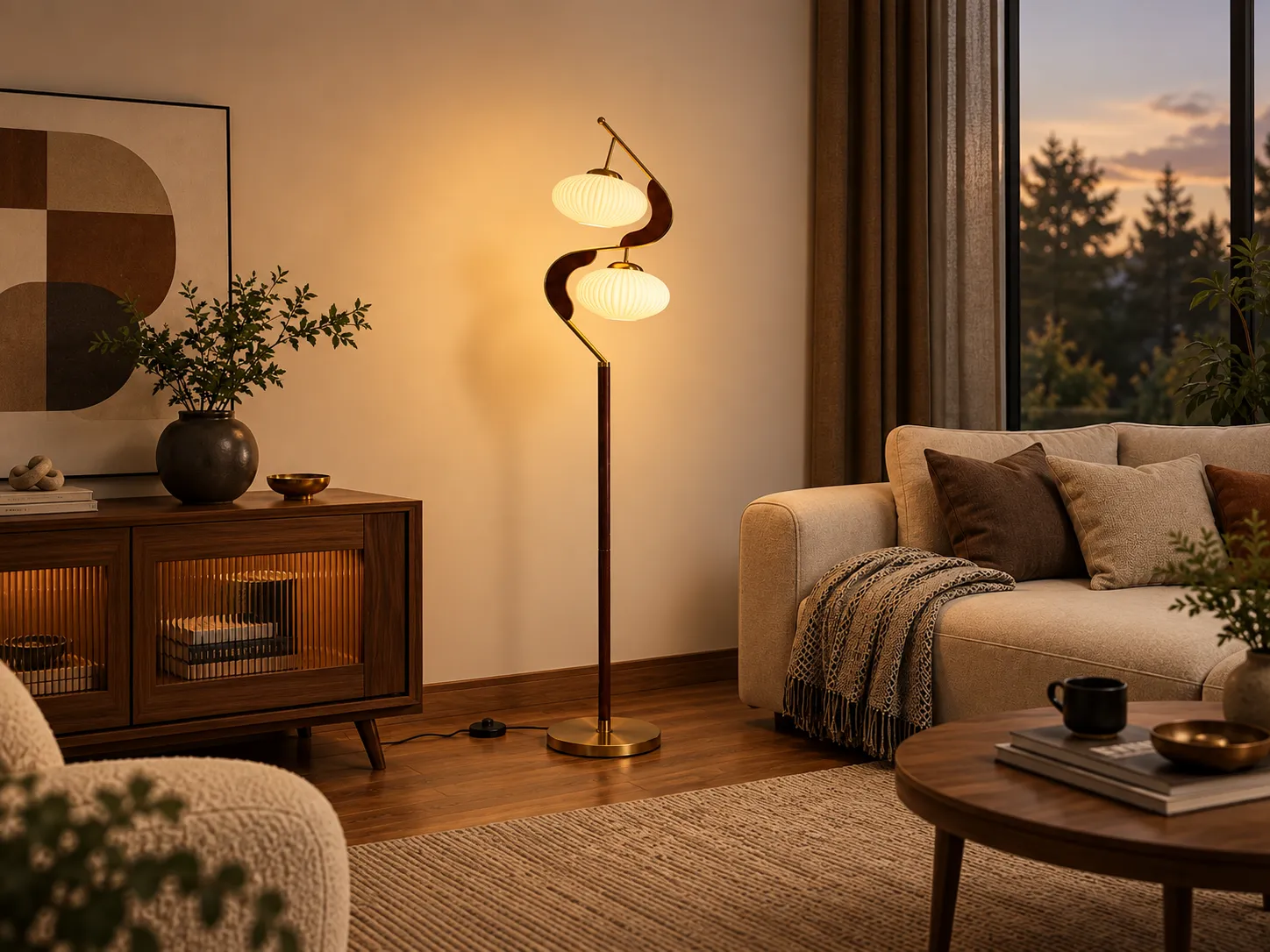

Balances Atmosphere, Comfort, and Function
A practical guide to layered residential lighting, diffused illumination, and warm material contrast
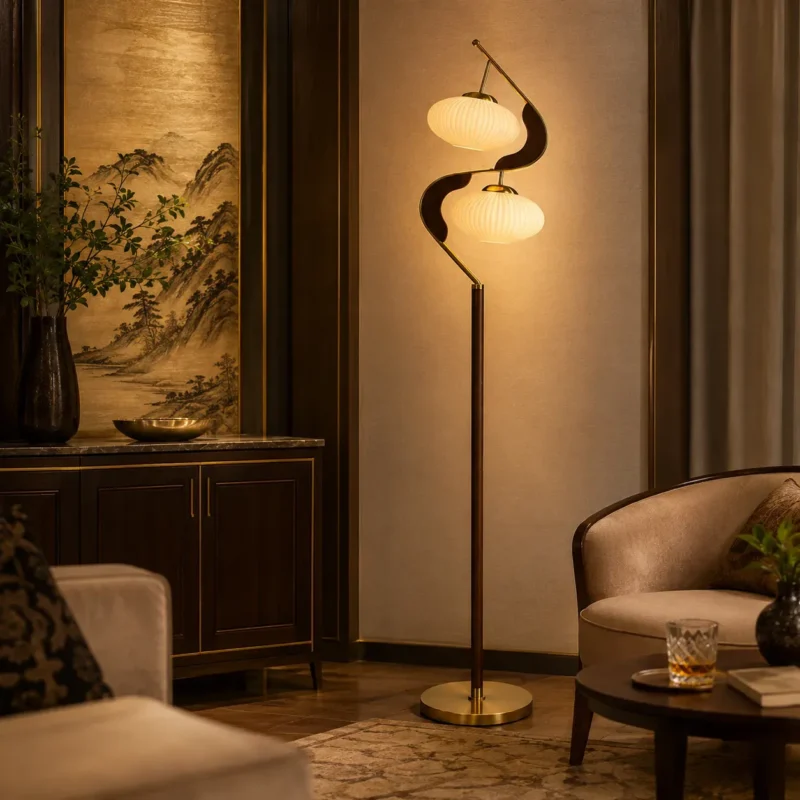
Why Floor Lamps Matter in Layered Lighting
A well-composed room rarely depends on a single ceiling fixture. Layered lighting typically combines ambient light, task light, and accent or decorative light. A floor lamp is useful because it can add illumination at eye level and mid-height, where it contributes to the perceived brightness of walls and surrounding surfaces without requiring new ceiling wiring.
This S-shaped model is especially suited to that role. The upper and lower shades create two luminous points at different heights, which helps break up a flat lighting scheme and gives the room a stronger vertical rhythm. In living rooms and bedrooms, this can make the lighting feel more spatially balanced than a single small source.
Diffused Glass and Visual Comfort
The ribbed opal glass is more than a decorative feature. A translucent diffuser spreads light over a larger apparent emitting area. In practical terms, that can soften the contrast between the luminous source and its background. This matters because discomfort glare is influenced by the luminance of the source, its apparent size, its position in the field of view, and the viewer’s adaptation level.
The Illuminating Engineering Society defines glare as a sensation caused by luminances in the visual field that are sufficiently greater than the adapted background to create annoyance, discomfort, or loss of visual performance. A diffusing shade does not automatically eliminate glare, but it is a sound optical strategy for reducing direct view of an intense LED emitter and distributing the light more gently.
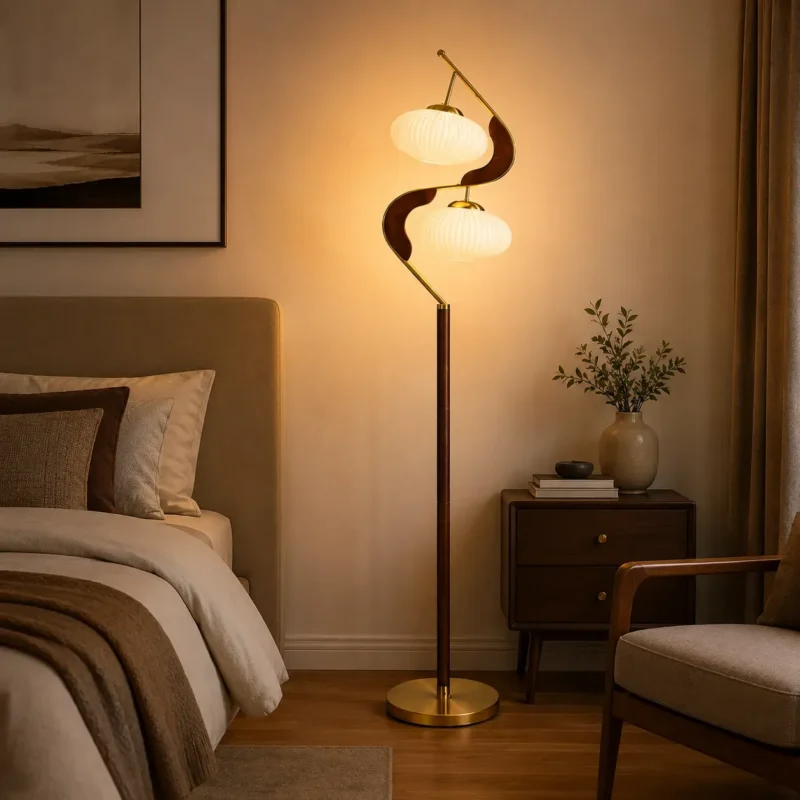
Choosing the Right Color Temperature
The product offers three selectable correlated color temperatures: 3000K warm white, 4000K neutral white, and 5700K cool white. Correlated color temperature, or CCT, describes the color appearance of white light in kelvins. Lower CCT values appear warmer and more yellow; higher values appear cooler and more blue-white.
For relaxed residential settings, 3000K is a natural choice because it supports a warm visual character and works well with walnut-brown wood, brass, beige textiles, and other warm finishes. Around 4000K, the room reads cleaner and more neutral, which can be useful for everyday activities. 5700K produces a cooler visual impression and may be preferable where a brighter, crisper appearance is desired. The U.S. Department of Energy notes that CCT changes the appearance and mood of a space and lists 3000K as a warm, pleasing range commonly used in homes and hospitality interiors.
A Practical CCT Guide
| Setting | Suggested CCT | Design Effect |
|---|---|---|
| Bedroom / evening lounge | 3000K | Warm, relaxed, flattering to wood and brass |
| Living room / general use | 3000K–4000K | Balanced ambience with useful clarity |
| Reading or focused activity | 4000K | More neutral appearance for visual tasks |
| Crisp functional look | 5700K | Cooler, higher-contrast visual character |
Light Output, Efficiency, and What the Numbers Mean
The lamp is specified at 12W total power with approximately 900–1200 lumens. That places the nominal system efficacy at roughly 75–100 lumens per watt before considering measurement tolerances and operating conditions. Efficacy is the ratio of light output in lumens to electrical power in watts, and it is a useful way to compare how efficiently lighting equipment converts electricity into visible light.
The U.S. Department of Energy emphasizes that real luminaire performance depends not only on the LED package itself but also on the fixture design, driver efficiency, optical system, and thermal management. In other words, wattage alone does not tell you how useful or comfortable a light will be; distribution and fixture design matter just as much.
Why Two Light Sources Feel More Layered
With one upper and one lower light source, the fixture creates two overlapping pools of illumination. This can increase visual depth because the eye reads multiple brightness gradients rather than one isolated hotspot. The effect is especially useful next to a sofa, lounge chair, console, or bed, where the lamp can illuminate both nearby surfaces and the vertical plane behind it.
Because perceived brightness depends strongly on the luminance of surfaces within the field of view, directing some light toward walls can make a room feel brighter without relying only on high horizontal illuminance. This is one reason decorative floor lamps can be effective in evening living spaces even when they are not the primary task light.
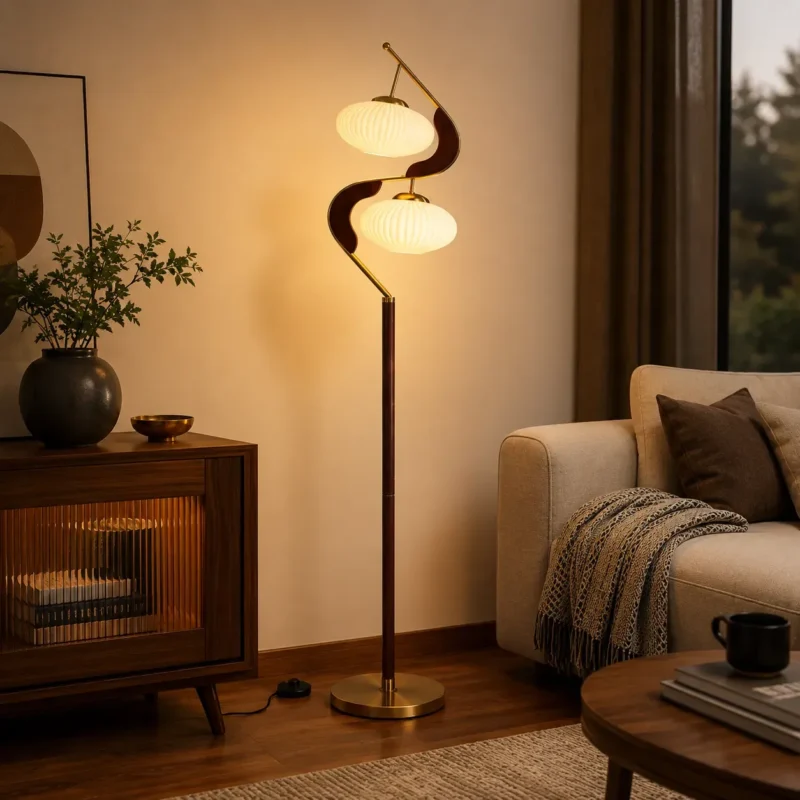
Material Contrast: Why Wood, Brass, and Opal Glass Work Together
The visual identity of the lamp comes from material contrast. The walnut-brown ash wood introduces natural grain and warmth, brushed brass adds a controlled metallic highlight, and opal glass provides a luminous soft-white surface. Together, they create a hierarchy of matte, reflective, and glowing textures.
This combination works particularly well in modern-classic, mid-century, Japanese-inspired, Nordic, and minimalist interiors because the materials contribute character without relying on heavy ornament. The S-shaped frame also introduces asymmetry and movement, allowing the fixture to function as a sculptural object even when switched off.
Where to Place It
- Living room: position the lamp beside a sofa or lounge chair, ideally where the shades can illuminate a nearby wall and create a soft evening pool of light.
- Bedroom: use it near a reading chair or beside the bed when floor space allows. A 3000K setting is the most naturally suited to evening ambience.
- Reading corner: pair the lamp with a chair and side table, but evaluate whether the light reaches the page adequately for your personal visual needs; decorative ambient light is not always sufficient as dedicated task lighting.
- Hotel or villa interior: use the lamp as a visual anchor near seating groups, consoles, or corners where a tall decorative element is needed.
- Apartment: the narrow vertical footprint makes it useful where wall or ceiling modifications are undesirable.
Scale, Stability, and Safety Considerations
At approximately 165 cm (64.96 in) high, the lamp sits within the visual field rather than above it, which is part of its decorative impact. The weighted round metal base is designed to improve stability. As with any tall floor lamp, it should be placed on a level surface, away from high-traffic paths, with the cable routed to reduce trip risk. The product is rated IP20, so it is intended for dry indoor environments rather than bathrooms, exterior patios, or other locations exposed to moisture.
Product Specifications at a Glance
| Product type | Double-shade integrated LED floor lamp |
| Materials | Ash wood, ribbed opal glass, metal |
| Frame finish | Walnut brown |
| Metal finish | Brushed brass |
| Overall height | 165 cm / 64.96 in |
| Shade diameter | 22 cm / 8.66 in |
| Base diameter | 28 cm / 11.02 in |
| Light sources | 2 integrated LEDs |
| Total power | 12W |
| Approx. output | 900–1200 lm |
| Voltage | AC 100–240V |
| CCT options | 3000K / 4000K / 5700K |
| Ingress protection | IP20 |
| Recommended spaces | Living room, bedroom, study, reading corner, lounge, hotel, villa, apartment |
Final Design Takeaway
The most successful use of this lamp is not as a substitute for every other light in the room, but as one layer within a broader lighting plan. Its two diffused shades provide decorative ambient illumination, while the warm wood and brass frame adds vertical structure and material richness. The selectable CCTs make it easier to coordinate the lamp with changing activities and interior finishes.
For homes that need a floor-standing fixture with more visual character than a conventional reading lamp, the S-shaped composition offers a strong balance of sculpture and utility. The key is to use it where the glowing glass, wall illumination, and wood-and-metal silhouette can all be appreciated together.
Explore the S-Shaped Wood and Glass LED Floor LampView the product at Xunlu Lighting
